
New Mexico Burns While Climate Clock Ticks: A State Trapped Between Desert and Firestorm
POLICY WIRE — ALBUQUERQUE, N.M. — It’s not just a warning; it’s a lament. Another weekend, another sky turned an unhealthy, muted orange by the threat of flame. New Mexico, that land of enchanting...

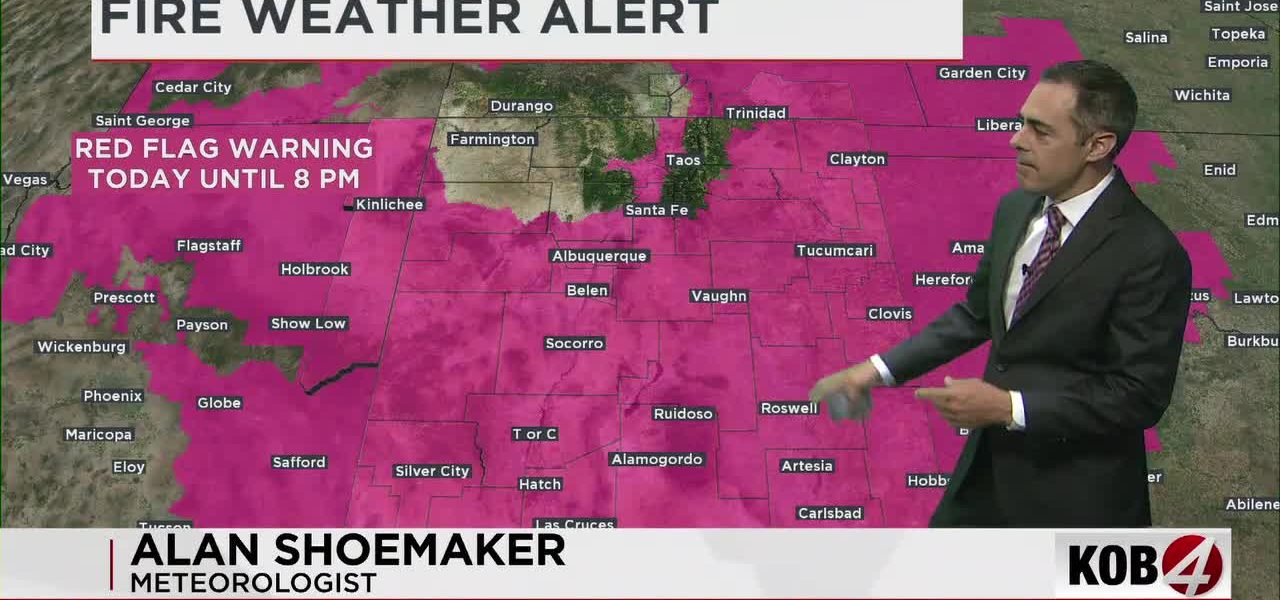
POLICY WIRE — ALBUQUERQUE, N.M. — It’s not just a warning; it’s a lament. Another weekend, another sky turned an unhealthy, muted orange by the threat of flame. New Mexico, that land of enchanting vistas and harsh deserts, finds itself once again under the tyranny of ‘Red Flag’ warnings. It’s a recurring nightmare, a seemingly endless cycle of dry brush, gusting winds, and rising temperatures that scream ‘fire’ to anyone paying attention. We’re seeing more than just dangerous weather; it’s a slow, grinding shift in the very fabric of the landscape.
Because frankly, what used to be called ‘bad weather’ is now just the default. Winds, howling sometimes up to 45 miles per hour across the state’s sprawling, parched terrain, fan invisible embers before they even exist. Albuquerque, a sprawling urban oasis, sits right in the bulls-eye, just like so many other communities dotted across the Southwest. The forecast doesn’t exactly offer a reprieve, does it? More dry air, more wind. Temperatures flirting with the upper 80s — and low 90s, even as spring officially begins its hopeful bloom. Hope, it seems, is a luxury many Western states can’t quite afford anymore.
And policymakers, you bet they’re noticing. Not just the immediate cost of battling these infernos—which can be staggering, don’t get me wrong—but the systemic, soul-deep damage to communities, to ecosystems, to the very notion of a predictable future. New Mexico Governor Michelle Lujan Grisham didn’t mince words in a recent virtual press conference. “We’re not just fighting fires; we’re fighting a fundamentally altered environment,” she stated, her voice tight with an urgency only an elected official responsible for millions can truly convey. “It’s a new reality for our state, — and honestly, for the entire American West. We have to adapt, — and quickly, or risk losing more than just acreage.” That’s the cold, hard truth of it, isn’t it? Adaptation, or despair.
It’s a reality echoing far beyond the Rio Grande. Think about it: the planet’s arid zones, those tough, sun-baked regions, they’re all humming the same worried tune. From the increasingly dry farmlands of Balochistan, Pakistan—where scarce water resources breed social tensions as readily as dust devils—to the Australian bush, the narrative remains eerily consistent. This isn’t just an American problem, not truly. You see the same desperate calculus, the same thirsty land, playing out from the American Southwest to the Thar Desert. It puts immense pressure on infrastructure, on agriculture, — and on the stability of whole regions.
But back to our immediate concern, because those ‘Red Flag’ alerts aren’t abstract policy documents; they’re grim prophecies for residents. They warn of houses burned, lives disrupted, air thick with ash — and regret. The financial fallout, too, it’s immense. A 2021 report from the National Interagency Fire Center indicated that the average annual acres burned in the U.S. have nearly doubled since the 1980s. Double. Just sit with that for a moment. It isn’t linear growth; it’s a terrifying exponential creep.
But who’s really feeling the pinch? Small towns. Farmers. Ranchers who’ve seen generations of their livelihoods turn to dust — and char. They’re on the front lines, literally, watching the encroaching desert swallow their horizons. And don’t imagine for a second that these extreme conditions don’t factor into the broader geopolitical calculus. When staple crops fail in one region because of drought — and fire, that creates market instability elsewhere. It’s a cascade, a ripple effect that touches every corner of our interconnected world, even affecting how other nations perceive challenges—like how India’s hardliners are rethinking traditional stances with Pakistan in a world of shared climate threats. There’s a pragmatic recognition, if not always overt, that global stability now hinges on more than just bombs and borders.
📄 POLICY WIRE WHITEPAPER PUBLISHED: PAKISTAN'S NATIONAL SECURITY POLICY PRIORITIES
👉 READ BY CLICKING HEREDr. Arlen Vance, a climate policy advisor with the U.S. National Climate Assessment, put it bluntly: “The data shows it unequivocally: longer fire seasons, greater intensity. This isn’t an anomaly; it’s a trend. And it’s impacting resource allocation at every level of government, from Albuquerque to Islamabad. Ignoring this reality is no longer an option, it’s an existential risk.” That’s the sort of understated urgency you hear these days, isn’t it? The quiet desperation of experts who know exactly what’s coming, if things don’t change.
What This Means
The persistent, escalating fire danger in New Mexico, much like in other drought-stricken areas globally, is far more than a weather report; it’s a stark indicator of deeper systemic strains. Politically, it mandates increased funding for firefighting agencies, shifts in land management policies, and potentially, controversial discussions around water rights and population distribution in the arid West. Local governments will be under immense pressure to protect citizens and infrastructure, often stretching already-thin budgets to their breaking point. There’s a direct economic hit from property damage and business disruption, sure, but also a quieter, insidious drain from increased insurance premiums, tourism declines in affected areas, and long-term ecosystem restoration costs. We’re talking billions, folks.
From a broader policy perspective, it intensifies the global conversation on climate change adaptation — and mitigation. The recurring nature of these disasters forces countries—even those historically disengaged—to acknowledge shared vulnerabilities. The U.S. finding its own backyard ablaze puts global warming directly on the domestic policy agenda, demanding responses that reach beyond simple emergency services. It isn’t just about putting out fires; it’s about reshaping the future of how — and where people live. That’s a massive undertaking, and we’re just getting started on the political wrangling it’ll entail. Expect more political theater, more finger-pointing, and hopefully, just hopefully, some actual policy innovations before it’s too late. The land, meanwhile, just keeps getting drier. And that’s a problem that won’t wait for bipartisan agreement.