


Balochistan’s Buried Behemoth: Ancient Giant Rewrites Continent’s Prehistoric Narrative
POLICY WIRE — Islamabad, Pakistan — Forget dusty textbooks. Toss out those cute little plastic dinosaur models. Because deep within the stark, sun-baked expanses of Balochistan, something monumental...

POLICY WIRE — Islamabad, Pakistan — Forget dusty textbooks. Toss out those cute little plastic dinosaur models. Because deep within the stark, sun-baked expanses of Balochistan, something monumental has just stomped onto the world stage, rewriting a fair chunk of what we thought we knew about life — really big life — on the ancient Earth.
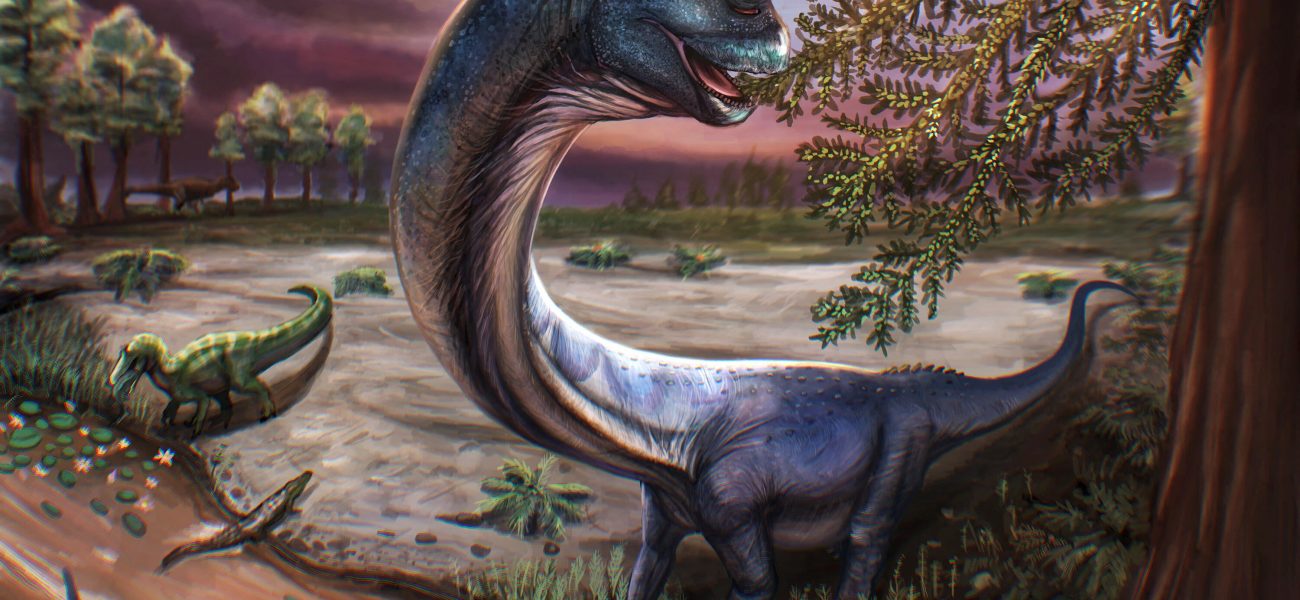
It wasn’t a sleek space rocket or a new geopolitical maneuver dominating the headlines here. No, it was a colossal fossil, a creature so enormous it makes today’s elephants look like overgrown house cats. Scientists, working quietly for years in a desolate corner of Pakistan, have finally pulled back the curtain on what they’re unofficially calling the ‘Balochistan Titan,’ a long-necked leviathan that could’ve stared down a seven-story building. This isn’t just another fossil; it’s a creature estimated to have weighed a staggering 55 metric tons, a figure backed by painstaking skeletal analysis at the University of Karachi.
And that’s the kicker. This isn’t just a bigger-than-average discovery. It’s an entire paradigm shift. We’ve all seen the news about new species popping up, usually somewhere else—often in South America or Africa. But finding such an unprecedentedly massive sauropod right here, tucked away in the forgotten Mesozoic sediments of what was once the Gondwanan supercontinent, well, it changes things. It demands a fresh look at the very biodiversity and climatic conditions of this landmass tens of millions of years ago.
“For too long, the narrative of megafauna has been centered away from our region,” Dr. Amina Sharif, the lead paleontologist from the University of Karachi’s Department of Earth Sciences, told Policy Wire. “But this animal, its sheer scale, its elegance even in fossilized bone—it screams that ancient Asia wasn’t just a migratory pathway; it was a flourishing, singular ecosystem capable of sustaining life on an almost unimaginable scale. We’re talking about a beast that lived, bred, — and died here, reshaping its environment through its very existence.”
Because, honestly, you don’t just ‘misplace’ a 55-ton animal from history. Its discovery begs questions about why such colossal finds haven’t been more common in the region’s rich geological strata. Was it lack of dedicated resources? Political instability making field research difficult? Probably a cocktail of both, truth be told.
The creature, believed to be a distant cousin to the titanosaurs found across South America, suggests a much more intricate and interconnected continental landmass than previously theorized. Imagine the kind of biomass necessary to fuel such an enormous herbivore! It paints a picture of lush, forgotten landscapes where today’s deserts sprawl, offering clues about ancient climates and vegetation.
📄 POLICY WIRE WHITEPAPER PUBLISHED: PAKISTAN'S NATIONAL SECURITY POLICY PRIORITIES
👉 READ BY CLICKING HEREBut this isn’t just an academic curio for geology nerds. This find has wider implications. “This isn’t merely about finding old bones; it’s about inspiring a new generation,” remarked Senator Riaz Gul, Chairman of Pakistan’s Senate Standing Committee on Science and Technology. “It’s about showing our young people the immense scientific heritage right beneath their feet. We must seize this moment. This discovery gives Pakistan a unique opportunity to enhance its standing in global paleontology—and to demonstrate its commitment to scientific exploration, which frankly, we haven’t always prioritized as much as we should’ve.” His words echoed across local scientific communities, sparking a quiet, determined resolve.
What This Means
The ‘Balochistan Titan’ is more than a scientific anomaly; it’s a strategic asset, whether Islamabad recognizes it or not. Politically, such a high-profile discovery provides a desperately needed boost to national prestige. In a region often in the headlines for less savory reasons, the unearthing of a world-record contender for largest land animal shifts the global narrative, if only slightly. It positions Pakistan not merely as a geo-strategic puzzle but as a land holding untold scientific secrets, capable of contributing significantly to our understanding of planetary history.
Economically, while direct benefits are distant, the long-term prospects could be substantial. It’s an undeniable magnet for scientific tourism and international research grants, drawing paleontologists and enthusiasts alike, echoing similar benefits seen by nations like Thailand (see our deep dive on Thai Giant Unearthed). Consider the local communities in Balochistan; a dedicated museum and research center, however modest initially, could become a focal point for regional development, offering employment and educational opportunities in an area desperate for both.
But securing these gains won’t be easy. It’ll require consistent political will, substantial investment in infrastructure, and a robust security apparatus to protect fragile research sites and the scientists working there. Otherwise, this incredible beast, having waited millions of years to tell its story, might find itself—and its potential—once again fading into obscurity. Pakistan has struck scientific gold; the challenge now is to refine it and polish it for the world to see, making sure this isn’t just a momentary flash in the paleontological pan, but a sustainable foundation for future endeavors.