


Silent Coup: Inside F1’s Power Struggle as Wolff, Horner Vie for Alpine’s Soul
POLICY WIRE — London, UK — The glitzy world of Formula 1, often presented as a crucible of engineering brilliance and raw speed, is increasingly proving itself to be a high-stakes arena for corporate...

POLICY WIRE — London, UK — The glitzy world of Formula 1, often presented as a crucible of engineering brilliance and raw speed, is increasingly proving itself to be a high-stakes arena for corporate warfare. You’d think it’s all about milliseconds — and podiums. But beneath the chrome and carbon fiber, an almost primal battle for ownership and influence plays out, nowhere more vividly than in the quiet, brutal bidding war currently consuming Alpine F1.
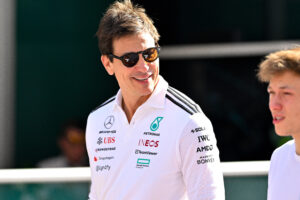
It’s a peculiar dance, this, with two of the sport’s most formidable architects, Toto Wolff and Christian Horner, each staking their claim not just on a quarter of a French racing team but on a strategic foothold for F1’s future. Because, let’s be real, this ain’t just a simple real estate transaction. It’s a land grab.
For months, the paddock chatter has revolved around Horner’s audacious bid. Fresh off a rumored £52 million severance package from Red Bull Racing – that’s quite a golden parachute, wouldn’t you say? – the man wasted no time demonstrating he meant business. He’s got some seriously heavy-hitting investment groups in his corner, all quite prepared to pay top dollar. Their offer correctly pegs the entire Enstone operation’s value at a cool $3 billion. Which, if you’re keeping tabs, means that the 24% stake already held by the Otro Capital consortium, the one featuring Hollywood’s Ryan Reynolds and NFL’s Patrick Mahomes, sits at about $750 million.
It’s a robust offer. A fair one, by all accounts. And it screams ambition. Horner, you see, isn’t known for subtlety. He wants control, a clean slate, a chance to build something anew, distinct from his Red Bull legacy. He sees Alpine as his next grand project, his empire reboot.
“We aren’t just buying a team; we’re investing in a dynasty,” Horner reportedly told a handful of private investors recently, a quote shared by someone with direct knowledge of the discussions. “This isn’t about mere dollars; it’s about control, vision, — and winning. Anyone who thinks otherwise just doesn’t get F1’s modern landscape.” A man who rarely minces words, he’s effectively putting his money where his mouth is, or rather, where other people’s money is.
But then, there’s Wolff. The Mercedes principal, a figure of icy composure — and even icier strategic acumen. He’s been sniffing around Alpine too, but his approach is markedly different, a study in contrasts. His initial bid for a slice of Alpine was, well, reportedly a bit pathetic – ‘very low,’ in the parlance of *RacingNews365*’s insider chatter. It was hardly a serious counter to Horner’s financial might. But don’t let that fool you into thinking Wolff’s playing from a weaker hand. He isn’t.
Wolff’s ace? Mercedes’ power units. Beginning this season, Alpine ditched its own underperforming Renault engine program — and embraced Mercedes horsepower. And guess what? The results are already staring everyone in the face: the struggling French outfit rocketed up to fifth place in the Constructors’ Championship after just four rounds in 2026. Fifth place, after years in the wilderness. It’s almost too neat.
“Some see F1 as a simple asset play. We see it as an ecosystem of partnerships,” Wolff explained to an exclusive gathering of industry heavyweights at a Geneva symposium recently. “Aligning interests, particularly at the corporate level, creates a force far more potent than any solitary chequebook.” He knows exactly what he’s doing, this one. He’s talking beyond share percentages; he’s selling future synergies to the parent company, Renault’s corporate board back in France.
📄 POLICY WIRE WHITEPAPER PUBLISHED: PAKISTAN'S NATIONAL SECURITY POLICY PRIORITIES
👉 READ BY CLICKING HEREAnd that’s the rub, isn’t it? While Flavio Briatore, an Alpine executive advisor, might’ve been the one to initially coax Horner to the table, the French corporate suits are listening more intently to the whispered promises of long-term strategic alignment. They’re attracted to the idea of a deeper bond with Mercedes, seeing more than just an engine supplier, but a veritable corporate partner in a shifting automotive landscape. This isn’t just about engines; it’s about sharing R&D, market reach, maybe even future EV tech.
But what does all this corporate chess mean for a global sport trying to grow? Think about the massive inflow of capital into F1 from sovereign wealth funds, particularly from the Middle East. They see sports as soft power, as a canvas for brand projection — and geopolitical influence. That kind of thinking often extends its reach across the broader Muslim world, including nascent markets like Pakistan, where F1’s presence, though small, is growing. These financial maneuvers set precedents for how investments flow globally, influencing everything from sponsorship deals to future grand prix locations in emerging economies.
And whichever grandmaster – Horner with his blunt financial force or Wolff with his subtle corporate charm – clinches this 24% stake, they’re not just getting a piece of the pie. They’re getting a massive seat at the table to shape the so-called ‘Gucci Alpine’ era from its very inception, influencing not just on-track performance but the entire commercial and strategic direction of a marque.
What This Means
This bidding war isn’t just about a Formula 1 team; it’s a stark commentary on the evolving economic and political landscape of elite global sports. F1, once perceived as a niche, high-tech gladiatorial contest, has morphed into a sprawling, multi-billion-dollar global entertainment enterprise. The tussle between Wolff and Horner, representing differing approaches to corporate strategy – the former emphasizing partnership and integration, the latter preferring outright financial dominance – offers a microcosm of broader geopolitical capital flows.
Economically, a Horner victory would signal a triumph for aggressive, private equity-backed takeovers, focusing on rapid asset maximization. It suggests F1 teams are increasingly viewed as distinct, high-yield investments, rather than mere extensions of automotive manufacturers. But a win for Wolff — and Mercedes would solidify a trend toward integrated, synergistic ventures. It would prove that aligning industrial powerhouses for long-term strategic advantages can trump brute cash bids. The implications for other struggling manufacturers in sports are enormous; do you go it alone, or do you find a ‘big brother’?
Politically, the ultimate winner of this bid could reshape power dynamics within F1’s governance structures. A more independent, Horner-led Alpine might push against manufacturer-bloc interests, whereas a Wolff-aligned entity would strengthen the influence of the established automotive giants. It’s a strategic move for market dominance, extending influence far beyond the track. These battles signal that F1 is not just about motorsport anymore; it’s about control over a burgeoning global media and technology platform, a stage where nations, corporations, and very rich men project their ambition and wealth on a truly global scale. And it’s only just getting started.