

Maldives’ Sapphire Dreams Clouded by Deep-Sea Tragedy for Italian Divers
POLICY WIRE — Malé, Maldives — Paradise, it seems, has its own silent, unforgiving depths. The dazzling turquoise expanse that draws millions to the Maldivian archipelago has recently surrendered a...

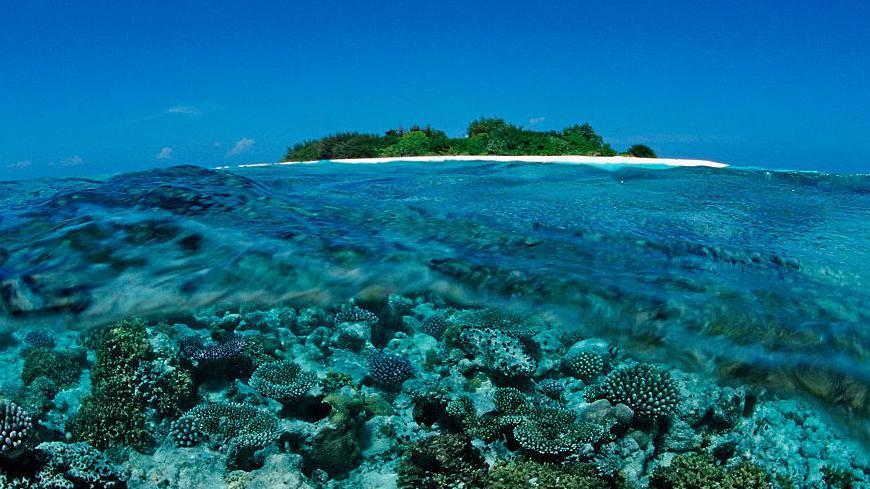
POLICY WIRE — Malé, Maldives — Paradise, it seems, has its own silent, unforgiving depths. The dazzling turquoise expanse that draws millions to the Maldivian archipelago has recently surrendered a far more chilling story: the demise of five Italian nationals, swallowed by the very beauty they sought beneath the waves. It wasn’t the sun-kissed beaches that claimed them, nor the gentle currents of an ocean teeming with vibrant life, but the unforgiving confines of a sub-aquatic cave, an unforseen grave far from Rome.
Details remain frustratingly murky, but the basics are stark. Five experienced Italian cave divers embarked on an adventure in the Thaa Atoll, far from the polished resorts and accessible dive sites. They were, by all accounts, highly skilled, pushing the boundaries of recreational exploration. But even mastery sometimes falters against the unpredictable, dark embrace of the ocean’s subterranean labyrinths. Rescuers eventually retrieved their bodies—a somber return from an ill-fated expedition.
Maldivian authorities, keen to protect their tourism lifeblood, have scrambled to assure both the public and nervous tour operators that an investigation is already underfoot. And they should be. Tourism isn’t just a sector here; it’s the national engine. Last year alone, the Maldives welcomed over 1.8 million tourists, a staggering 20% jump from pre-pandemic levels, with Europe being a primary source market, according to the Ministry of Tourism. A statistic like that underscores the island nation’s deep reliance on visitor confidence. A spate of incidents? That’s not good for business.
“This tragic incident is a stark reminder,” Maldivian Minister of Tourism, Ibrahim Faisal, said in a prepared statement, his voice undoubtedly weighted with diplomatic concern, “that even in paradise, the sea demands respect. We’re working closely with Italian authorities; our reputation for safety and transparency is paramount.” He’s right, it’s. The whispers of danger can travel faster than any jet bringing in tourists.
But how thorough can an investigation truly be when the primary witnesses are gone? And who, exactly, bears responsibility when experienced individuals undertake inherently risky activities? These aren’t just tourists snorkeling; this was an extreme sport, a perilous descent into the unknown. The implications for the local diving industry—an intricate network of guides, operators, and safety protocols—could be significant.
For Italy, the news hit home with a particular sting. Five lives, snuffed out so far from the cobbled streets of Milan or the historical grandeur of Florence. “It’s a deeply painful loss for our nation,” an Italian Foreign Ministry spokesperson, Alessandra Ricci, lamented, her words reflecting the somber mood across the peninsula. “We expect a thorough investigation and remain in close contact with the families of our lost citizens, offering every possible support. Italy values its long-standing relationship with the Maldives; these are not simply visitors, but our citizens, deserving of answers.”
📄 POLICY WIRE WHITEPAPER PUBLISHED: PAKISTAN'S NATIONAL SECURITY POLICY PRIORITIES
👉 READ BY CLICKING HEREThe incident inadvertently shines a spotlight on the wider South Asian — and Muslim world’s tourism aspirations. For nations like Pakistan, which closely monitors regional tourism trends as it attempts to develop its own coastal attractions (much like Balochistan’s nascent beach resorts), any perception of danger in a regional hotspot like the Maldives reverberates. Safety is king; you can’t build a thriving tourism industry if visitors question their well-being. But that’s a whole other regional narrative for another time, isn’t it?
What This Means
The immediate political implication here is a diplomatic dance between Italy and the Maldives, centered on accountability and information. The Maldivian government will be under pressure to show decisive action, not just for the grieving Italian families but for the broader international tourism market. Any misstep, any hint of obfuscation, could severely damage an economy so utterly dependent on its pristine image.
Economically, there’s an inherent tension. The Maldives thrives on its reputation as a safe, luxurious, — and beautiful escape. While extreme diving accidents don’t usually scare away the average resort-goer, the narrative of deaths, particularly multiple deaths, in the island nation could trigger a nervous recalculation among those planning their next escape. Tourism is fickle, after all. People don’t just book a flight; they’re buying into an aspiration, a carefully curated fantasy. When that fantasy cracks—even in its deepest, darkest corners—the tremors can be felt across an entire sector. It’s not just about one cave; it’s about the perceived reliability of an entire national brand. It’s a bitter pill to swallow for a country whose existence, whose entire identity, is wrapped up in offering an unblemished piece of paradise to the world.