


From Beijing to Moscow: Russia’s Auto Market Navigates Sanction-Proof Chassis
POLICY WIRE — Moscow, Russia — Forget the glossy showrooms in Mayfair or the glitzy launches in Geneva. Russia’s automotive market these days operates less like a consumer playground — and more...

POLICY WIRE — Moscow, Russia — Forget the glossy showrooms in Mayfair or the glitzy launches in Geneva. Russia’s automotive market these days operates less like a consumer playground — and more like a geopolitical chessboard. Its latest move? The quiet swap-out of a Chinese-sourced SUV for a homegrown, albeit suspiciously sleek, ‘modern Russian’ alternative. It’s an act of defiant industrial repositioning, one could argue, packaged in steel — and glass.
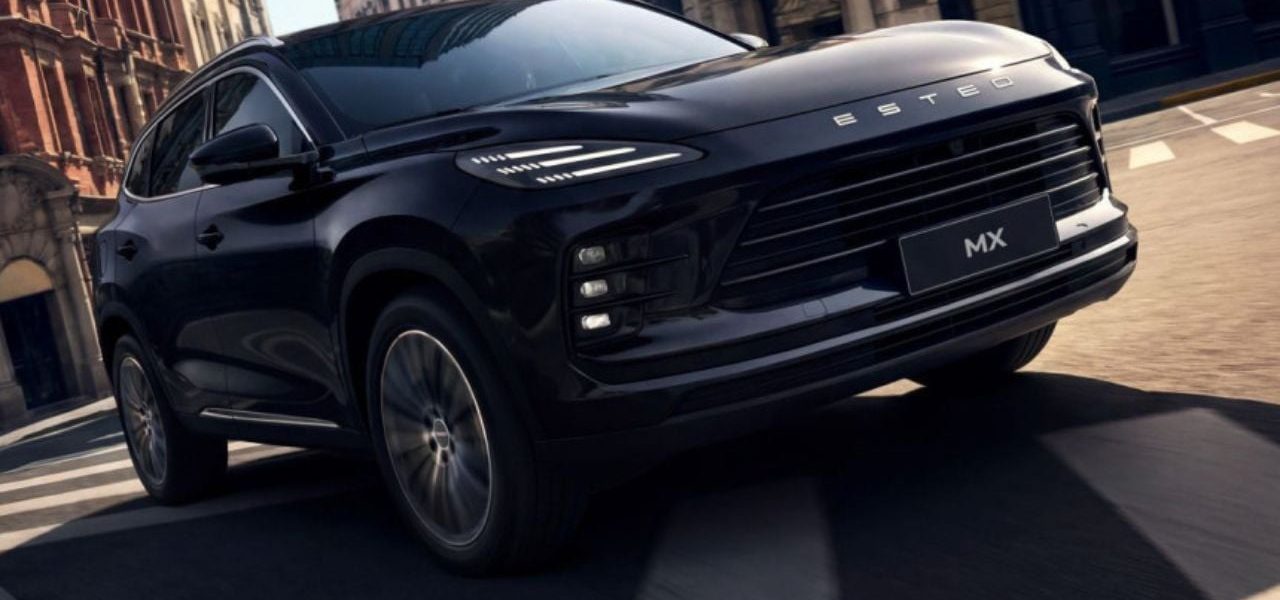
Esteo MX, a name few in Washington or Brussels might recognize—but certainly a brand gaining traction within Russia’s rejigged economy—has quietly, perhaps inevitably, ceased production of its Exeed TXL variant. In its place, emerges the Esteo Komendant, a beast pitched as fully, utterly, *authentically* Russian. The implication is stark: Russia doesn’t just want its cars, it wants them made at home, away from the prying eyes and sanctioning fists of Western powers. It’s an interesting evolution, considering how readily they once embraced Chinese imports.
But how ‘Russian’ is a Russian SUV in an era defined by globalized supply chains — and fractured alliances? That’s the billion-dollar question—or perhaps, given current exchange rates, the 90-billion ruble question. Because while the branding screams Moscow, the actual nuts and bolts, the sophisticated microchips and specialized alloys, they’ve got to come from somewhere, right? It isn’t just about sticking a new badge on an old chassis. They’ve genuinely tried to re-engineer things.
Dmitry Anatoliev, the somewhat laconic Head of Russia’s Trade and Industry Ministry Automotive Division, offered a predictably robust assessment. “This isn’t merely a vehicle; it’s a clear indication of our nation’s enduring industrial muscle, proving we can innovate—even thrive—under the most rigorous pressures,” Anatoliev declared recently, during a rather low-key media briefing outside Moscow. “We’re building our own path. We don’t need anyone’s permission, and we certainly don’t need their off-the-shelf solutions when we can design better ourselves.”
And ‘better’ is a relative term, isn’t it? Better for domestic propaganda? Absolutely. Better for those looking for robust, reasonably priced transportation without the baggage of Western brands? Quite possibly. The pivot isn’t just symbolic; it’s economic, carving out market share for what Russia hopes will be its own industrial renaissance. It’s a calculated gamble, though, banking on domestic demand — and the tolerance of new trade partners.
Across the diplomatic divide, the mood is, shall we say, less enthusiastic. Fiona Carmichael, a rather sharp-tongued spokesperson for the UK Foreign, Commonwealth, and Development Office, didn’t mince words when pressed on the matter. “While Russia trumpets its self-reliance, we’re keenly aware that supply chains for these ‘domestic’ innovations often rely on components skirted through less-than-transparent channels. It’s a game of smoke — and mirrors, isn’t it? Their definition of ‘modern’ seems rather… flexible, in an ethically dubious way.” Her sigh, one imagines, was quite audible across continents.
📄 POLICY WIRE WHITEPAPER PUBLISHED: PAKISTAN'S NATIONAL SECURITY POLICY PRIORITIES
👉 READ BY CLICKING HEREThe switch doesn’t exist in a vacuum, of course. This shift happens as Russia looks increasingly eastward, South, for new commercial inroads. Pakistan, for instance, a nation long grappling with its own import dependencies and ever-eager for diverse trade partnerships, presents a logical—if challenging—opportunity for Moscow’s industrial exports. Pakistan’s trade deficit with its main partners reached over 48 billion USD in 2022, according to the State Bank of Pakistan, a figure that highlights a desperate hunt for new, affordable imports and diverse suppliers. Russian vehicles, manufactured under new realities, might just find an unlikely foothold in such markets, bypassing traditional Western gatekeepers. Britain’s grand naval maneuvers in the Strait of Hormuz, for example, certainly aren’t making things easier for existing East-West trade routes, inadvertently pushing nations like Pakistan towards less conventional options.
What This Means
This car swap isn’t just about an SUV; it’s about Moscow’s broader strategy for economic survival and, frankly, defiance. We’re witnessing an intentional recalibration, a systemic attempt to de-risk its industrial base from external pressure points. Sanctions aren’t just an annoyance for the Kremlin; they’re an incentive, spurring domestic production and pushing them to forge alternative, non-Western economic ecosystems.
Politically, this fosters a narrative of self-sufficiency. It tells the average Russian, ‘See? We can do this without the West.’ Economically, it forces capital expenditure into domestic manufacturing—even if that means higher costs or initially lower quality for some products. But it also creates new dependencies. Relying on fewer, often less technologically advanced, partners in a globalized world brings its own set of vulnerabilities. Russia is aggressively looking for partners who won’t ask too many questions about sourcing. That could easily include nations in South Asia or parts of the Muslim world, keen on securing goods without political strings.
This isn’t merely an inconvenience for Western policymakers; it’s a fundamental challenge to their strategy of isolating Russia. Because when you corner an economy, it doesn’t just wither away; it innovates, adapts, — and finds new friends. And sometimes, those new friends are quite happy to drive a ‘modern Russian SUV,’ no questions asked.