


Wembley’s Weight: Chelsea’s Desperate Cup Bid Under Financial Skies
POLICY WIRE — London, UK — The storied emerald pitch of Wembley, usually a stage for unbridled joy or dignified defeat, this weekend becomes something starker: a high-stakes arena for...

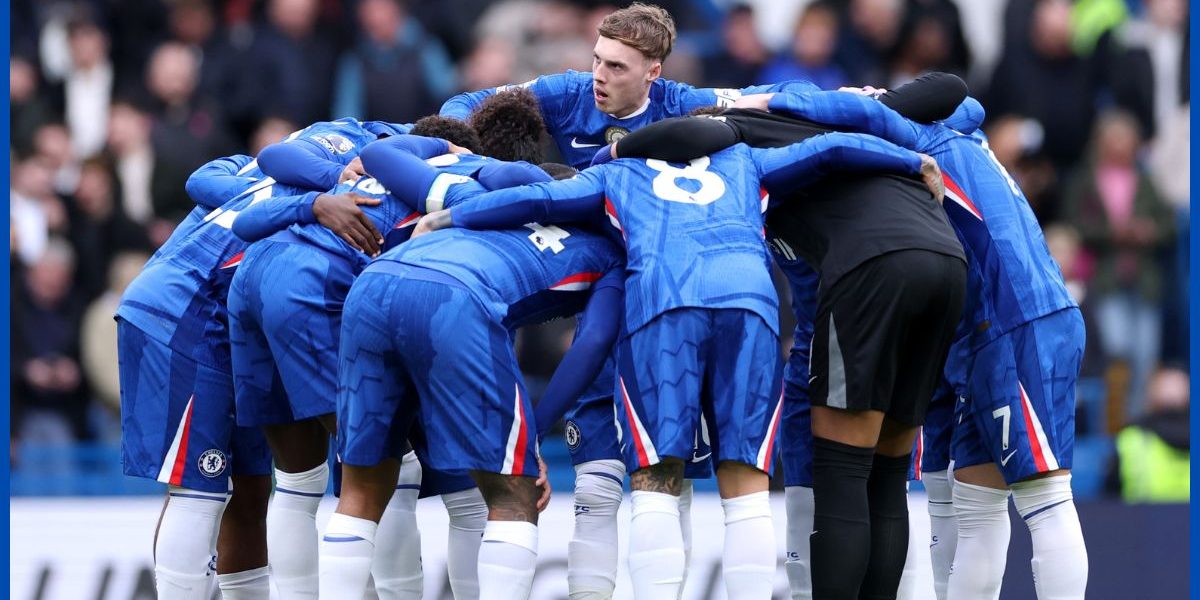
POLICY WIRE — London, UK — The storied emerald pitch of Wembley, usually a stage for unbridled joy or dignified defeat, this weekend becomes something starker: a high-stakes arena for institutional salvage. For Chelsea Football Club, facing their blue-collar-clad behemoth rivals Manchester City in the FA Cup final, it’s not just about lifting a shiny pot; it’s about a momentary reprieve from a season – maybe even an era – riddled with questions, anxieties, and some pretty hefty invoices.
Fans, bless their optimistically deluded hearts, cling to the notion of ‘magic’ – a word that, in the brutal landscape of modern football, increasingly sounds like a quaint relic. And Trevoh Chalobah, the stalwart defender, certainly did his bit, issuing what sounded a lot like a rallying cry. “This final means a lot,” he told the Chelsea website, the club’s carefully curated mouthpiece. “It’s time for us to grab it with both hands — and give it our all. It hasn’t been the season we wanted, but we have the chance to win a trophy. We know how big the FA Cup is…”
But does he, really? Does anyone truly comprehend the sprawling, intricate machine that needs greasing behind every hopeful header or audacious penalty? A trophy, even one as historically venerated as the FA Cup, acts more like a fiscal bandage than a genuine cure for what ails clubs adrift in the financial squalls of global football.
It’s no secret Chelsea’s performance has been erratic – a word that feels like an understatement – following an astronomical spending spree. And, as one Chelsea club insider, speaking anonymously to Policy Wire, put it rather bluntly, “Another season without Champions League revenues would be… well, let’s just say ‘suboptimal’ doesn’t cover it. The Cup offers a shimmer, a distraction, a brief moment to convince investors we haven’t completely lost the plot.”
Across the field, Manchester City presents a chilling contrast. Their recent 3-0 demolition of Chelsea in the league wasn’t just a win; it was a clinical, surgical demonstration of what relentless, sustained excellence – backed by near-limitless funds – actually looks like. City’s manager, Pep Guardiola, renowned for his often cryptic pronouncements, had little room for sentimentality when asked about the final. “We approach each game the same way,” Guardiola stated, a subtle curl to his lip. “We want to win. That’s our philosophy. What other clubs do, their seasons – it doesn’t really matter to us. We play our football.” That’s the cold, hard truth, isn’t it?
For Chelsea, securing any silverware – any at all – becomes an increasingly important part of managing global brand perception. It helps retain sponsorship values. It calms the nerves of shirt-buyers everywhere, from suburban London to Karachi. Because, while the English Premier League and its associated tournaments play out primarily in Europe, their global footprint is enormous. Nations like Pakistan, where cricket reigns supreme, still harbor millions of ardent football fans who religiously follow these top European clubs, purchasing merchandise, staying up late to watch matches, and contributing to the economic machinery – often far more emotionally invested than their geographic proximity suggests.
📄 POLICY WIRE WHITEPAPER PUBLISHED: PAKISTAN'S NATIONAL SECURITY POLICY PRIORITIES
👉 READ BY CLICKING HEREAccording to research from sports analytics firm Sportico, the value of clubs like Chelsea and Manchester City isn’t just about local support; it’s a testament to the global reach and commercial viability of football as an entertainment export, with massive fan bases translating into lucrative broadcasting and merchandising deals across continents. But those values erode without success.
What This Means
This FA Cup final isn’t merely a contest of athletic prowess; it’s a microcosm of the intense financial pressures and geopolitical investments that underpin modern sports. For Chelsea, a win isn’t just glory; it’s a desperately needed marketing bullet point. It provides a narrative cushion – however thin – for another year of trying to rationalize hundreds of millions spent on players who haven’t quite clicked. Failure to secure this trophy, particularly against a dominant opponent, amplifies questions about recruitment strategy, managerial stability, and the overall wisdom of the current ownership’s aggressive, almost uncoordinated, spending spree. And, you know, it probably fuels more Twitter rage.
From an economic standpoint, consistent top-tier performance directly translates to higher broadcast revenues, increased prize money, and greater appeal for new investment partners, particularly from regions like the Middle East or East Asia where European football’s soft power is a significant draw. Because at this level, every flicker of success is monetized, every misstep scrutinized through the lens of profit and loss. It also dictates what kinds of global partnerships are feasible. A struggling giant struggles more globally. Perhaps it’s even a question of soft power projection for ownership that a high-profile asset performs well. As we’ve seen, billion-dollar sporting endeavors don’t always unfold smoothly, or profitably, without on-field validation.
This match, then, is a fleeting opportunity to inject some much-needed positive sentiment – a sentiment that can have tangible effects on share prices, sponsor interest, and the general market perception of the club. It’s less a game, more a corporate health check played out over 90 minutes. Someone’s gonna walk away with a trophy. And someone’s accountants will be breathing a tiny bit easier.