


Beijing’s Wind Play: UK ‘Snub’ Pivots Chinese Turbine Giant to European Heartland
POLICY WIRE — London, UK — The British establishment, it seems, can occasionally resist the siren call of a cheap deal—even when it promises to churn out clean energy. That’s the cold reality...

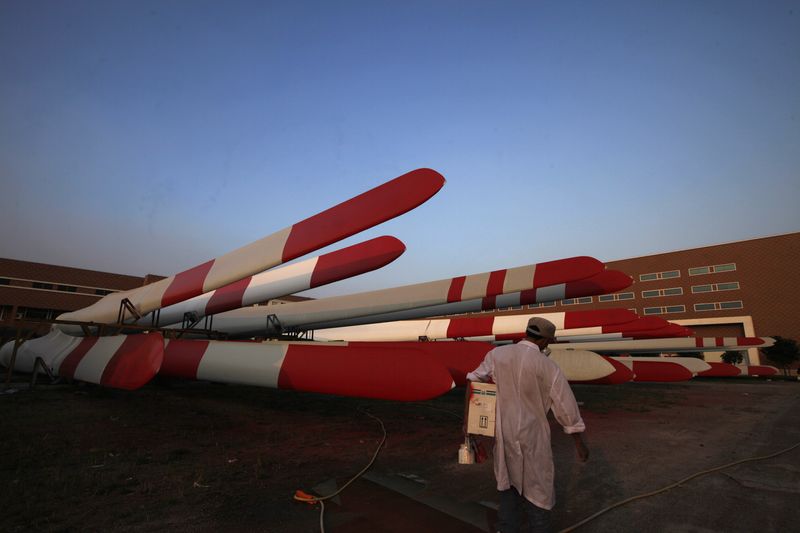
POLICY WIRE — London, UK — The British establishment, it seems, can occasionally resist the siren call of a cheap deal—even when it promises to churn out clean energy. That’s the cold reality China’s Ming Yang Smart Energy Group learned recently, finding its grand designs for a North Sea wind farm partnership unceremoniously shunted aside. But don’t misunderstand: this isn’t a retreat for Beijing’s industrial might. It’s more like a strategic detour, with the wind turbine manufacturer now reportedly eyeing mainland Europe for its next big production hub. A swift, almost impudent pivot, you might say.
It was a decision shrouded in the usual Whitehall quietude—no big speeches, no official press releases to trumpet the rejection. Just a quiet sidelining, a gentle nudge of a Chinese state-backed entity away from British shores. The whispers, though, they’re loud enough. Concerns about national security, supply chain vulnerabilities, and plain old industrial policy have been floating around the UK’s energy sector for a while. This isn’t just about making windmills; it’s about who owns the intellectual property, who holds the data, and crucially, who builds the infrastructure that keeps the lights on. Because these days, economic leverage often comes dressed in renewable robes.
And so, Europe beckons. The continent, desperately racing to meet ambitious decarbonization targets, still largely welcomes foreign direct investment, albeit with increasing scrutiny. Ming Yang, a player of considerable heft in the global wind market, isn’t going to let one setback stall its march. The company, which specializes in hefty offshore turbines—the kind that look like sci-fi constructs rising from the waves—reportedly sees new opportunities across the English Channel. It’s a calculated chess move: if one market gets chilly, find another with a warmer embrace (or, at least, less overt frostiness).
“Britain’s long-term energy security isn’t just about greening our grid; it’s about control, resilience, and strategic independence,” stated Eleanor Vance, a Senior Advisor to the UK Department for Energy Security and Net Zero. “We can’t simply import solutions that might create future dependencies, no matter how attractive the initial pricing.” Her comments, relayed by an aide, hint at deeper anxieties—a growing unease with relying too heavily on any single external provider, especially one backed by a state that operates with different geopolitical objectives.
Meanwhile, in Beijing, the narrative is, unsurprisingly, rather different. “Global energy transition requires global cooperation, not protectionist barriers,” countered Liu Hongwei, a spokesperson for Ming Yang Group, in an email exchange this week. “Our technology is world-class, cost-effective, — and fully compliant with all international standards. Europe represents a strong growth market where we can contribute significantly to decarbonization efforts, creating jobs and fostering innovation locally.” It’s the standard diplomatic line: we’re here to help, even if some doors aren’t as wide open as they once were.
This isn’t an isolated incident, either. Nations across the globe are grappling with the intricate dance of embracing Chinese technology—especially in sectors as sensitive as energy—while safeguarding their own strategic interests. And you see similar plays elsewhere; from infrastructure projects in Africa to semiconductor battles in East Asia. The global grid is a knotty problem, economically — and politically.
📄 POLICY WIRE WHITEPAPER PUBLISHED: PAKISTAN'S NATIONAL SECURITY POLICY PRIORITIES
👉 READ BY CLICKING HEREThe situation casts a shadow, too, over how emerging economies, particularly in the Global South, will navigate their own energy transitions. For countries like Pakistan, for example, the promise of affordable, efficient Chinese renewable energy technology is often hard to ignore, especially when Western alternatives come with steeper price tags or more complex financing structures. As global players jostle for market share, the ripples extend far beyond European shores. Beijing’s geopolitical aspirations don’t end at trade negotiations; they reshape how nations everywhere power their future. And let’s not forget China already accounts for nearly 70% of global investment in onshore wind manufacturing capacity (IEA, 2023 figures), leaving others playing catch-up.
What This Means
The Ming Yang saga isn’t just a corporate hiccup; it’s a stark indicator of intensifying economic nationalism within critical sectors. Politically, the UK’s move, however understated, signals a deepening commitment to strategic autonomy, echoing concerns from Washington about China’s growing technological dominance. It’s a pragmatic (if often frustrating for consumers) re-evaluation of globalization, prioritizing resilience over raw cost efficiency.
Economically, this redirect to mainland Europe suggests Beijing’s industrial machine isn’t slowing down. It will simply find new pathways, likely exacerbating trade tensions within the EU as member states balance their green agendas against varying degrees of protectionist sentiment. Countries that accept Chinese manufacturing investment might gain initial economic boosts but risk becoming overly reliant on Chinese supply chains. It also complicates international climate efforts; if Western nations reject efficient, albeit geopolitically fraught, renewable tech, reaching emissions targets becomes harder and more expensive. So, you’ve got a standoff between economic nationalism and climate imperatives—not an easy tightrope to walk, is it?