


The Vatican’s Ultimatum: A Doctrinal Reckoning on Rome’s Terms
POLICY WIRE — Rome, Italy — For an institution that counts its history in millennia, a terse message from the Vatican City, however gently phrased in officialese, can carry the weight of centuries of...

POLICY WIRE — Rome, Italy — For an institution that counts its history in millennia, a terse message from the Vatican City, however gently phrased in officialese, can carry the weight of centuries of spiritual and temporal maneuvering. The Holy See, that notoriously deliberative bureaucracy, has delivered what amounts to an ecclesiastical ulti-matum to a traditionalist Catholic faction, signaling a deepening rift within the Church’s ranks. It’s a reminder that even the world’s most enduring faith isn’t immune to its own version of internal strife and boundary policing. Think of it less as a diplomatic spat, and more like a high-stakes family quarrel, but with eternal consequences, or so Rome implies.
This isn’t about flashy heresies anymore—no Galileo or Luther for our digital age. This is about adherence, or the stubborn lack thereof, to reforms enshrined in the Second Vatican Council and subsequent magisterial teachings. The Group, often described as ‘rebel’ but staunchly self-identifying as ‘loyal’ to a purer form of Catholicism, now faces the stark specter of formal excommunication. That’s not a lightweight sanction; it’s being cut off, canonically speaking, from the spiritual body, a theological lockout from the sacred. You don’t get many second chances in these sorts of disagreements, particularly when the Pope himself is setting the tone.
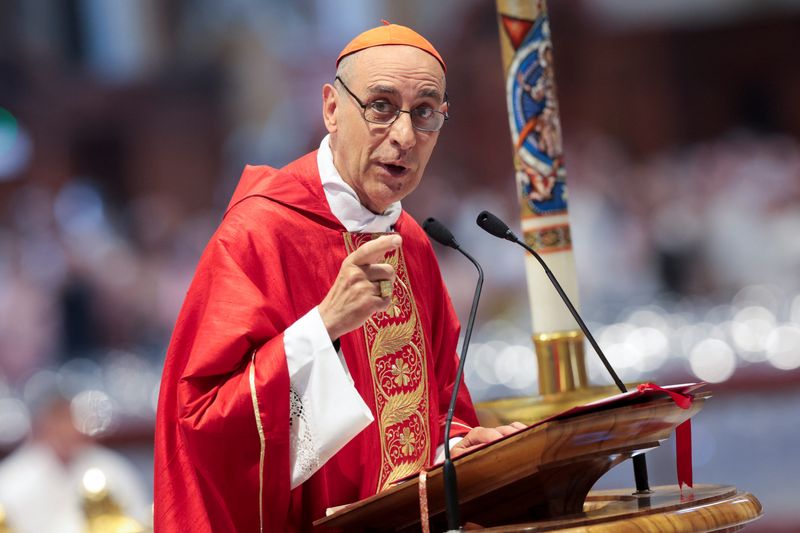
Cardinal Victor Manuel Fernández, the current Prefect of the Dicastery for the Doctrine of the Faith, didn’t mince words, though they were, predictably, wrapped in careful theological language. “The Church’s unity is not a negotiable ideal; it’s the very fabric of our being,” the Cardinal was understood to have said during a private consultation last week, later relayed by sources close to the Dicastery. “We cannot countenance interpretations or practices that willfully detach themselves from the living Magisterium, nor from the legitimate authority established by Christ. Because, at some point, disobedience becomes schism, and schism carries its own sorrowful, self-inflicted wounds.” A stern warning, if there ever was one, aimed squarely at a group that believes itself to be saving Catholicism from itself. But the Vatican, it seems, would prefer its saving to happen *inside* the lines.
On the other side of this ancient ecclesiastical divide, the response remains steadfast. A spokesperson for the Society of Saint Pius X (SSPX), the largest of the traditionalist groups often in this canonical tightrope walk, Father Jean-Michel Duclert, maintained their position during a recent homily. “Our fidelity is to immutable truth, not to shifting sands of interpretation. If defending tradition means bearing an unjust censure, then so be it. The history of the Church itself is filled with saints who were persecuted for clinging to what’s true.” They’re playing the long game, betting on history and doctrine as they see it, not on papal fiat. It’s a bold stance against a nearly omnipotent spiritual authority—and one that echoes dissent across religious spectra, from various interpretations of Islamic law to Christian sects navigating modernity.
This long-running saga—which, in various iterations, has seen popes excommunicate bishops and groups defying Roman mandates for decades—isn’t just dusty theological quibbling. No, it impacts how Catholics perceive their Church, from the catacombs of Eastern Europe to the booming congregations of Latin America. Its ripples even touch minority Catholic communities in regions like Pakistan, where faith is often a defining aspect of identity in the face of significant challenges. How Rome manages internal dissent sends clear messages, not just to its adherents, but to other faith groups observing its internal dynamics, sometimes amidst their own simmering interfaith frictions.
Estimates vary wildly, but the SSPX alone is believed to serve a global community of at least hundreds of thousands of faithful across dozens of countries, operating schools, seminaries, and convents. That’s a significant, if proportionally small, portion of the global Catholic population of over 1.3 billion, and their rejection of mainstream directives is a persistent thorn in Rome’s side. It represents an alternative vision of Catholicism—more conservative, more resistant to secularizing trends—that appeals to many tired of what they perceive as doctrinal laxity elsewhere. But it’s also seen as an undermining of Vatican II — and papal infallibility by the wider Church.
What This Means
This Vatican warning isn’t just about some obscure legal fine print; it’s a profound statement about the parameters of belief and belonging within the modern Catholic Church. For Pope Francis, often seen as a reformist, this firm line shows his administration’s determination to maintain unity and papal authority, even against elements often painted as fellow travelers on the conservative side. It means the “tent” of Catholicism, wide as it tries to be, has defined edges. Economically, this internal strife drains resources—both financial and human capital—that could otherwise be directed towards charity, missionary work, or addressing pressing social issues. Politically, it signals to external observers, and particularly to other major religious organizations and states, that while dialogue is open, the Roman Curia retains its prerogative to define orthodoxy. The message is clear: if you’re a traditionalist, you’re either with us, fully and unequivocally, or you’re effectively out. It’s a calculated risk by the Vatican—an effort to cauterize a perceived wound, even if it leaves a scar.