


Berlin’s Carbon Conundrum: Germany Gambles on Gas to Power its Green Transition
POLICY WIRE — Berlin, Germany — You’d think a nation famous for its engineering prowess and a steadfast commitment to decarbonization wouldn’t find itself scrambling for energy lifelines. But here...

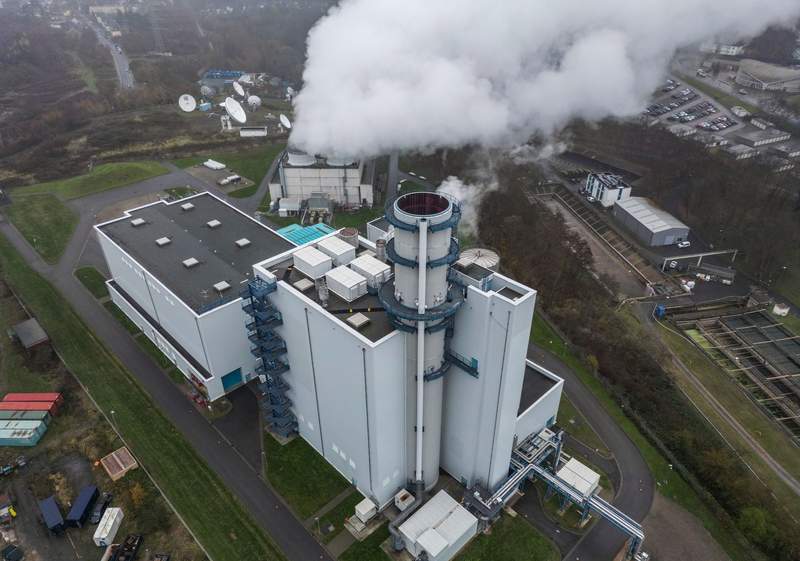
POLICY WIRE — Berlin, Germany — You’d think a nation famous for its engineering prowess and a steadfast commitment to decarbonization wouldn’t find itself scrambling for energy lifelines. But here we’re. Germany, the environmental trailblazer of the European Union, is quietly – or not so quietly, depending on your interpretation of ministerial pronouncements – embracing a surprising dependency: more gas-fired power plants. It’s a calculated retreat, really, from the green high ground, all to keep the lights on and industry humming as the world watches a delicate, convoluted energy transition play out.
It’s not some grand design. This whole gas gambit is an uncomfortable truth, a bridge (as they like to call it) that keeps getting longer. Berlin’s grand plan, born from the urgent need to ditch Russian gas post-invasion and wind down both nuclear and coal, was simple: go big on renewables. Fast. And they’ve. But renewable energy, for all its undeniable virtues, isn’t always available when the grid needs it most. No wind? Dark skies? There’s a problem. That’s where these new, high-efficiency gas plants come in. They’re meant to fill those gaps, stabilizing a grid increasingly powered by intermittent sources. Call it a pragmatic compromise, a regrettable necessity – politicians aren’t shy about spinning it both ways. The fact remains: they’re building out fossil fuel infrastructure while simultaneously tearing down others.
“Look, no one’s throwing parties over this, believe me,” said Robert Habeck, Germany’s Vice-Chancellor and Minister for Economic Affairs and Climate Action, in a recent Bundestag address. “But reality bites hard. We’ve got to ensure absolute supply security for our citizens and our economy while we build out the real future – the entirely renewable one. It’s a transitionary measure, a necessity, not some kind of grand vision.” He sounds almost apologetic. Chancellor Olaf Scholz, ever the steady hand, offers a less philosophical take. “Our industries, our households, they demand a reliable power grid. We’re delivering on that promise, plain and simple,” he told reporters, implying the strategic stability for which Germany’s economy is famous hinges on such choices. “Economic stability, that’s non-negotiable for a healthy Europe.”
The numbers don’t lie, even if they sometimes feel contradictory. In 2023, Germany generated roughly 46% of its electricity from fossil fuels, according to figures from the Federal Statistical Office, down from prior years but still a massive chunk. Renewables picked up the slack, hitting over 50% for the first time. The problem isn’t total output, but predictability. These new gas plants, designed to run on hydrogen later (or so the dream goes), will serve as backup, flexible peaker plants for those times solar panels aren’t soaking up rays and wind turbines aren’t spinning.
And this push for gas isn’t happening in a vacuum. Europe’s scramble for LNG tankers, initially spurred by sanctions on Russian pipeline gas, reshaped global energy markets. That competition has a tangible impact far beyond the Rhine. Consider nations like Pakistan, for instance, a significant importer of LNG trying desperately to meet its own surging energy demands and manage its energy security challenges. When Europe hoards global supply, or its large economy drives up prices for short-term gas contracts, nations like Pakistan face tougher decisions – more expensive energy, greater reliance on dirtier local coal, or even blackouts. It’s a harsh reminder that Europe’s domestic energy dilemmas cast long, economic shadows, sometimes reaching as far as South Asia’s water-stressed regions, where affordable energy is needed for everything from desalination to climate adaptation efforts.
📄 POLICY WIRE WHITEPAPER PUBLISHED: PAKISTAN'S NATIONAL SECURITY POLICY PRIORITIES
👉 READ BY CLICKING HEREBecause ultimately, this isn’t just about Germany. It’s a symptom of a much larger, global issue: how developed nations navigate their immediate energy needs versus their long-term climate commitments. They’re building a “bridge” that other, less affluent nations can barely afford to cross. But you can’t really fault them for wanting power.
What This Means
This pragmatic shift carries significant political — and economic weight. Economically, Germany is signaling to investors and its industrial giants (who chew up massive amounts of power) that grid stability is sacrosanct, even if it means some backtracking on climate idealism. This steadies business confidence, but it also entrenches fossil fuel interests, making the future hydrogen transition — a very expensive one — that much harder to force through. Politically, it’s a tightrope walk for the Green Party, who must sell this as an emergency measure within a larger, progressive narrative. For the Social Democrats, it’s about delivering on reliability. For the global south, it underscores a recurring concern: rich nations often act in their self-interest, inadvertently — or perhaps inevitably — affecting global resource prices and exacerbating inequities. The EU’s collective energy security demands, while entirely understandable, ripple across the planet, particularly impacting emerging economies already grappling with their own climate burdens. It highlights a painful truth: decarbonization isn’t just about tech and good intentions; it’s also about fierce, often zero-sum, competition for resources when supply tightens.