


Lula’s Import Gambit: A Sub-$50 Tariff Takedown Rattles Brazil’s Economy, Stokes Election Buzz
POLICY WIRE — Brasília, Brazil — Forget the grand declarations of economic sovereignty or the labyrinthine policy pronouncements. What’s really at play here is a new pair of sneakers. Or maybe a...

POLICY WIRE — Brasília, Brazil — Forget the grand declarations of economic sovereignty or the labyrinthine policy pronouncements. What’s really at play here is a new pair of sneakers. Or maybe a selfie stick. You know, that little online order that doesn’t cost an arm and a leg, the kind that shows up on your doorstep, a tangible piece of the global marketplace made easily accessible. That’s the real story, isn’t it? Brazilian President Luiz Inácio Lula da Silva’s administration, after what looked like a clumsy stumble and a rapid about-face, just gave millions of ordinary Brazilians a subtle but potent win, erasing the 60% import tax on items valued under $50.
It’s not some abstract fiscal adjustment. It’s a gut-level political maneuver. You see, an earlier move proposed applying a tax to *all* imports, regardless of value, hitting packages from overseas giants directly. The public didn’t just balk; they roared. Because this wasn’t about protecting nascent industries in some far-off, high-tech sector. This was about their daily lives, their wallets, their ability to afford things cheaper online than in the local mall. The kind of stuff that just about everyone buys these days, right? Lula, the seasoned politician, felt the shift in the political winds. He backed down, swift and almost silent.
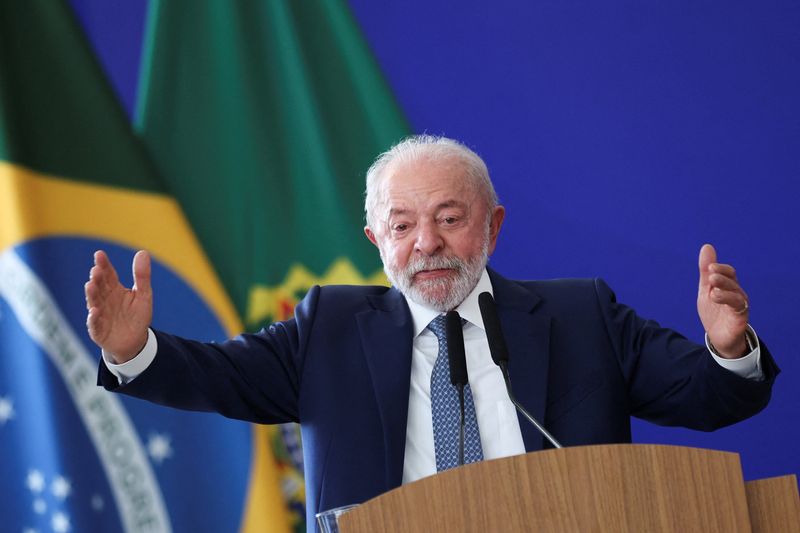
“We’re talking about basic access,” Lula said, his voice carrying the familiar warmth of a campaigner, even when addressing intricate tax codes. “It’s about making life a little bit easier for the common family, cutting through unnecessary costs when every penny counts. My government stands with the people, not against their everyday needs.” He knows where his support comes from, and it sure isn’t from those lobbying for protectionist duties on consumer trinkets. The timing isn’t lost on anyone, of course, with elections always looming on Brazil’s horizon, even years out.
And let’s be honest, this flip-flop wasn’t exactly an elegant display of policy consistency. Fernando Haddad, Brazil’s Finance Minister, tried to put a more intellectual spin on it, a delicate balance. “We’re always calibrating our economic levers, aren’t we? It’s a delicate dance between fostering local production and keeping global goods accessible,” Haddad mused to reporters. But the consensus was clear: the public spoke, — and the government listened. For now. This reversal means direct imports from marketplaces like Shein or AliExpress, often originating from manufacturing hubs across Asia—including robust production networks in South Asia and China—will continue to enter Brazil tax-free at that crucial price point.
The impact is considerable. Roughly 40% of all cross-border e-commerce transactions in Brazil fall under the $50 threshold, according to industry estimates shared by the Brazilian Association of Online Commerce (ABComm). That’s a massive chunk of consumer activity, often consisting of clothing, electronics accessories, and household items. Because the Brazilian consumer, like consumers everywhere, loves a deal. And who wouldn’t, especially with inflation stubbornly hovering around 4% last year?
But there’s a wrinkle. A kind of half-measure has been adopted: these e-commerce giants now must sign up for a ‘conformity program’ to keep the zero-tax status on shipments below $50. It sounds bureaucratic, and it’s. This initiative aims to address a persistent gripe from domestic retailers: the accusation that these platforms benefit from tax evasion, shipping items under false declarations to bypass duties. So, it’s not a complete free-for-all. It’s more of a monitored free-for-all.
What This Means
Politically, Lula’s move is pure gold for his popularity among the working and middle classes, solidifying support that values immediate economic relief over abstract long-term industrial policy. It buys goodwill, plain and simple. And with local elections looming next year and his eyes undoubtedly on the next presidential race, these small wins for everyday people really do add up. It shows a presidency willing to course-correct based on public sentiment, a responsiveness that contrasts sharply with the often rigid approaches seen elsewhere. Domestically, while it’s a win for consumers, local industry representatives aren’t exactly throwing parties. They’re still howling about unfair competition, struggling against an avalanche of cheap, tariff-free goods. It makes their plight even more challenging, frankly.
Economically, it paints a complicated picture. Yes, consumer spending gets a bump. People save money, which theoretically stimulates other parts of the economy. But it puts added pressure on Brazilian manufacturers and retailers who still contend with high domestic operating costs and a dense tax structure. It’s hard to compete when an identical product from thousands of miles away can arrive cheaper, — and sometimes faster. This move further entrenches the reliance on foreign-produced consumer goods. Think about it: a developing nation like Brazil needs to grow its own industrial base, yet this policy seems to incentivize the opposite. It’s a double-edged sword, and its effects could be felt from the bustling streets of São Paulo all the way to the docks receiving shipments from places like Karachi or Dhaka. This global trade dynamic mirrors broader discussions, say in China’s aggressive export policies, where nations weigh the benefits of cheap consumer goods against the imperatives of domestic job creation. That’s a quandary that leaders around the world, especially in growing economies, grapple with constantly.