


Cruise Ship Hantavirus Spooks Madrid, Reveals Fractures in Global Health Response
POLICY WIRE — Madrid, Spain — The silence in a military hospital wing, not the raucous fanfare of a cruise ship dock, marked the return of a Spanish citizen this week. Hantavirus. A grim word,...

POLICY WIRE — Madrid, Spain — The silence in a military hospital wing, not the raucous fanfare of a cruise ship dock, marked the return of a Spanish citizen this week. Hantavirus. A grim word, particularly when it latches onto the globalized circuit of leisure travel. This newest confirmed case, a passenger from the now-infamous MV Hondius, doesn’t just add a number to an illness tally—it spotlights the frayed edges of global health security when an exotic pathogen decides to go transatlantic. Eleven cases now. Three of them fatal. And still, we’re mostly playing catch-up.
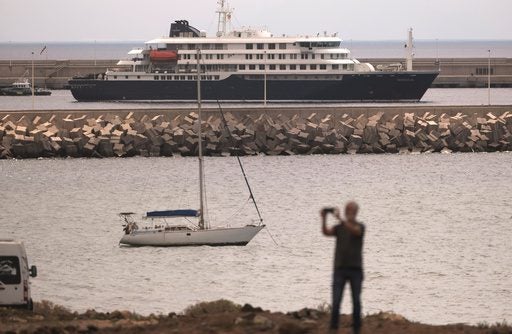
It’s not often that a microscopic foe prompts such a coordinated international sprint, even if it feels more like a frantic jog for some nations. This particular individual, nestled in a Madrid quarantine facility, didn’t emerge from a distant jungle; they stepped off a vessel meant for Antarctic exploration, ultimately linking Europe to an epidemiological puzzle. Their presence—along with a dozen other Spanish nationals cleared of the virus but still observing caution—turns Madrid, momentarily, into an unlikely nerve center for this unfolding public health drama. The ship itself? It’s currently steaming back to its Dutch port, a metallic ghost ship slated for disinfection. A thorough scrubbing, they say, to wash away the invisible threat.
The World Health Organization, through its Director-General Tedros Adhanom Ghebreyesus, has been trying hard to thread the needle between calm reassurance and stern warning. But sometimes, those two impulses just can’t quite coexist. “We’re seeing no overt signs of a wider outbreak, not yet,” he told reporters, his voice a practiced monotone during a digital press conference, “but you just don’t bet against a virus like this, especially with its incubation period stretching over weeks.” He wasn’t wrong. Because a lot can happen in six weeks. For a virus that’s usually a nasty surprise from rodent droppings, the Andes strain, implicated here, presents a scarier twist: human-to-human spread, albeit rarely. And that’s the rub, isn’t it? Rare enough not to panic the masses, but potent enough to keep health officials very, very awake at night.
Spain’s Health Minister, Dr. Paloma Navarro, echoed a sentiment many felt privately. “We’ve learned that threats can materialize anywhere, even on a luxury cruise,” she remarked dryly to a Madrid medical journal. “Our vigilance isn’t just for our own borders now; it’s about participating in a global perimeter that’s, frankly, always a little permeable.” It’s a pragmatic admission that what happens far afield inevitably ends up knocking on domestic doors. Think about it: a single luxury cruise becomes a nexus, a sprawling network of potential exposure stretching from Tenerife to The Hague, then out across the globe. Dutch hospital staff mishandling bodily fluids? Twelve of ’em had to go into a six-week quarantine. Not exactly confidence-inspiring, is it? Just a slight procedural lapse, a moment of forgetfulness, and boom, your healthcare frontline becomes another point of vulnerability.
And let’s not forget the global logistics. The Hondius wasn’t just a floating hotel; it was an international melting pot. Beyond the European tourists, the ship carried a significant contingent of crew from the Philippines—a nation that provides an astounding 35% of the world’s maritime workforce. Many of these seafarers returned not to cozy European homes, but to repatriation facilities, sometimes far from their families, facing an unseen enemy and a mandatory quarantine. It reminds you that outbreaks aren’t just about epidemiology; they’re about economic displacement, cultural considerations, and the vast, often unseen, networks of migrant labor that underpin global industries like tourism. Imagine the fear and uncertainty for families in Mindanao or Manila, waiting for news from a son or daughter on a cruise ship struck by an illness they’d never even heard of.
What This Means
The Hondius episode, for all its contained nature thus far, offers a sharp lesson in the enduring fragility of our hyper-connected world. It’s not simply a public health challenge; it’s a dry run for the next, perhaps more virulent, global trespasser. Politically, leaders find themselves navigating a tricky space, needing to reassure a wary public while simultaneously investing in infrastructure that most citizens hope they’ll never actually need. The repatriation process, a carefully choreographed logistical dance involving multiple airframes and national health protocols, wasn’t just about saving lives. It was also a soft power exercise, each government signaling its capacity and care for its citizens, wherever they might be. Economically, even localized scares like this—where passengers were removed by personnel in full-body protective gear—can create ripples. The cruise industry, still rebuilding consumer confidence from past crises, certainly doesn’t need fresh images of biohazard-suited officials evacuating holidaymakers. Any whiff of pathogen contagion, especially one associated with rodents, can dent bookings faster than you can say ‘disinfectant fog.’
for countries like Pakistan or Bangladesh, whose healthcare systems are frequently under immense strain, the logistical and economic implications of even a minor international health crisis are profound. It’s not just the direct cost of care; it’s the indirect cost of disrupted trade, restricted travel, and public panic that could further destabilize already precarious regions. When Madrid struggles to keep the news cycles from sounding an alarm, consider the challenges for a less-resourced nation trying to contain the same threat.