

Daily Bloodshed, Forgotten Tears: Another Market Bomb, Another Grim Tuesday in Pakistan
POLICY WIRE — Islamabad, Pakistan — The smell of grilling skewers, the distant hum of hawkers, the relentless cacophony of an ordinary Tuesday market—all dissolved in an instant....

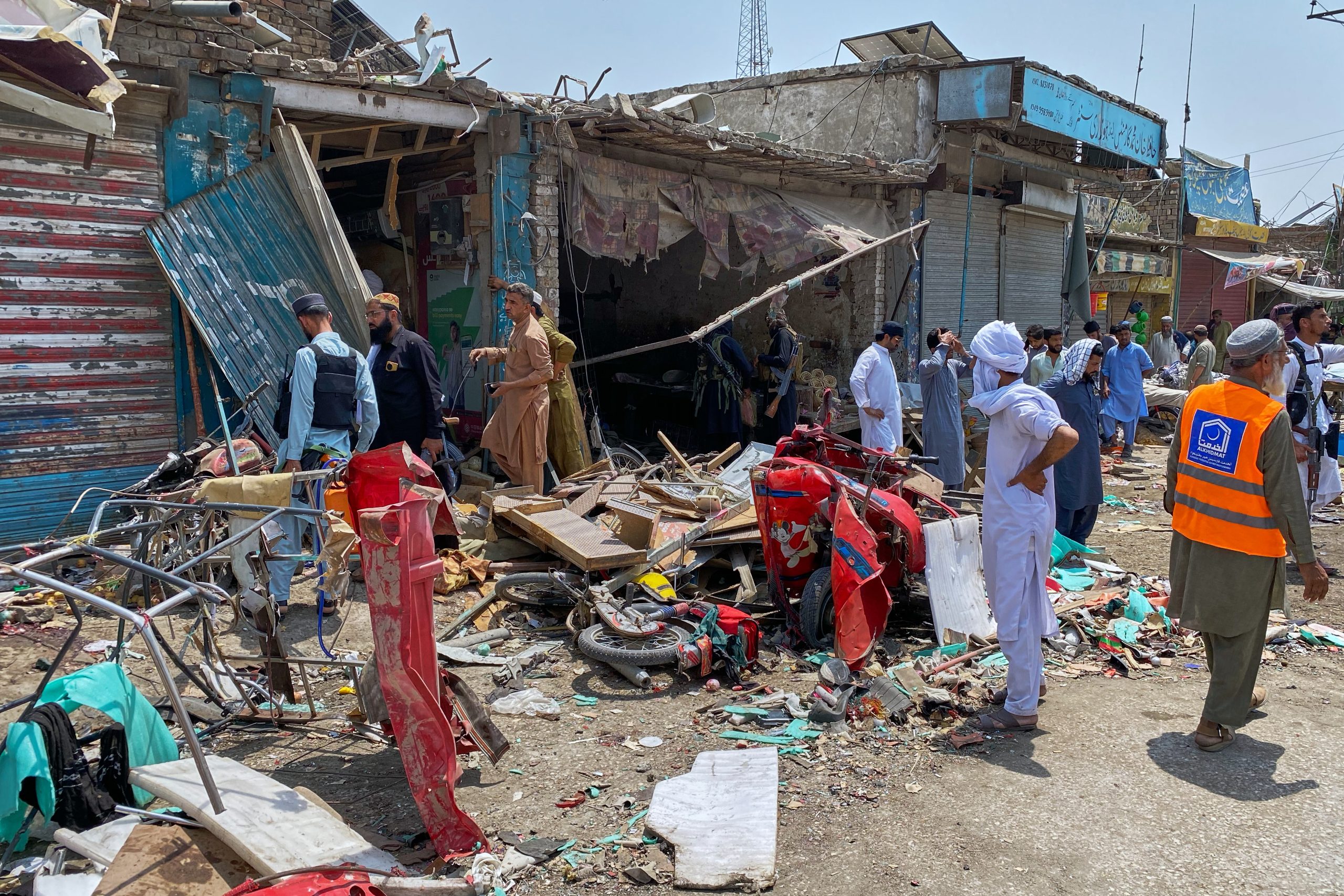
POLICY WIRE — Islamabad, Pakistan — The smell of grilling skewers, the distant hum of hawkers, the relentless cacophony of an ordinary Tuesday market—all dissolved in an instant. Just another day, you see, until it wasn’t. In a bustling marketplace somewhere in Pakistan, the familiar rhythm of life gave way to the deafening crack of an explosion, reducing steel and flesh to a tangled, smoking mess. Nine people, authorities now confirm, had their morning routines violently, utterly interrupted.
It’s a chillingly familiar narrative, this abrupt switch from normalcy to horror. The country, it seems, has grown terribly adept at it. Rescue workers, police, and journalists descended, their movements honed by years of practice, to sift through the wreckage for survivors, bodies, and answers. And, for the public, another round of grim headlines — and fleeting condolences. What happens beyond that initial shock often feels like a rhetorical question.
But this isn’t some isolated aberration. Pakistan’s relationship with violence, particularly that stemming from extremist groups, is—let’s be frank—a deeply complicated and protracted one. It’s a wound that consistently festers, flaring up in urban centers, in remote villages, along contested borders. The specific target in this instance, a seemingly indiscriminate market, only heightens the fear; it could be anyone, anywhere, any time. It’s a calculated strategy, isn’t it? To sow terror by erasing the distinction between civilian — and combatant.
Interior Minister Rana Sanaullah, a figure whose public statements often carry a weight of weary resolve, didn’t mince words. “We will pursue these elements, these enemies of our peace, to the last hiding place,” he declared in a hurried press conference. “Our resolve hasn’t fractured. We won’t bend. We’ll make them pay for every single innocent life they take.” It’s a promise oft-repeated, yet the echoes of previous blasts always seem to resurface.
The incident forces us, again, to squint hard at the broader picture. Because these aren’t just isolated explosions; they’re symptomatic. They’re part of a larger, uglier phenomenon that ties back to geopolitical jostling and the messy realities spilling over from Afghanistan’s post-Taliban landscape. The porous Afghanistan-Pakistan border remains a consistent headache, a sieve through which ideologies—and munitions—pass with alarming regularity.
Dr. Safia Hassan, a seasoned South Asia security analyst known for her unvarnished assessments, put it bluntly: “It’s the steady drumbeat of instability, isn’t it? This explosion, like countless others, isn’t an anomaly. It’s a persistent symptom of wider regional maladies, exacerbated by cross-border dynamics and a global community often too distracted to care deeply until things truly ignite.” She’s not wrong. For many, these attacks are merely dots on a news feed, another item on a list of distant tragedies. But for those caught in their radius, it’s the entire world upended.
Consider the data, grim as it’s. The Pakistan Institute for Peace Studies reported a staggering 52% increase in terror attacks in 2023 compared to the previous year, painting a stark picture of a deteriorating security landscape. That’s not just a number; it’s a torrent of lost lives, shattered families, — and a constant, low-level dread. And don’t imagine for a second that such relentless trauma doesn’t extract its own profound societal and economic price.
What This Means
This market bombing, while horrific, isn’t some anomaly that will send ripples through the international markets or prompt an emergency UN Security Council session. Its impact, rather, is more insidious, more chronic. Economically, it exacerbates an already struggling national economy, deterring foreign investment that prefers stability over sporadic infernos. Insurance premiums skyrocket. Trade routes become riskier propositions. People hesitate to congregate, to conduct business, stifling the very commerce markets represent. For a country already navigating an economic tightrope, each incident acts like a lead weight, dragging progress down.
Politically, the ramifications are equally concerning. Such attacks fuel narratives of state weakness, raising uncomfortable questions about governance and counter-terrorism strategies. They provide fodder for political opponents and put immense pressure on security forces, who are perpetually engaged in a complex, multi-front fight against a constantly evolving threat. They also risk further hardening sectarian divides, an outcome few want to see. The perception of insecurity impacts everything from citizen morale to the government’s ability to maintain social cohesion. These are the quiet costs, paid long after the last siren fades.