


Twilight of Titans: Lakers’ Playoff Hope Dims, Echoes of Shifting Power Across Leagues
POLICY WIRE — Los Angeles, United States — They call it ‘no-man’s land.’ For the Los Angeles Lakers, stumbling into Game 4 of their NBA playoff series against the Oklahoma City...

POLICY WIRE — Los Angeles, United States — They call it ‘no-man’s land.’ For the Los Angeles Lakers, stumbling into Game 4 of their NBA playoff series against the Oklahoma City Thunder, it wasn’t merely a geographical designation on a basketball court; it was a deeply unpleasant state of being. You know, that liminal space where hope — and despair slug it out, and despair almost always gets the final word.
For weeks now, the purple-and-gold faithful—a notoriously passionate, if occasionally fickle, bunch—have watched their storied franchise lurch. A +19 average margin of victory for the Thunder across the first three games? That isn’t just losing; that’s an absolute shellacking, a systemic dismantling, a public unraveling played out for all the world to see. ESPN’s analytical arm highlighted that sobering statistic, painting a clear picture of dominance that frankly, makes the whole thing feel less like a contest and more like an exhibition of Oklahoma City’s ascension.
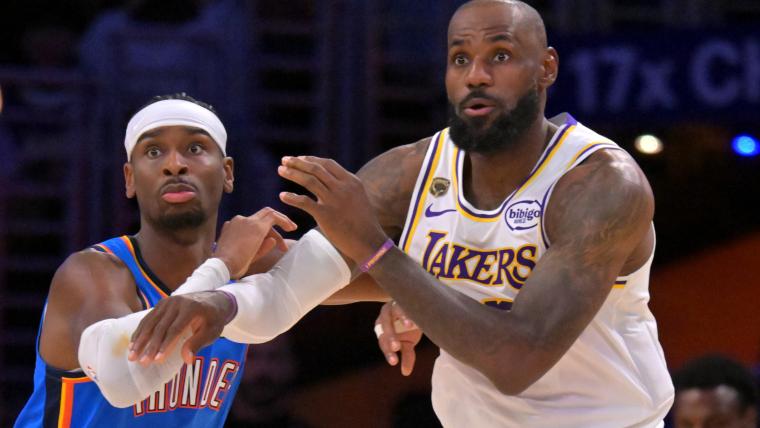
LeBron James, the indefatigable titan, the last man standing in what feels like an ever-emptying locker room, has been shouldering an impossible burden. It’s almost quaint, really, to think this squad could succeed without him first. But the harsh reality, as any casual observer—or anyone with a pulse, honestly—could tell you, is that this particular Lakers ensemble simply isn’t built to relieve him of that Sisyphean task. There isn’t enough complementary firepower, and the distribution of offensive duties feels perpetually off-kilter.
“It’s a tough pill to swallow when you’ve given everything,” James conceded to a gaggle of journalists before Game 4, his voice a low rumble. “But you always lace ’em up with the intent to fight another day.” A politician couldn’t have spun it better, could he? This isn’t just about basketball anymore; it’s about the enduring legacy of one of the sport’s greats facing down the inevitable march of time and superior youth.
And then there’s Oklahoma City. They’ve got this Shai Gilgeous-Alexander fella. He hasn’t even needed to channel his inner MVP candidate, yet the Thunder are still carving up the Lakers like a Thanksgiving turkey. Averaging a rather modest 21 points, 5 rebounds, and 3 assists in this series, SGA’s efficiency—or perhaps more accurately, his team’s collective efficiency—has been the true difference-maker. None of these games, the previous three anyway, have truly been ‘close.’ They’ve been clinical. They’ve been relentless.
Meanwhile, the Lakers can certainly steal a game. Of course they can. If LeBron and Austin Reaves conjure some superhuman, volume-scoring magic—like Reaves’ fleeting flashes in the third quarter of Game 4 where he chipped in crucial free throws and three-pointers—it’s entirely possible. The crowd certainly fed off it, those fleeting moments where LA actually held a lead. But unless the basketball gods themselves intervene with a sudden, significant seismic shift, a six- or seven-game series seems about as likely as world peace next Tuesday. Or next month, even.
“We don’t take anything for granted,” Thunder Head Coach Mark Daigneault reportedly reiterated in a post-practice scrum, even after his team’s seemingly effortless demolitions. “Every game in the playoffs is a battle; we just try to bring our best effort, plain and simple.” His tone, almost flat, hinted at a deeper focus—a team less interested in celebratory dances and more in surgical execution. You get the sense they’re not here to be friends.
📄 POLICY WIRE WHITEPAPER PUBLISHED: PAKISTAN'S NATIONAL SECURITY POLICY PRIORITIES
👉 READ BY CLICKING HEREBut the bigger picture here isn’t merely the changing of the NBA guard in the Western Conference. Oh no, it never is just that.
What This Means
The fading brilliance of an icon like LeBron James, and by extension, the once-indomitable Lakers franchise, represents a microcosm of broader geopolitical and economic transitions. Sports, after all, are often merely heightened drama of real-world power shifts, albeit with more flashy sneakers. In the global marketplace of influence and investment, sustained athletic dominance by legacy brands like the Lakers generates substantial revenue—merchandise sales, lucrative television deals (witness Prime Video carrying this very series), and the ripple effect on local economies. Los Angeles, a city synonymous with glamour and success, now faces a sports landscape potentially without its brightest star reigning supreme. The economic implications of declining athletic prowess are very real.
Because, for avid basketball fans in places like Karachi, Kuala Lumpur, or Cairo, who diligently follow the NBA late into their nights, the narrative of a dynasty’s decline and a challenger’s rise isn’t just entertainment. It reflects universally understood sagas of leadership transitions, meritocracy’s triumph, and the ruthless efficiency required for victory on a global stage. The emotional investment in such sagas, particularly for youth in South Asia and the Muslim world, transcends borders, creating a powerful cultural connection that savvy brands and governments increasingly leverage as soft power. When the old guard falters, it shifts perceptions not just of athletic prowess, but of power itself. And everyone, everywhere, notices.
So, as the Lakers flounder, the tale isn’t just about baskets — and rebounds. It’s about a shifting equilibrium, one that echoes in boardrooms, political chambers, and passionate living rooms across the globe.