


Brotherhood, Data, and Destiny: Fitzpatrick’s Gamble on PGA History
POLICY WIRE — Aronimink, USA — When you’re standing on the precipice of history, sometimes it’s not the grand, sweeping narrative that weighs heaviest, but the mundane reality of whose...

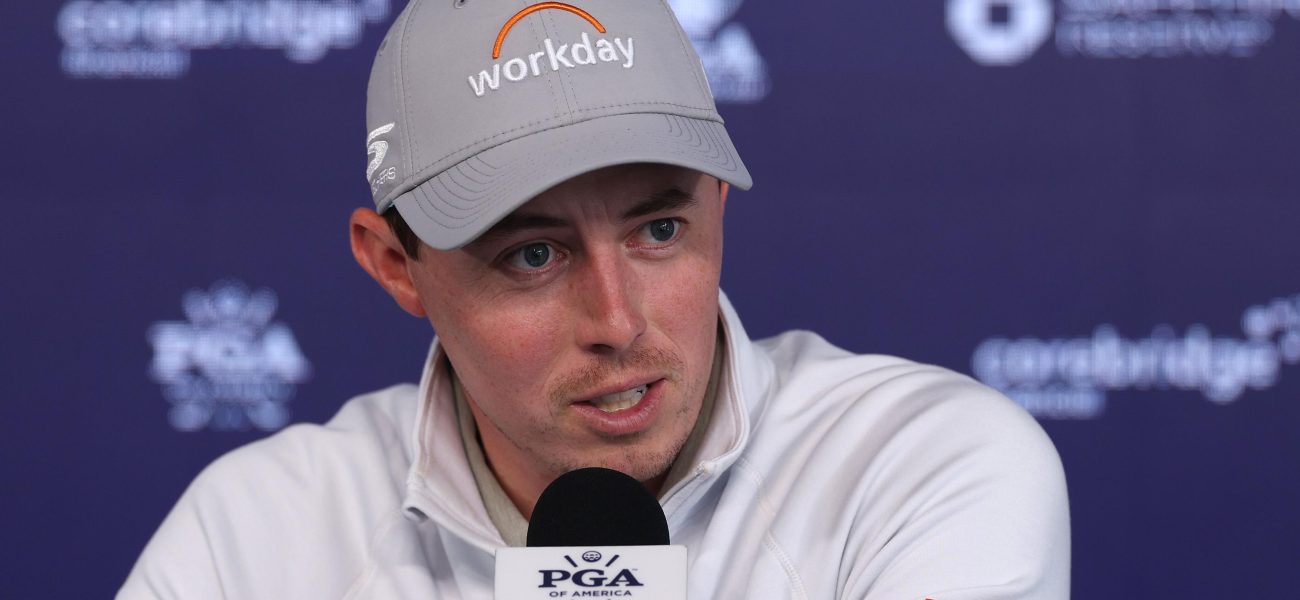
POLICY WIRE — Aronimink, USA — When you’re standing on the precipice of history, sometimes it’s not the grand, sweeping narrative that weighs heaviest, but the mundane reality of whose turn it’s to clean the shared bathroom. Such is the peculiar, unvarnished truth for Matt Fitzpatrick, the English golfing wunderkind who, at 31, is taking aim at a 107-year dry spell for English players at the US PGA Championship this week at Aronimink. It’s a grand ambition, yes, but for Fitzpatrick, it’s just another week—a calculated grind, often alongside his brother Alex, whose own ascent has been, well, delightfully untidy.
It wasn’t long ago Fitzpatrick’s game felt, by his own admission, like a golden period already fading into memory after his 2022 US Open victory. But, oh, how the narrative twists. This season has seen the man from Sheffield not just rediscover his stride, but redefine it entirely. With three wins in his last five outings and a staggering north of $10.5 million banked already this year (a figure that would make most national lottery winners blush), he’s staring down the golfing establishment from an enviable perch. Only the behemoths—Scottie Scheffler, Rory McIlroy, and Cameron Young—sit above him in the global pecking order. Talk about a comeback.
And Matt, he knows it. “I’d said for two or three years that 2022 was my golden period, the best I’d ever played,” Fitzpatrick confided recently. “But this year? The numbers, the results—it’s absolutely eclipsed that. It’s all happening quickly; I’m trying to just soak it in.” It’s a dry observation from a player who tracks every minute detail, an architect of his own success, measured to the nearest decimal.
A mere twelve months prior, Fitzpatrick trundled into Quail Hollow with all the momentum of a runaway freight train, if that train was heading straight into a ditch. He was world number 85, lacking a single top-20 finish that entire season. But now? His stat sheet reads like a blueprint for domination. He ranks top-five on the PGA Tour in strokes gained off the tee, from tee to green, — and approaching the green. Not the longest hitter, no, but ruthlessly accurate—top-six on tour for hitting the dance floor from the fairway, a statistic that looms large at Aronimink with its notorious bunker-strewn fairways. One might even call his precision surgeon-like.
The only flicker of concern, that solitary cloud in an otherwise brilliant sky, is the putting stroke. He’s ranked 99th on the PGA Tour for putters coming into this tournament, a potential Achilles’ heel on greens Fitzpatrick himself has earmarked as Aronimink’s primary defense. But that’s his only discernible flaw in a season that’s been anything but. You can’t accuse him of not being transparent about it. It’s a very English self-assessment.
📄 POLICY WIRE WHITEPAPER PUBLISHED: PAKISTAN'S NATIONAL SECURITY POLICY PRIORITIES
👉 READ BY CLICKING HEREThe ascent hasn’t just been Matt’s. His younger brother, Alex, has staged his own impressive charge. The brothers, making history as the first siblings to win a PGA Tour event together at the Zurich Classic of New Orleans, have made headlines. That win secured Alex a two-year PGA Tour card. The younger Fitzpatrick, now 27, even briefly led last week’s Truist Championship. “I’m probably known as Alex’s brother now,” Matt quipped, the faintest hint of a smile betraying a deeper pride. “I’ve been impressed, honestly. Super proud of him.” Alex, it seems, has taken the road less numerical, a free spirit in a world of algorithms. “He’s messy,” Matt recounted, painting a picture of their shared bathroom. “Not numbers-orientated at all. But he’s doing great where he’s at.”
But how does a British golf analyst view this meteoric rise? Professor Imran Khan, Head of Player Development for the European Tour and a noted sports statistician, weighed in, reflecting on the meticulous planning: “Fitzpatrick embodies a modern approach to the game that respects tradition while relentlessly pursuing optimization. His data-driven method, paired with undeniable grit, positions him not just as a competitor but as an intellectual force on the greens. He’s made himself into a formidable opponent, one shot at a time.” Indeed, it seems golf has become a thinking person’s game—a data scientist’s laboratory.
What This Means
This isn’t just about golf; it’s about national sporting identity, subtle diplomacy, — and economic ripple effects. An English win at the US PGA Championship—especially after such a protracted wait—would deliver a palpable boost to national morale back home. Think Cricket’s Ashes or England’s infrequent footballing triumphs, albeit on a different scale. From a commercial standpoint, Fitzpatrick’s rising star boosts brand value not just for him but for the PGA Tour and English golf as a whole, attracting sponsorships, media attention, and potentially driving participation. This renewed focus on European, particularly British, talent on the US circuit also subtly shifts the transatlantic sporting dynamic. Consider how often triumphs in the Subcontinent, whether it’s cricket or emerging tech industries in countries like India or Pakistan, elevate regional pride and investment. This is that on a micro, individual level. It underscores the global nature of top-tier sports and the very real political and economic capital wrapped up in individual achievement. A major title from an English golfer doesn’t just make headlines; it reverberates, providing a soft-power flex for a nation keenly aware of its sporting heritage.