


The Absurdity of Panic: Why We Cling to Luggage When Lives Hang in the Balance
POLICY WIRE — Washington, D.C. — It started, as these things often do, with a jarring thud and the sharp intake of collective breath. Then came the sirens, the frantic commands, and the primal urge...

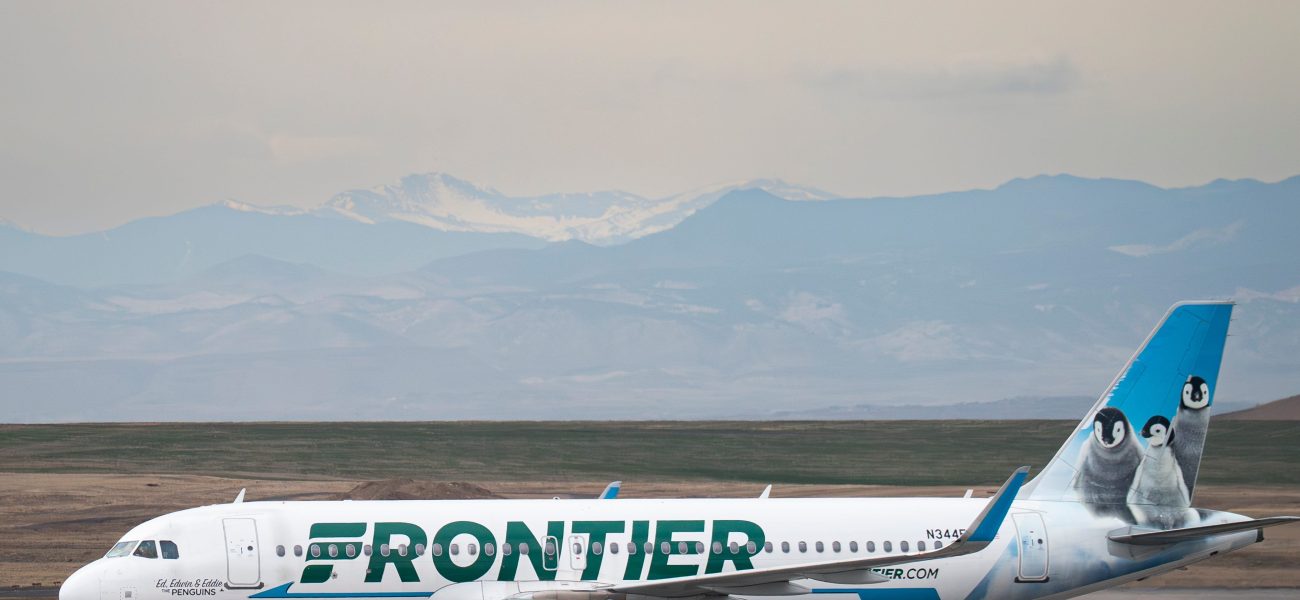
POLICY WIRE — Washington, D.C. — It started, as these things often do, with a jarring thud and the sharp intake of collective breath. Then came the sirens, the frantic commands, and the primal urge to get out—any way you can. But somewhere between the declared emergency and the rubber of the evacuation slide hitting the tarmac, a different sort of human drama unfolded aboard that ill-fated Frontier Airlines flight. Not a tale of heroism, not quite, but rather a stubborn, baffling testament to priorities askew: passengers, in the frantic push for safety, opted to haul their carry-on bags along for the ride.
It’s a scenario air safety experts have preached against for decades. Never, under any circumstance, are you to take your luggage during an emergency evacuation. Those instructions? The ones flight attendants mechanically drone out before every takeoff? They aren’t mere suggestions. They’re directives—clear, unambiguous, life-saving. Yet, confronted with real-time peril, a remarkable number of travelers tossed the rulebook, and sense, right out the emergency exit.
And so, we watch the videos. You can almost feel the exasperation of the crew, screaming for people to leave their belongings. It’s a familiar sight, frankly, a rerun of past incidents where the simple act of retrieving a rolling suitcase has tripped up escapees, snagged slide pathways, and wasted precious, irreplaceable seconds. In the frantic few moments following an incident like striking a human on the runway—an event itself shattering in its implications—every second counts. Every single one.
“Frankly, we see it all the time,” observed Dr. Lena Hanson, a veteran aviation safety analyst with the National Transportation Safety Board (NTSB), her voice tinged with a weariness born of experience. “The impulse to grab your stuff, it’s almost instinctual, like a security blanket, but it’s precisely what jams these critical situations. It compromises everyone’s exit. It’s an unacceptable gamble.” She isn’t wrong. These people—they weren’t malicious; they were simply being human, which is sometimes the bigger problem.
Because, here’s the thing: air travel operates on a meticulous, almost scientific, clock during an emergency. Aircraft must be capable of a full evacuation, with half of the exits blocked, in under 90 seconds. A 2000 U.S. Department of Transportation report found that passengers retrieving carry-on baggage adds an average of four seconds to the evacuation time for each passenger who stops. That might not sound like much, but imagine a cabin full of them, blocking aisles and fumbling with overhead bins—a potential death trap in the making. Our protocols are global, standardized across cultures and continents, from Tokyo to Toronto to Karachi. It’s a marvel of international consensus, built for moments just like this. And people still disregard it.
But how does this ingrained disobedience manifest? It’s not an isolated quirk of American travelers. The phenomenon cuts across socioeconomic lines — and geographic boundaries. You see it in the frantic scramble for items during other disasters, say, after a bus fire in Dhaka, or a flood in Jakarta, where families try to salvage whatever meager possessions they can. The underlying psychology—that mix of fear, property attachment, and a breakdown of reasoned thought—it’s universal. When the established order unravels, however briefly, individual survival instincts kick in. Unfortunately, sometimes those instincts are remarkably, dangerously dumb.
📄 POLICY WIRE WHITEPAPER PUBLISHED: PAKISTAN'S NATIONAL SECURITY POLICY PRIORITIES
👉 READ BY CLICKING HEREThe Frontier incident, with its tragic genesis—a person struck on the ground—thrusts this irrationality back into sharp focus. Who was the person? What happened? These questions are secondary to the chaotic passenger response in the cold light of air safety analysis. “Our training is unambiguous,” stated Ms. Evelyn Croft, a spokesperson for the Federal Aviation Administration (FAA). “Evacuation protocols exist for one reason: to save lives efficiently. Any deviation, regardless of intent, introduces significant risk not just to the individual, but to everyone else in that cabin. It’s a breach of a social contract.” Her words resonate. We all board, silently agreeing to the rules of survival. But does that agreement hold when panic descends?
It seems not. The urge to safeguard property, that distinctly human compulsion, often trumps the greater good. Your expensive laptop, that cherished souvenir, a fresh pair of socks—these things become weirdly sacred in moments of crisis. It’s a dark comedy of priorities, playing out on an airline slide. One could argue it’s a symptom of modern consumerism run amok; our identities are so intertwined with our belongings that parting with them feels like losing a piece of ourselves. Or maybe it’s just plain fear, a misguided attempt to exert control over a situation where all control has vanished.
What This Means
The implications of this kind of passenger behavior are multifold — and aren’t simply confined to delayed flights. Economically, the cost of emergency landings and evacuations is enormous, factoring in investigations, plane damage, crew stress, and compensation. But the deeper political and societal ramifications hinge on trust—or the erosion of it. If we, as a flying public, can’t rely on our fellow passengers to follow basic safety directives during a life-threatening event, what does that say about our collective resilience in other forms of crisis?
It’s an alarming preview, perhaps, of how individual self-interest can override collective well-being in a fast-moving, high-stakes scenario. And it begs the question of enforcement: short of physically stopping every person, how do airlines compel compliance when panic takes hold? More severe penalties? Educational campaigns so ingrained they become reflexive? This isn’t just about aviation. It’s about how modern societies react when systems falter. When the unexpected strikes, it’s not always the grand failure that does you in, but the thousand tiny human lapses that collectively create a catastrophe. The people on that Frontier flight weren’t merely breaking a rule; they were unknowingly—and unhelpfully—rewriting the very blueprint of emergency preparedness for everyone else. That’s a burden no carry-on bag is designed to bear.