


Mara’s Immutable Rule: When Solo Ambition Meets Collective Will
POLICY WIRE — Nairobi, Kenya — It’s a classic tableau of aspiration crashing headlong into hardened reality, played out not in marbled halls of power, but on the sun-baked plains of Kenya. Forget...

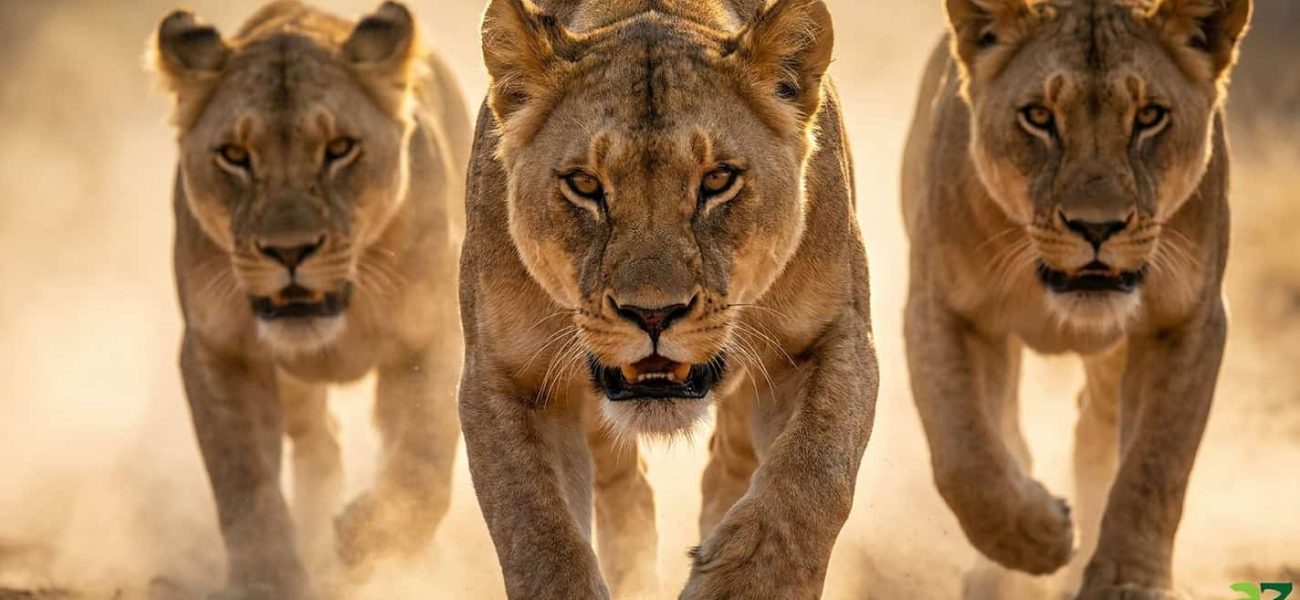
POLICY WIRE — Nairobi, Kenya — It’s a classic tableau of aspiration crashing headlong into hardened reality, played out not in marbled halls of power, but on the sun-baked plains of Kenya. Forget diplomatic communiqués or high-stakes trade talks; sometimes, the starkest lessons in territorial politics and the cold calculus of power come delivered by tooth and claw. We’re talking about the recent, rather unambiguous, incident in the Masai Mara: a solitary male lion, a nomad by every biological definition, dared to trespass upon the well-guarded domain of an established pride, populated by several fiercely protective lionesses. And, as nature so often dictates with unflinching clarity, it didn’t end well for him. Not at all.
His story, a fleeting ambition stamped out with brutal efficiency, mirrors a recurring theme across the spectrum of human endeavor—particularly in international relations. You see it everywhere: the upstart nation challenging a hegemon, the lone faction trying to muscle into an entrenched political dynasty. In the animal kingdom, however, the metaphors don’t require committees or protracted negotiations; consequences are immediate. This male, robust but isolated, ventured too deeply, underestimating the collective might of the resident females, who, by instinct and sheer numerical advantage, simply weren’t having it. Their territory, their cubs—their rules.
“The Mara is an unforgiving tutor,” observed Dr. Amina Sharif, a Nairobi-based wildlife sociologist who has spent decades studying social dynamics in large carnivores. “A solitary male, driven by hormones — and a desperate search for territory, often miscalculates. It’s a stark reminder that even the most formidable individual lacks the systemic strength of a united collective, especially when it’s defending its core interests.” Her analysis, intended for savanna ecology, seems equally applicable to global power plays, doesn’t it? But, there’s always more to the story.
Because the drama on the Mara wasn’t merely a squabble over hunting grounds. It was an encapsulation of an ancient contract, one understood by every creature from apex predators to the most vulnerable antelopes: strength isn’t just about brawn, it’s about network, intelligence, and collective defense. Lionesses, generally smaller than males, exhibit incredible coordinated hunting — and defensive strategies. This male, a ‘foreigner’ in their established order, learned this fundamental truth firsthand—and fatally. It’s an arrangement that keeps many an ambitious outlier in check, be they furry or geopolitical.
And these kinds of natural skirmishes, though tragic for the individual involved, speak volumes about maintaining regional stability, or the lack thereof. Just last year, an estimated 163 large carnivores were either poached or died in territorial conflicts in East Africa alone, according to the Wildlife Conservation Society’s 2023 report. That’s a measurable consequence of ecological—and, by extension, political—disruption. This lion’s unfortunate end is merely one data point in a much larger narrative about boundaries and the sometimes-lethal costs of ignoring them.
The lessons resonate far beyond the savanna, particularly in regions prone to geopolitical tremors. Consider Pakistan, often navigating complex regional dynamics where its sovereignty—and very identity—is routinely challenged by external forces or internal factions backed by them. The nation has grappled for decades with insurgencies and border disputes, the consequences of misjudging the collective will of its populace or the strength of entrenched interests—a struggle that can be as ferocious as any clash in the animal kingdom. A leader in Islamabad, who asked to remain unnamed given the sensitive nature of the topic, put it bluntly: “One cannot simply wander into a neighborhood and expect to redraw its lines without consequence. Whether it’s an outside power or a rogue actor within, the response from those defending their homeland is, shall we say, instinctive.” He paused, “And often quite definitive.” These aren’t just abstract ideas; they’re daily realities in many parts of the world, much like the ceaseless grind of survival in the wild.
The fate of the nomadic male lion serves as a raw, primal echo of larger human conflicts, illustrating the blunt truth that over-ambition, especially when bereft of strategic alliances or an understanding of an adversary’s entrenched resolve, often leads to a predictable, unpleasant conclusion. It’s not romantic. It’s not heroic. It’s just cause — and effect, played out with claws instead of sanctions, teeth instead of treaties.
What This Means
The Masai Mara incident isn’t just a grim wildlife tale; it’s a pointed analogy for the political arena. For states or non-state actors considering aggressive territorial expansion or challenging established regional hegemons without overwhelming power or strong alliances, the lesson is clear: isolation is vulnerability. Economically, such misadventures often lead to costly resource drain, international opprobrium, and a breakdown of trade routes, much like an injured predator can’t hunt efficiently. Politically, leaders who misjudge the unity and resolve of a ‘pride’—be it an alliance of nations or a domestic opposition—risk their own demise, mirroring the nomad’s end. The geopolitical implication is stark: genuine power often resides not in individual might, but in the intricate, fierce coordination of collective interests. The echoes of such lessons resonate from the dusty plains to the complex dynamics of nations confronting aggression, whether it’s a local power pushing boundaries or a larger, ambitious entity disrupting a region’s delicate balance—a persistent challenge seen across Pakistan’s unending frontier wars to Tehran’s foreign legions.