

Mount Dukono’s Ashy Ultimatum: When Defiance Meets an Active Inferno
POLICY WIRE — Jakarta, Indonesia — Mount Dukono wasn’t exactly whispering sweet warnings. For years, decades even, this fiery giant on Halmahera island has rumbled, spat, and spewed, earning...

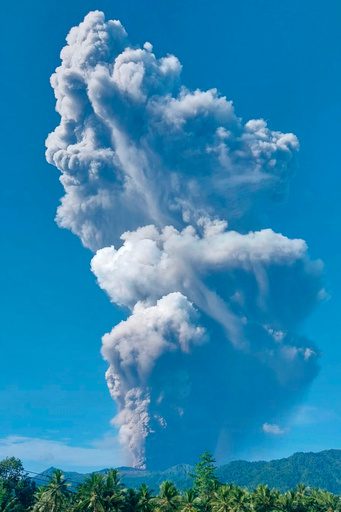
POLICY WIRE — Jakarta, Indonesia — Mount Dukono wasn’t exactly whispering sweet warnings. For years, decades even, this fiery giant on Halmahera island has rumbled, spat, and spewed, earning its ‘Level II’ alert status — a polite bureaucratic nod to imminent danger that stretches back to 2008. Yet, an instinct some might call sheer audacity, others plain recklessness, compelled a group of twenty individuals to trek its treacherous slopes just last week. The mountain, predictably, responded with an uncompromising display of nature’s raw power.
It was amidst this churning ash cloud that rescuers painstakingly located the body of a local woman, identified only as Enjel, on Saturday. She was found approximately 50 meters from the main crater’s edge, a grim testament to her final moments spent too close to the volcano’s throbbing heart. But her recovery, a grim success in its own right, only intensified the urgency: two Singaporean climbers remain unaccounted for, swallowed by an earth still very much in an angry mood. It’s a somber game of hide-and-seek, one played against a backdrop of intermittent explosions and a chilling 10-kilometer plume of ash that had previously shot into the sky.
“We’re not playing checkers here; this is a three-dimensional chess game where the board itself is trying to kill you,” observed Iwan Ramdani, who heads the local Search and Rescue Office, a man whose voice carries the fatigue of too many grim operations. “Every step, every lift of equipment, it’s a gamble against time and nature’s next whim.” His team, a dedicated cohort of over 100 personnel, drones buzzing overhead like metallic gnats, pushes through the jagged, ash-choked terrain. But conditions are brutal. Because, honestly, what do you expect when you’re literally operating on an active volcano?
Hours after the initial eruption on Friday, seventeen climbers, seven of them Singaporean nationals, had been plucked to safety. Ten suffered burns – painful reminders of their misadventure. What’s perhaps even more telling, some of these evacuees later joined the rescue effort, lending their intimate, if ill-advised, knowledge of the volcano’s secret paths to aid in the search for their missing compatriots. It’s a strange brand of repentance, you could say.
Mount Dukono has been on high alert for over 15 years, a period during which authorities repeatedly — and in December 2024, explicitly — carved out a 4-kilometer exclusion zone around its volatile summit. They even formally closed all hiking routes back in April. You’d think the signs, both written — and seismic, were clear enough. And yet, human stubbornness often proves as resilient as volcanic rock. And this defiance of established rules isn’t an anomaly, especially in a nation of 270 million people where many navigate life’s perils with a unique blend of faith and a slightly fatalistic approach.
“We can legislate, we can warn, but ultimately, common sense has to kick in,” stated Hajjah Siti Zubaidah, a spokesperson for Indonesia’s National Disaster Management Agency, her tone tinged with a weariness born from perpetual preparedness drills. “When you disregard direct orders, you’re not just risking your own life; you’re endangering the very rescuers who are then compelled to chase after you. There’s a legal component to this, certainly, but also a fundamental breach of trust with the public.” Indeed, the agency has reminded folks that entering these forbidden zones could bring sanctions, a rather light punishment, many argue, for courting disaster.
📄 POLICY WIRE WHITEPAPER PUBLISHED: PAKISTAN'S NATIONAL SECURITY POLICY PRIORITIES
👉 READ BY CLICKING HEREBut the real issue, perhaps, isn’t just a few rogue climbers. It’s the broader geological reality. Indonesia, a nation that stretches across the vast expanse of the Pacific ‘Ring of Fire,’ is home to an astonishing 120 active volcanoes. This constant geological ferment means such incidents, tragic as they’re, are less exceptions and more periodic punctuation marks in a larger, relentless narrative. That figure, by the way, places Indonesia second globally only to the U.S. for its number of volcanoes, according to the U.S. Geological Survey (USGS). That’s a lot of potential explosions just waiting their turn.
What This Means
The Mount Dukono incident, while regionally localized, throws a sharp spotlight on several larger challenges facing Jakarta and other nations perched precariously on earth’s seismic fault lines. Economically, this recurrent volatility creates a perverse tourism paradox: the allure of raw, untamed nature draws some, while the undeniable danger repels many more mainstream travelers. Local economies, often heavily reliant on adventure tourism even for restricted areas, find themselves in a precarious balance between capitalizing on appeal and enforcing strict safety. It’s a tough spot to be in when your natural wonders double as natural destroyers. And the reputational fallout for Indonesian tourism, however niche the affected activity, remains a concern for an economy keen on foreign exchange.
Politically, the government faces an unenviable task of patrolling vast, often remote territories to enforce regulations. This isn’t just about stern warnings; it’s about tangible resources—personnel, surveillance, communication infrastructure—all competing for slices of a finite budget. Similar challenges resonate across South Asia and parts of the broader Muslim world, from Pakistan’s earthquake-prone regions to Iran’s complex geological landscape; managing natural disasters requires constant vigilance and, crucially, a populace that respects scientific advisories, sometimes against ingrained cultural tendencies towards a ‘fate will decide’ mentality. The rescue of Singaporean nationals, by the way, will likely prompt renewed diplomatic conversations between the two ASEAN partners regarding citizen safety abroad and the host country’s enforcement capacities. Because when international travelers get into trouble on your turf, it’s never just a local problem, is it?
So, as the search continues for two more, with plumes still occasionally darkening the Halmahera sky, one can’t help but ponder the uncomfortable equilibrium between human desire and geological destiny. Mount Dukono, in its stoic indifference, delivers a harsh lesson: some lines, once drawn by nature, are simply not meant to be crossed. No matter how enticing the view from the summit.