


Europe’s Seaborne Sickness: German Cruise Quarantines Expose Global Fragility
POLICY WIRE — Hamburg, Germany — The champagne flutes and sunset vistas faded fast. For a shipload of German tourists, what began as a carefree ocean escape just capsized into an...

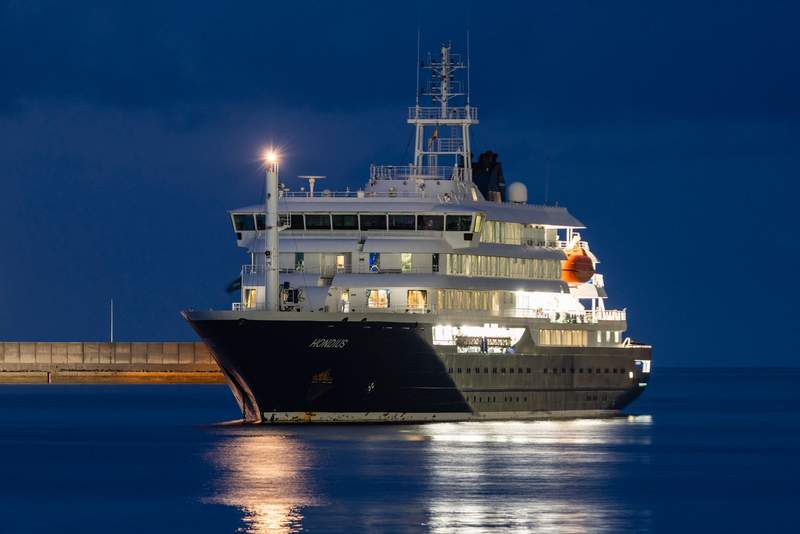
POLICY WIRE — Hamburg, Germany — The champagne flutes and sunset vistas faded fast. For a shipload of German tourists, what began as a carefree ocean escape just capsized into an involuntary stint in state-mandated limbo. They thought they’d signed up for open seas and pampering; they got the sharp, unpleasant reality of public health protocols.
It wasn’t a rogue wave or an engine failure that scuttled their good times. No. It was something far smaller, infinitely more insidious: Hantavirus. A rodent-borne disease, you see, deciding to hitch a ride and bring its nasty business right into the supposedly sanitized bubble of a modern cruise liner. Now, everyone on board? They’re under an extended quarantine. A stark, unpleasant reminder that even the most meticulously planned European escapes aren’t immune to nature’s capricious whims—or its microscopic agents of chaos.
For weeks now, the authorities in Hamburg, where the vessel was redirected, have been managing a slow-burn crisis that’s got more moving parts than a Swiss watch. They’re talking about patient transfers, tracing potential contacts, and trying to contain something that doesn’t quite play by neat, predictable rules. The very idea of an outbreak—any outbreak—on a cruise ship immediately sends shivers down the spine of the global tourism industry. Because it’s a PR nightmare. A floating petri dish, essentially.
Germany’s Federal Health Minister, Dr. Lena Schiller, wasn’t mincing words during her brief, tightly controlled press conference. “This isn’t just about a bug in a luxury setting; it’s about safeguarding our public health apparatus. We can’t afford complacency—not after what we’ve seen globally with pathogen spread. We’re acting decisively.” You could almost hear the unspoken threat in her voice: we’ve learned our lessons, or we ought to have.
This episode, minor as it might appear on the world stage, casts a long shadow over the return to “normalcy” for leisure travel. It’s a potent, if somewhat ironic, symbol of how interconnected our planet remains. One contaminated corner, — and the contagion can be, literally, shipped to another. And because these viruses don’t respect borders or economic status, even the highly developed health systems of places like Germany suddenly find themselves wrestling with unseen threats.
It also forces an uncomfortable comparison. You see this rapid, well-resourced response in Hamburg. Medical staff. Isolations. Extensive media coverage. Now, consider the challenges in a region like South Asia. Nations there—Pakistan, for instance—are often battling outbreaks of far more common, yet equally deadly, diseases on an almost continuous basis. They’re dealing with Dengue, Cholera, Malaria; diseases that spread in settings with less infrastructure, less robust public health funding, and, often, far less public awareness about novel pathogens. The sheer financial muscle to isolate an entire ship of passengers is a luxury not every nation possesses. They simply don’t have it. Instead, they’re constantly playing catch-up, resource-starved, often at the mercy of factors outside their immediate control. You see, the German reaction is quick, comprehensive. Elsewhere, it’s a long, uphill struggle, a perpetual “grim cycle” as Policy Wire has previously documented concerning issues in the region.
📄 POLICY WIRE WHITEPAPER PUBLISHED: PAKISTAN'S NATIONAL SECURITY POLICY PRIORITIES
👉 READ BY CLICKING HEREHantavirus itself isn’t some sci-fi plague. It’s been around. It’s endemic in some areas. But its appearance in such a contained, yet internationally mobile, environment does raise eyebrows. The CDC (Centers for Disease Control and Prevention) notes that the mortality rate for Hantavirus Pulmonary Syndrome (HPS), a severe form of the infection, can hit nearly 38%. That’s not just a bad cold; that’s a serious, life-threatening situation. So, no, they’re not messing around.
The Association of European Cruise Operators CEO, Maria Schmidt, issued a carefully worded statement, acknowledging the disruption. “Of course, guest safety remains paramount. We’re cooperating fully with German authorities, providing every resource they request. But the long-term impact on traveler confidence, well, that’s something we’re very keenly watching. Rebuilding trust isn’t always an easy voyage.” A very tidy analogy, if you ask me.
What This Means
This incident, small though it’s in raw numbers, holds disproportionate weight. Economically, it’s another dent in the cruise industry’s reputation. They’ve just clawed back from much larger pandemic-related crises, and a fresh wave of public health-induced anxiety isn’t what the travel bookings department wanted for Christmas. Politically, it reaffirms a critical reality: even wealthy, technologically advanced nations aren’t insulated from zoonotic diseases. It’s a warning flare for biosecurity investments, emphasizing the continuous need for vigilance and adaptable emergency responses. For the broader geopolitical landscape, it just means that the world remains fragile, its interconnectedness a double-edged sword. While trade routes, information flows, and tourism bind us closer, they also create vast, unseen pathways for threats to travel. Global health security, then, isn’t a localized issue. It’s a shared imperative. Whether you’re worried about economic shockwaves from distant conflicts or simply wondering if your next vacation cruise will actually get you to the beach without a medical detour, the underlying current is the same: modern life is complicated, precarious even.