


Asia’s Silent Arms Race: India’s BrahMos Redraws Geopolitical Lines
POLICY WIRE — New Delhi, India — The world’s armories are having a moment, a shake-up many folks in Brussels and Washington probably hadn’t quite reckoned with. It’s not just about...

POLICY WIRE — New Delhi, India — The world’s armories are having a moment, a shake-up many folks in Brussels and Washington probably hadn’t quite reckoned with. It’s not just about what hardware you’re hawking, but who’s buying it—and where they’re getting it from these days. Turns out, the traditional Western monopolies on high-tech weaponry are starting to look, well, a bit like yesterday’s news.
Take Vietnam, for example. Historically, they’ve played a careful game, balancing big powers. But now, Hanoi isn’t just window shopping; they’re in advanced talks to nab India’s supersonic BrahMos missiles. This isn’t some small-time procurement. We’re talking about a potential US$700 million deal, hammering out the details while Vietnamese President To Lam was just here in Delhi, doing the rounds with Prime Minister Narendra Modi and Defense Minister Rajnath Singh. You don’t sign off on that kind of money without serious intent.
And Vietnam’s not alone, not by a long shot. Word on the street is there are at least 15 other nations, a real mixed bag from Southeast Asia to bits of Latin America, all sniffing around India’s battle-tested rocketry. They’re all trying to diversify their arsenals, looking past the usual suspects—and for good reason. They want systems that don’t come tethered to complex geopolitical strings or exorbitant price tags, a sentiment often felt acutely by countries wary of superpower patronage.
“We’re not merely buying hardware; we’re investing in the very fabric of our national security, ensuring Vietnam’s capacity to chart its own course in an increasingly complex world,” Vietnamese President To Lam reportedly stated during his recent visit, his words a quiet echo of a broader shift in geopolitical strategy. It’s about self-reliance, you see. About hedging bets.
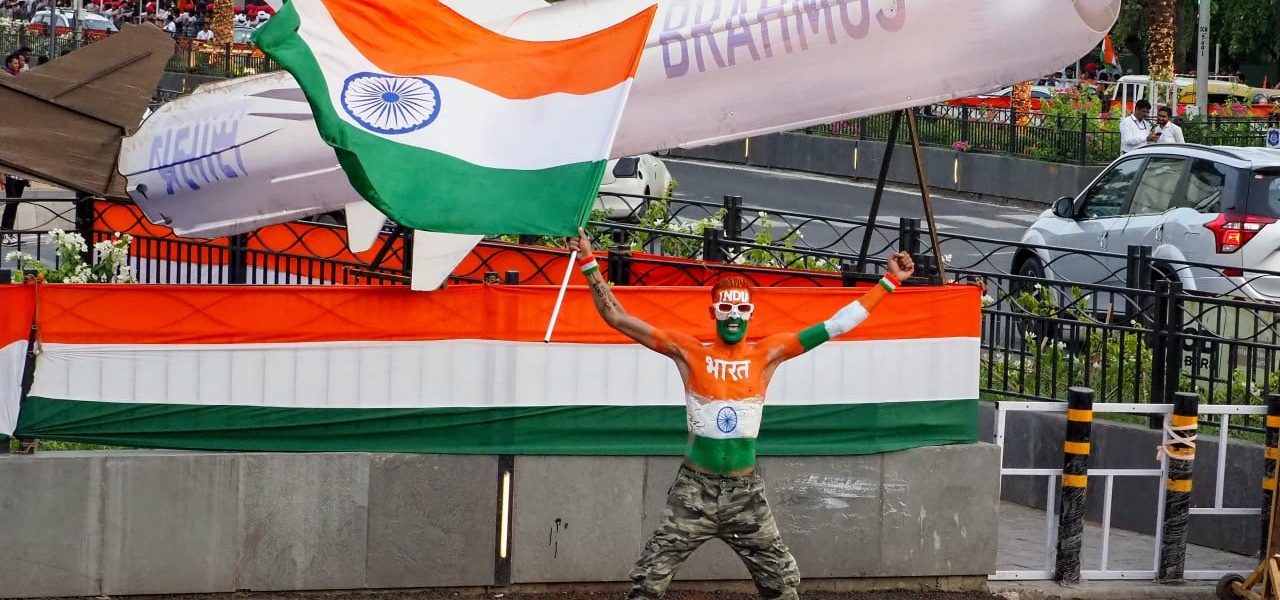
This whole trend signals a major recalibration. Countries like Vietnam, nestled squarely in China’s ever-expanding shadow, are seeking credible deterrence options. The BrahMos, a joint Indian-Russian venture known for its speed and precision, offers exactly that—a punchy, fast, anti-ship and land-attack cruise missile that gives smaller navies a disproportionate bite. It certainly complicates any aggressive naval calculus in, say, the South China Sea. And India isn’t just selling weapons; it’s projecting power, subtle as it may seem.
“India isn’t just a market; we’re becoming a forge. Our partners recognize that strategic autonomy means looking beyond the traditional power centers, and we’re ready to meet that demand with battle-tested systems,” Defense Minister Rajnath Singh is understood to have remarked privately. His statement pretty much sums up Delhi’s ambitions: move from being an arms importer to a significant exporter, a regional arms factory of sorts. But what does this mean for a place like Pakistan?
Because every action has a reaction, right? India’s ascendance as a defense exporter, especially of systems designed to deter naval or aerial threats, won’t be lost on its immediate neighbors. Pakistan, long accustomed to balancing its defense procurement between China, and occasionally, Western nations, finds itself in a trickier spot. India’s growing capacity, and its willingness to export to Pakistan’s rivals (real or perceived), forces a re-evaluation of its own defense posture. It could ignite a localized arms build-up or push Pakistan further into the embrace of its closer allies, like China, or even other emerging defense producers in the Muslim world, like Turkey, which is rapidly expanding its own indigenous defense industry. It’s a classic security dilemma, played out in the modern arms market.
India’s defense exports hit a record US$2.6 billion in fiscal year 2023-24, a thirteen-fold increase since 2013-14, according to figures released by the Ministry of Defence. This isn’t just statistical fluff; it’s hard cash — and concrete proof of a deliberate strategy working. They’re building up capacity, cultivating relationships. It’s more than just selling missiles; it’s about India’s missile diplomacy subtly reshaping the geopolitical chessboard.
What This Means
This flurry of interest in Indian-made missiles isn’t just good news for New Delhi’s bottom line; it’s a profound strategic realignment. Politically, it signals a waning confidence in the unipolar world of arms sales and a rise of middle powers as independent defense suppliers. Nations want choices, don’t they? They’re tired of being told what they can — and can’t buy, or having their acquisitions politicized by donor states.
Economically, it’s a boon for India’s burgeoning defense industrial complex, fostering innovation and creating jobs, certainly. But it also creates a competitive market for high-tech weaponry, potentially driving down costs or, at the very least, diversifying the technological pipelines available globally. Geopolitically, countries like Vietnam acquiring potent, long-range capabilities can shift regional power balances, especially in contested zones. It encourages a more multi-polar defense landscape, which might sound messy, but some would argue it actually stabilizes things—everyone gets a bigger stick, making aggressive moves a good deal riskier. But it could also accelerate regional arms races, especially among nations feeling hemmed in. There are always two sides to a coin like this, aren’t there?