


Blood Gem’s Glare: Myanmar’s Mammoth Ruby Reveals a Nation’s Wounds and the Junta’s Iron Grip
POLICY WIRE — Naypyidaw, Myanmar — Somewhere beneath the perpetual haze of conflict and desperation, in a corner of the world carved by ancient fault lines and modern brutality, an obscenely large...

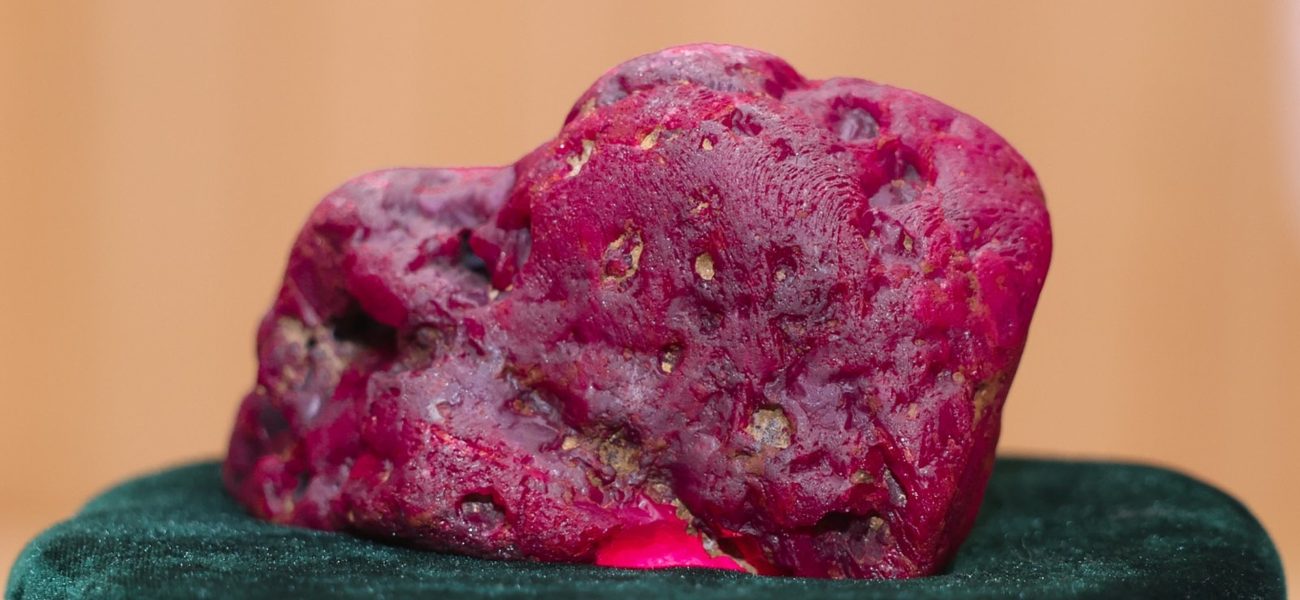
POLICY WIRE — Naypyidaw, Myanmar — Somewhere beneath the perpetual haze of conflict and desperation, in a corner of the world carved by ancient fault lines and modern brutality, an obscenely large ruby decided to announce its presence. Not with a whimper, mind you, but a seismic jolt, roughly the size of a human skull, boasting a frankly ridiculous 11,000 carats. It’s an anomaly, a splash of obscene color in a land where too much blood has already stained the earth.
For decades, Myanmar’s remote Mogok Valley—a place usually described with adjectives like ‘war-scarred’ or ‘resource-cursed’—has been the source of the planet’s finest pigeon-blood rubies. But this specimen, dubbed the ‘Nainggyin Yar Pyae’ (State Full Moon), ain’t just fine. It’s a goliath, a behemoth, a stone so disproportionate to the misery around it, you almost have to laugh—if the situation wasn’t so terribly grim. But don’t misunderstand; for the ruling junta, it’s not some geological curiosity. It’s another gleaming line in their ledger.
This mineral windfall surfaces as the military junta, having snatched power in a 2021 coup, battles a multi-front civil war, their control increasingly precarious outside the capital. And yet, there’s this ruby, ready to be polished into billions for whoever holds the shovel. You’d think the world might balk at buying conflict stones, right? But the global appetite for luxury gems often overrides inconvenient realities. It’s a bitter pill to swallow, frankly.
Major General Kyaw Sann, a spokesman for the ruling State Administration Council, didn’t bother with much nuance when contacted by Policy Wire. “This rock,” he boomed through a translator, “it screams Myanmar’s inherent bounty. Foreign meddlers? They’d just rather we stay down, that our people don’t see the true worth of this nation. But we’re bringing it to the light, for the state.” His voice carried an echo of a regime clutching at any scrap of legitimacy, any shiny object to distract from their widening credibility gap.
The gem industry, cloaked in mystique — and high finance, frequently masks its sourcing. Myanmar’s precious stones—jade, sapphires, rubies—have historically been a key funding mechanism for the military, fueling conflict and enriching a select few. The United States and European Union have slapped sanctions on Myanma Gems Enterprise, the state-owned body responsible for gem extraction and sales. Yet, trade continues, often via clandestine routes through neighboring countries like Thailand and China, or even the shadows of global bazaars, leaving a wide margin for the ill-gotten gains of regimes to enter the legitimate market.
“They yank a bloody fortune from the ground while kids go without food,” asserted Aung Mar Wai, a representative of a pro-democracy exile group now operating from a cramped office in Dhaka, Bangladesh, just across the contested border. “This ain’t for the people; it’s for their private vaults, their weapons. How many homes could that gem rebuild? How many desperate Rohingya could it feed? It’s a symbol of their barbarity, not our nation’s strength.” Her frustration was palpable, a testament to the chasm between the junta’s pronouncements and the daily grind of survival for millions.
📄 POLICY WIRE WHITEPAPER PUBLISHED: PAKISTAN'S NATIONAL SECURITY POLICY PRIORITIES
👉 READ BY CLICKING HEREBecause that’s the ugly truth: for most Burmese citizens, a billion-dollar ruby discovery means precisely nothing. Just another news flash in a landscape of endless war, displacement, — and a rapidly collapsing economy. Since the 2021 coup, the poverty rate in Myanmar has soared, pushing nearly half of the country’s 54 million people into poverty, according to a recent United Nations Development Programme report. Let that sink in. Nearly half. And then, a giant red rock. The optics couldn’t be worse, yet the junta carries on.
This blood-red glint isn’t just about geology or market value; it’s a searing indictment. A commodity that, in a stable nation, would celebrate national pride instead here fuels a different fire, a cycle of repression and violence that echoes across the region, impacting refugee flows into countries like Bangladesh, and destabilizing broader South Asian dynamics. And nations, from Pakistan to Malaysia, watch on, weighing geopolitical concerns against humanitarian outrage. It’s a brutal ledger they’re balancing.
What This Means
The discovery of this monumental ruby isn’t just a pretty headline; it’s a grim mirror held up to Myanmar’s enduring conflict and the junta’s stubborn grip. Economically, this massive stone offers the regime a crucial injection of hard currency, bypassing international sanctions and perpetuating its capacity for war. It signals to international buyers, despite all rhetoric to the contrary, that Myanmar’s resources are still for sale, albeit through murkier channels. For the country’s besieged populace, it only underscores the vast disconnect between their suffering and the regime’s self-enrichment, solidifying cynicism. Politically, it empowers the military to dig in further, diminishing the immediate leverage of international pressure. The message? They don’t need the world’s approval, not when the earth beneath their feet coughs up billions. This effectively ensures the prolonged agony of a civil war, exporting instability—and desperation—into neighboring territories. It’s a red gem, all right, drenched in red ink on humanity’s balance sheet.