


Balochistan’s Gritty Horizon: Another Blood-Soaked Dawn for Pakistan’s Forces
POLICY WIRE — Islamabad, Pakistan — Some days, the silence in Balochistan screams louder than any explosion. Other days, like Monday, it’s the detonation itself, and the subsequent spray of gunfire,...

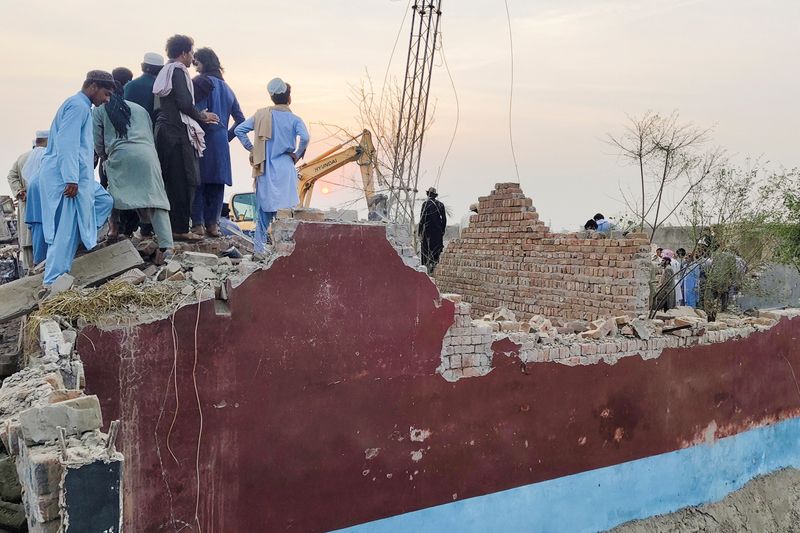
POLICY WIRE — Islamabad, Pakistan — Some days, the silence in Balochistan screams louder than any explosion. Other days, like Monday, it’s the detonation itself, and the subsequent spray of gunfire, that echoes the unspoken truths of a nation perpetually wrestling its ghosts. A car loaded with explosives, rammed into a convoy, followed by a shootout—it’s a sequence that’s become a grim, predictable tableau in Pakistan’s resource-rich, insurgency-plagued province. Fourteen police officers, gone. Another statistic, another wave of shock, but little actual surprise for anyone paying attention.
It wasn’t a sudden, out-of-the-blue incident. This brutal ambush, targeting officers returning from duty near the city of Sibi, just hammered home a stark reality: the Pakistani state’s hold over swathes of its territory, especially its western frontier, remains tenuous, perhaps even illusory in places. These weren’t just police; they were part of a specialized rapid response force, their demise a blunt reminder that even hardened units can be caught flat-footed.
And let’s be frank, this wasn’t an isolated flare-up. Balochistan, with its sprawling deserts, gas fields, — and Chinese-backed port developments, is a cauldron. Nationalist separatists have been at loggerheads with Islamabad for decades, their struggle often punctuated by such savage acts. But it’s not just them; militant Islamist groups, many with ties to the Afghanistan borderlands, also stir the pot. This particular attack—claimed by the Balochistan Liberation Army (BLA) splinter group, Majeed Brigade—fits a chilling pattern. They’ve gone for high-value targets, even symbolic ones, previously.
“We will hunt down every single individual responsible for this barbarity,” vowed Pakistani Interior Minister Rana Sanaullah Khan, his voice reportedly tinged with a weariness that’s become all too common among Islamabad’s leadership. “They think they can break our resolve, but they’re sorely mistaken. We won’t surrender an inch to these terrorists.” It’s a boilerplate condemnation, sure, but what else can one say after the dozenth, the hundredth such incident?
But the narrative isn’t just about defiant statements. General Asif Ghafoor, a retired military spokesman often vocal on security matters, offered a slightly more nuanced, if grim, perspective. “The lines between tribal insurgencies, state proxies, and transnational extremist organizations in this region have blurred significantly,” he observed dryly in a televised discussion shortly after the news broke. “It’s a Hydra, you cut one head, another—often more ferocious—grows back. And the external factors—namely a largely unchecked western border—don’t make things any simpler.”
Official data from Pakistan’s Interior Ministry, though often incomplete, suggests a nearly 30% surge in militant-related casualties among security forces in Balochistan alone over the past year. This isn’t just numbers; it’s families shattered, trust eroded, and a continuous drain on the nation’s already strained resources. It points to a conflict that, far from abating, is evolving, becoming more lethal, more strategic on the part of the insurgents.
📄 POLICY WIRE WHITEPAPER PUBLISHED: PAKISTAN'S NATIONAL SECURITY POLICY PRIORITIES
👉 READ BY CLICKING HEREThe tragedy isn’t confined to Pakistan’s internal borders either. Balochistan shares long, porous frontiers with Iran and Afghanistan, making it a critical nexus in the broader geopolitical chessboard of South Asia. Instability here directly affects regional security. Think about it: a fragile Pakistan becomes a haven for anyone with an agenda—from drug traffickers to global jihadists—and that spills over, infecting neighboring states. It’s an inconvenient truth for powers that prefer a stable, if not pliant, Pakistan. And when it comes to regional headaches, Pakistan’s perpetual internal security woes definitely rank high.
What This Means
This latest attack, brutal as it’s, merely peels back another layer of the long-standing crisis simmering in Pakistan’s largest province. Politically, it’s a blunt instrument used by insurgents to signal their continued potency, challenging Islamabad’s narrative of containing militancy. For any government in power, these repeated failures to secure the homeland become potent ammunition for political rivals and, more consequentially, chip away at public confidence.
Economically, Balochistan is home to the China-Pakistan Economic Corridor (CPEC) projects, grand infrastructure initiatives Beijing is heavily invested in. Such attacks don’t just kill cops; they send shivers down the spines of foreign investors, especially those eyeing the province’s vast mineral wealth. Project delays, increased security costs, and a constant threat perception make Balochistan a less attractive proposition for development. It’s an ironic twist: the region’s resources, which ought to be its salvation, often become a flashpoint for conflict. the human toll—the loss of experienced law enforcement personnel—has long-term ramifications for local governance and security infrastructure. The cycle continues, and for the families of those 14 officers, today marks just the beginning of their interminable grief, while the state grapples with what it often calls an existential threat, and what outsiders often label a self-inflicted wound.