


Vapor Trails: New Mexico’s Ghost-Haunted ‘Fallout’ Dream Collapses Under Its Own Weight
POLICY WIRE — ALBUQUERQUE, N.M. — Beneath New Mexico’s vast, unassuming sky, where whispers of cursed mines and spectral figures cling to ancient arroyos, an ambitious digital dream once...

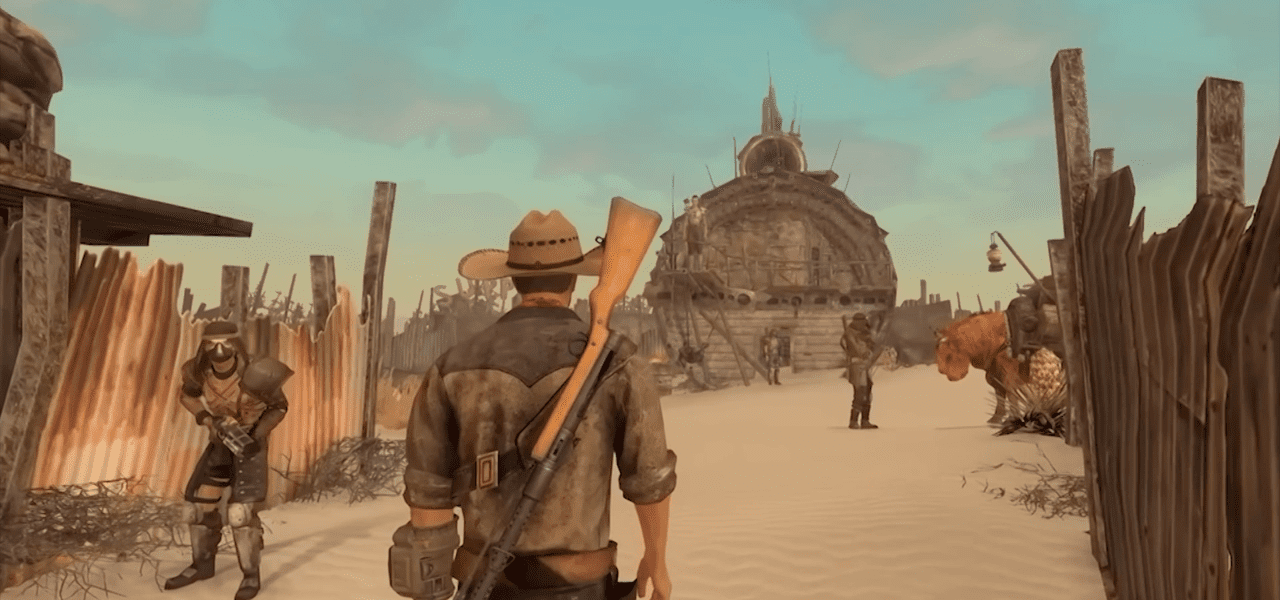
POLICY WIRE — ALBUQUERQUE, N.M. — Beneath New Mexico’s vast, unassuming sky, where whispers of cursed mines and spectral figures cling to ancient arroyos, an ambitious digital dream once thrived. It wasn’t about mining rare minerals or decoding extraterrestrial secrets, though the state certainly has its share of those. Instead, a cadre of devoted, if anonymous, enthusiasts poured years into crafting a fan-made video game, ‘Fallout: Nuevo Mexico,’ meant to enshrine these very local legends within the bleak, post-apocalyptic universe of the popular ‘Fallout’ series.
Now, it’s all gone quiet. Not with a bang, but with a weary sigh. And it underscores a blunt truth about creative endeavors—especially those born from passion, not paychecks—they often fall victim to the very real constraints of time and aging. The project, once envisioned as a sprawling exploration of New Mexico’s peculiar mystique, featuring a ghoul protagonist dubbed ‘The Dreamer’ navigating real-world locales like Roswell and Los Alamos, now sits mothballed.
Bishop, one of the team members who found the project already years underway, confessed the vision ballooned. “It’s turned into this big project, this wide scope of an idea,” he’s been quoted saying. “There’s a lot of lore that hasn’t been explored or touched upon.” He meant New Mexico’s lore, of course, from elusive treasures hidden in crimson hills to phantom assailants. It’s a deep well of inspiration, one arguably as rich and untamed as the oral traditions informing epic poetry or folkloric storytelling across continents, even stretching to the rugged northern territories of South Asia, where ancient narratives often intersect with modern geopolitical undercurrents.
The online echo chamber, ever hungry for drama, spun wild tales of its demise. Rumors swirled—rather preposterously, Bishop confirms—that the lead developer, known only as ‘Zapshock,’ had been detained by Immigration and Customs Enforcement (ICE), effectively shuttering the game. “Yeah, no, he didn’t get deported,” Bishop flatly stated, clearing up a rumor that, for a moment, had seemed plausible to some of the internet’s more conspiratorially-minded corners. Instead, the reality proved far more mundane, yet far more intractable: people just grow up. They get jobs, they start families, they move on. Such is the way of volunteer projects.
Because the digital creative sphere, while boundless in its imagination, remains grounded by very human limitations. A 2023 study by the Independent Game Developers Association (IGDA) indicated that nearly 65% of indie game projects fail to see full release, often due to funding issues or, quite simply, burnout. And what funding existed here was, presumably, nil, sustained only by sweat equity.
What This Means
This saga isn’t merely about a defunct fan project. It’s a poignant footnote on the economic — and cultural value of regional identity in a globalized world. While a direct monetary impact is difficult to quantify for a game that never materialized, the potential for digital cultural exports is significant. Think of Poland’s ‘Witcher’ series, an unlikely global hit built entirely on Slavic folklore, generating billions. A successful ‘Fallout: Nuevo Mexico’ could’ve been an innovative cultural ambassador for the state, driving digital tourism and artistic interest, perhaps even inspiring similar endeavors in nations striving to brand their unique heritage in the international marketplace.
“We can’t afford to ignore these grassroots cultural efforts, even if they sometimes feel like ephemeral pixelated ghosts,” commented Dr. Amina Khan, a cultural economist specializing in digital heritage, when asked about the project’s implications. “They represent invaluable, unfiltered cultural capital. It’s time federal arts grants consider supporting community-driven digital narratives with the same earnestness they approach traditional performance arts.” New Mexico State Senator Joe Cervantes (D), when informed of the project’s hiatus, observed, “This kind of passion for our state’s rich, often unsettling, history needs channels. We talk about economic development, and too often forget the burgeoning digital economy that can be spurred by celebrating our own tales. Losing out on potential IP like this? That’s a missed opportunity, no matter how small scale it begins.”
But the true cost of ‘Fallout: Nuevo Mexico’s’ halt is probably unquantifiable: the quiet extinguishing of a collective flame, the creative energies diverted, the potential connections left unmade. They might not have shipped a game, but Bishop still contends that “bouncing off ideas from one another, it’s very very—that’s the best part! That’s the best part of the whole experience.” A reminder that sometimes the process, not just the product, is where the real meaning lies. Even in the wasteland.