


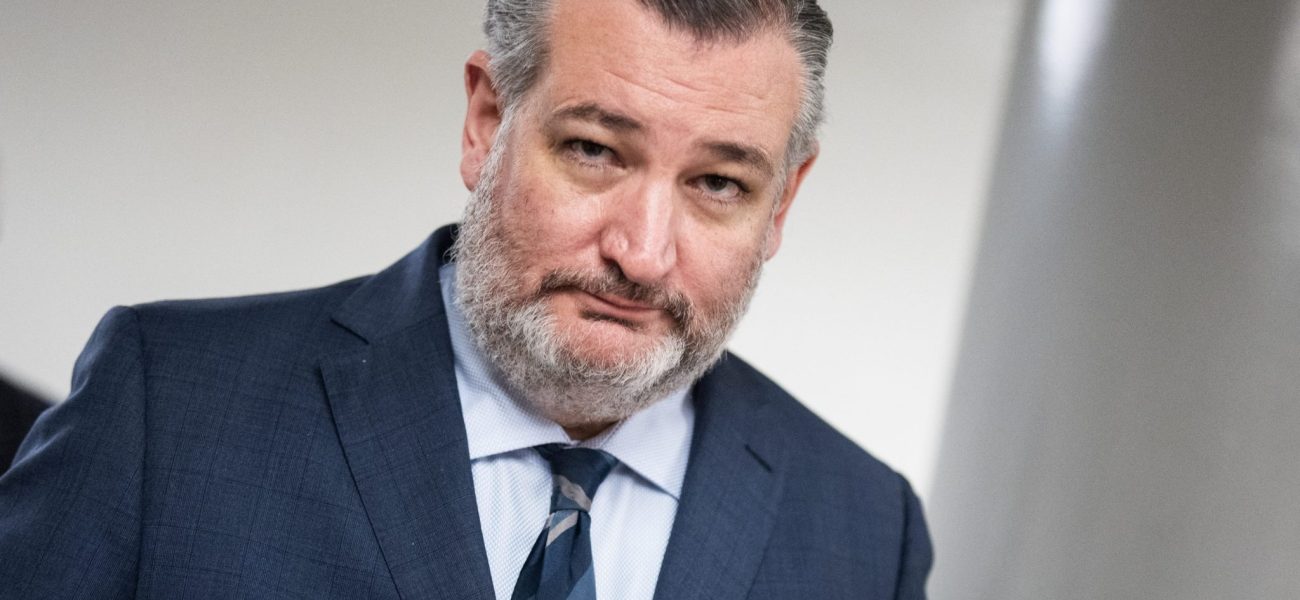
Ted Cruz Blurs Entitlement Lines, Reveals Trump’s ‘Quiet Part’ on Social Security Reform
WASHINGTON D.C. — United States — It’s a bit like watching a magic trick unfold backstage: you always knew how it worked, but seeing the apparatus laid bare still elicits a gasp. Senator Ted Cruz,...

WASHINGTON D.C. — United States — It’s a bit like watching a magic trick unfold backstage: you always knew how it worked, but seeing the apparatus laid bare still elicits a gasp. Senator Ted Cruz, R-Texas, known for his unvarnished pronouncements, just showed America the strings behind the Republican party’s long-standing, often whispered, intentions for Social Security. And honestly, it wasn’t much of a secret to anyone who’d been paying attention. But saying the quiet part out loud? That’s something else entirely.
Cruz’s revelation, delivered with characteristic confidence, wasn’t about some new, audacious policy proposal. No, it was a more casual confirmation. He framed former President Donald Trump’s administration – or rather, its hypothetical second iteration – as unequivocally embracing the idea of ‘personal accounts’ for Social Security. This isn’t just semantics; it’s the ideological bedrock for shifting a portion of traditional government-managed retirement funds into individually controlled investment vehicles. Some call it reform. Others call it dismantling.
“Look, the dirty little secret,” Cruz explained, almost conspiratorially, during a recent media appearance, “is that every Republican president or administration, when it talks about Social Security, is talking about personal accounts. Trump’s administration? That’s what it was, — and that’s what it’ll be again.” There you have it. A straight shooter, if nothing else. He didn’t sugarcoat it, didn’t attempt the usual double-speak. And because of it, Democrats are, shall we say, enjoying the unforced error. Or perhaps, the deliberate clarification.
For decades, the political tightrope walk around Social Security has been legendary. Touch the third rail, — and your career might just go poof. But the GOP’s more fiscally hawkish wing has consistently eyed personal accounts as a fix for the program’s long-term solvency issues. They’re banking on the idea that individual investment will yield better returns — and foster a sense of ownership. Critics, however, warn that it exposes retirees to market volatility, jeopardizes guaranteed benefits, and disproportionately harms lower-income beneficiaries who can’t afford big investment losses. And don’t forget, these are the folks who rely on every penny. The program, after all, pays benefits to nearly 68 million Americans, including retirees, survivors, and people with disabilities, and is expected to pay full benefits until roughly the mid-2030s, according to the Social Security Administration’s 2024 Trustee’s Report.
Senator Sherrod Brown, D-Ohio, didn’t mince words following Cruz’s comments. “They’ve always wanted to privatize it, pure — and simple,” Brown stated forcefully. “This isn’t about innovation; it’s about breaking a fundamental promise to America’s seniors — and working families. We won’t let them turn grandma’s guaranteed income into a Wall Street gamble.” It’s a pretty stark difference in messaging, isn’t it?
And how might such fundamental shifts reverberate beyond American borders? When the bedrock of a nation’s social safety net gets debated so aggressively, particularly with calls for market-based solutions, it doesn’t just stay a domestic spat. Think about a country like Pakistan, for instance, grappling with its own complex social welfare landscape and relying heavily on a stable U.S. economy for everything from trade relations to strategic partnerships. Instability or perceived risk in the U.S. financial system—even due to a domestic debate over entitlements—sends shivers globally, impacting investor confidence and regional stability narratives. Every economic hiccup, real or imagined, sends ripples.
What This Means
Cruz’s candidness—whether intentional political jiujitsu or a genuine slip—has done a couple of things. Firstly, it has laid bare the unspoken strategy that’ll likely be trotted out more openly should Trump regain the Oval Office. For Democrats, it provides immediate, potent fodder to energize their base around protecting existing entitlements, positioning themselves as the bulwark against radical reform. For Republicans, it forces a decision: embrace the explicit call for personal accounts, potentially alienating swaths of older voters, or find new ways to message around ‘reform’ that doesn’t quite sound like what Cruz just said.
Economically, moving to a personal accounts model represents a massive ideological wager. It gambles on individual financial literacy and market performance while potentially undermining the collective risk-sharing mechanism that has defined Social Security for generations. But it also promises, for its proponents, a pathway to solvency without raising taxes or dramatically cutting benefits for current retirees. The implications aren’t just for retirees either; consider the cascading effects on financial markets, the burden on regulatory bodies, and the psychological impact on an entire working populace. It also touches on broader debates about government’s role in the economy, a theme explored often, whether in discussions about global economic pillars or specific domestic spending.
Because ultimately, what Cruz highlighted isn’t just an internal Republican dialogue; it’s the shape of a potential future. A future where retirement security might look vastly different. And that’s a conversation everyone, regardless of political stripes, probably needs to be ready for. It’s not some obscure, theoretical discussion anymore; it’s a policy framework staring us right in the face, thanks to a Texan senator who prefers bluntness over political delicacy.