

Inter Triumphs in Ghost Stadium, Italy’s Football Battlegrounds Shift From Pitch to Stands
POLICY WIRE — Rome, Italy — The party for Inter Milan, fresh off sealing the Serie A title, unfolded in front of rows of spectral blue seats. Their clinical 3-0 rout of Lazio this past Saturday...

POLICY WIRE — Rome, Italy — The party for Inter Milan, fresh off sealing the Serie A title, unfolded in front of rows of spectral blue seats. Their clinical 3-0 rout of Lazio this past Saturday wasn’t just another win; it was a bizarre tableau, a prelude to the Italian Cup final staged next week in the very same stadium, yet defined more by absence than by spectacle.
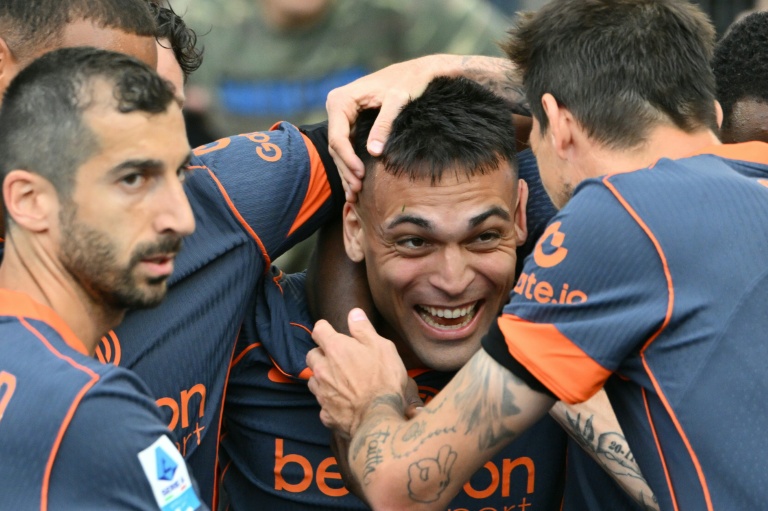
No, this wasn’t about the dazzling footwork of Lautaro Martinez or the strategic genius of Inter’s manager—though they both played their parts. It was about what wasn’t there. Lazio supporters, en masse, stayed home. It’s been a months-long protest, a simmering revolt against owner Claudio Lotito. They’re fed up, apparently, with his stewardship. And because of that, the air hung thick with quiet frustration, punctuated only by the roars of the visiting Inter faithful who happily filled what little space was taken.
It’s not often a celebration feels quite so… hollowed out. “We’ve certainly played in livelier atmospheres,” admitted Inter captain Martinez, his voice carrying a slight edge of understatement after the match. “But we’re professionals; our job’s to win, wherever the stadium lights shine. You learn to block out the noise—or the lack of it, in this case.”
Meanwhile, the true drama played out in the nearby Ponte Milvio district. Here, hardcore factions of both Lazio and Inter supporters—united not by allegiance but by an eerie commonality of “hard-right politics”—convened, exchanging banners, probably pleasantries, certainly sentiments, miles away from the quiet match. That’s a unique wrinkle in Italy’s often tribal football scene, isn’t it?
Lazio’s management, for their part, remains publicly stoic. “The team trains to perform for its city, for its badge,” a club spokesman, requesting anonymity, told Policy Wire, “regardless of stadium attendance. We must adapt to the circumstances. Owners will always face scrutiny; that’s the nature of leadership in a passionate sporting community.” He seemed to sidestep the obvious political alliances the incident brought to light, choosing instead to focus on the traditional business of football.
The champions—Martinez, Petar Sucic, and Henrikh Mkhitaryan finding the net—sailed to a 3-0 triumph. It was an effortless victory. They’re now poised for a league-and-cup double. But what price victory, or even a championship, when the soul of the stadium is absent?
📄 POLICY WIRE WHITEPAPER PUBLISHED: PAKISTAN'S NATIONAL SECURITY POLICY PRIORITIES
👉 READ BY CLICKING HEREAnd speaking of the broader league picture, things are getting tighter for those aspiring to European glory. Napoli, for instance, still aren’t guaranteed a Champions League spot, clinging precariously with three games left. Juventus, buoyed by Dusan Vlahovic’s sudden return to form, grabbed a crucial 1-0 win at Lecce. Vlahovic, sidelined for much of the season with various injuries, scored for the second consecutive game after a scoring drought that stretched all the way back to November. He’s a man whose contract hangs in the balance, creating a personal drama within the wider footballing one.
But the numbers don’t lie. According to official Serie A statistics, Inter’s decisive 15-point lead over nearest rivals Napoli demonstrates a class apart this season. Elsewhere, Juventus sits third, just a point ahead of AC Milan, — and crucially, four points clear of fifth-placed Roma. Below them, Lecce barely maintains a four-point cushion above the relegation zone, hovering over Cremonese, who are now dangerously entrenched in the bottom three.
What This Means
This match wasn’t just a friendly jog for Inter; it was a stark reminder of where real power lies in modern football. It’s often not with the players, nor even exclusively with the coaches, but with the owners and—perhaps more surprisingly—with the organised fan bases. Lazio’s boycotting faithful weren’t just skipping a game; they were making a profound statement about ownership accountability. Their “months-long protest” against Lotito points to a growing trend of fan activism across Europe, where deep pockets don’t automatically grant unquestioned authority. It’s an economic standoff as much as a show of dissent, with millions in matchday revenue likely lost, signaling to potential investors that managing a legacy club is far more nuanced than simple asset acquisition.
The casual convergence of hard-right groups from opposing teams at Ponte Milvio, divorced from the actual game, highlights another layer of contemporary football’s complexities. It transcends mere sport; it becomes a platform for expressing broader political or ideological alignments. This isn’t just an Italian phenomenon. We see parallels, in fact, across various cultural and sporting landscapes, from politicized fan clubs in Turkey to the fervid, sometimes ideologically charged, nationalism that can spill over into cricket rivalries across South Asia. You can witness similar underlying societal fissures playing out, albeit with different flags — and chants. It’s a subtle yet potent demonstration of how deeply entrenched social and political undercurrents shape even the seemingly straightforward business of a football match. And for clubs increasingly reliant on international investment, understanding these local socio-political dynamics becomes paramount. Or it should, anyway. Just ask any wealthy Arab consortium trying to navigate the peculiarities of European fan culture. Ultimately, while Inter bagged three points, this game truly illuminated the evolving, often turbulent, relationship between fans, finance, and flag in a globalized sport.