


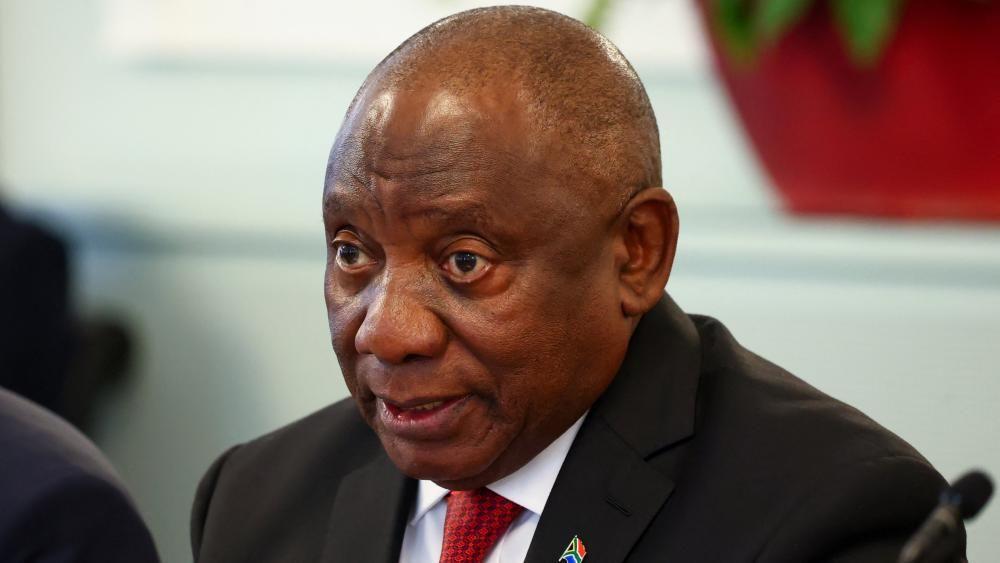
Ramaphosa’s Crucible: South Africa President Grapples with Frayed Mandate After Courtroom Verdict
POLICY WIRE — Pretoria, South Africa — There’s a certain grim ballet that plays out in nations navigating the messy confluence of post-colonial legacy and modern governance. South Africa, bless its...

POLICY WIRE — Pretoria, South Africa — There’s a certain grim ballet that plays out in nations navigating the messy confluence of post-colonial legacy and modern governance. South Africa, bless its embattled heart, finds itself performing another complicated routine, not on the stage of reconciliation, but in the echoing chambers of its courts.
President Cyril Ramaphosa—the man often presented as the pragmatic anchor in the storm of ANC politics—now stares down an abyss. It’s not the usual mud-slinging of opposition, but a judicial decree, dry and precise, yet carrying the destructive force of a political earthquake. An appeals court, in a decision handed down yesterday, upheld a lower court’s finding of procedural irregularities and, more damagingly, questioned the President’s direct knowledge concerning a significant undeclared cash transfer involving his Phala Phala farm. They didn’t directly indict him, mind you, but they certainly didn’t clear him, leaving his position—and the ANC’s stability—precariously perched. People are calling for his head, you see.
And those calls, they’re coming fast — and furious. The opposition Democratic Alliance (DA) wasted no time, framing the ruling as irrefutable evidence of a compromised presidency. “It’s become painfully clear that President Ramaphosa can no longer credibly lead this nation,” thundered DA leader John Steenhuisen in a press conference that was part outrage, part political opportunism. “His ongoing presence in office undermines the very institutions he swore to protect. He needs to go. Now.”
But the President, famously—or infamously—unflappable, appears to be digging in. We hear the familiar murmurings of internal party consultations, statements hinting at defiance. “Our nation is facing complex challenges, and it’s my unwavering commitment to serve its people, especially as we address economic growth and social justice,” a source close to the president, speaking anonymously, quoted Ramaphosa as saying earlier today. “I remain dedicated to due process and the principles of transparency and accountability.” But commitment means little when trust is draining away, like sand through cupped hands. Ramaphosa’s own party, the African National Congress, now finds itself split, a perennial condition, certainly, but one exacerbated by an approaching general election that looks like it might actually be competitive for once.
It’s not just a South African problem, this dance between institutional integrity — and political power. In a world increasingly wary of weak governance, these episodes reverberate. For many nations in the Muslim world and South Asia, who often grapple with similar inherited state structures and the shadow of corruption, South Africa’s trials serve as a stark reminder. Good governance, they know, isn’t an elective. The brutal calculus of trust, once shattered, is incredibly difficult to mend.
📄 POLICY WIRE WHITEPAPER PUBLISHED: PAKISTAN'S NATIONAL SECURITY POLICY PRIORITIES
👉 READ BY CLICKING HEREBecause, make no mistake, global investors are watching this saga unfold with something beyond mere academic interest. Emerging markets, generally speaking, are always under heightened scrutiny. Political instability? It’s like pouring ice water on growth forecasts. In the immediate aftermath of this judicial decision, the rand took a noticeable dip against major currencies, a classic flight-to-safety move. One prominent London-based emerging markets analyst, Anya Sharma from Pantheon Economics, put it bluntly: “Episodes of presidential uncertainty, especially those linked to impropriety, tend to shave, on average, 0.7 percentage points off annual GDP growth projections in the initial two quarters across various developing economies.” It’s not just a number; it’s jobs, it’s opportunity, it’s fewer kids in school.
What This Means
The fallout from this court ruling isn’t just about President Ramaphosa’s immediate future; it casts a long, ominous shadow over South Africa’s democratic trajectory. Firstly, his capacity to effectively govern will be severely diminished, perhaps irreparably. Opposition parties won’t let up. They’re salivating, knowing an incumbent crippled by scandal is a golden opportunity. And the ANC? This further complicates its already tricky electoral prospects. Voters are tired of the old guard, of graft, of the constant internal power struggles. There’s a real possibility that the ANC could dip below 50% in the upcoming elections, forcing them into complex, and likely unstable, coalition politics—something unheard of since the nation’s democratic birth.
But beyond the ballot box, there are deeper concerns. Persistent political turbulence sends cold shivers down the spines of both domestic — and foreign investors. Capital doesn’t fancy uncertainty; it retreats. We’re talking about slowed infrastructure projects, fewer job creations, and a weakened rand, leading directly to higher import costs for everyday South Africans. South Africa’s regional standing, as a presumed bastion of democratic stability, might well erode, impacting its influence in pan-African initiatives and its role in groups like BRICS. It’s not merely a president on the ropes; it’s a nation facing its fundamental democratic compact. The ramifications of such an institutional crisis can have a profound impact on policy stakes across the board, affecting everything from economic stability to diplomatic ties.