

Festus Mogae: Botswana’s Quiet Architect of Stability Exits Stage
POLICY WIRE — Gaborone, Botswana — The quiet thrum of a nation built on prudence, not bombast, just lost one of its chief architects. Festus Mogae, who steered Botswana through a period of sustained,...

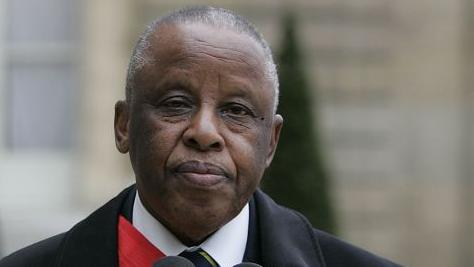
POLICY WIRE — Gaborone, Botswana — The quiet thrum of a nation built on prudence, not bombast, just lost one of its chief architects. Festus Mogae, who steered Botswana through a period of sustained, enviable growth and against the ravages of AIDS, has died at 86. It isn’t just Botswana that’s watching; the rest of the continent—and indeed, much of the developing world—might just take notes, again.
His passing, while not wholly unexpected given his age, brings a fresh moment of reflection on what often feels like an anomaly in sub-Saharan Africa: a diamond-rich nation that mostly managed to avoid the resource curse, charting a democratic, stable course. You’d think the headlines would blare about some former leader’s controversies, wouldn’t you? But with Mogae, it’s mostly about a steady hand. He wasn’t the kind to court grand, global photo ops. He just got on with the job, which is pretty rare, if we’re being honest.
Mogae served as president from 1998 to 2008, stepping down gracefully, an act of democratic decency often lost in power-hungry regions. But he had previously been a finance minister, an economics wonk in the best sense. He took over a country staring down the barrel of an HIV/AIDS epidemic that threatened to wipe out a generation. Botswana, under his watch, didn’t just ignore it or fumble through it; it launched one of Africa’s most aggressive and effective anti-retroviral treatment programs. A stark lesson for any government caught in the crosshairs of a health crisis, or any crisis, really.
His pragmatism was always his strongest suit. There’s this story, likely true, about his unflinching honesty in global forums. He wasn’t afraid to tell it like it was. And that often meant calling for collective action, reminding everyone that prosperity, when built right, requires more than just natural endowments. “Our path was never predetermined,” President Mokgweetsi Masisi remarked, his voice a somber tone as the news broke. “Festus Mogae demonstrated that ethical leadership and genuine commitment to our people’s well-being could forge a modern state out of challenging circumstances.”
But the challenges didn’t stop with health. Mogae pushed for economic diversification beyond diamonds, understanding that relying solely on a single resource, however sparkly, was a mug’s game. This foresight, even if its full fruition is a long-term project for his successors, set a crucial precedent. It’s a template many nations in the resource-rich Muslim world, grappling with volatile oil or gas markets, could still learn from. And they’re looking for stability, aren’t they? That sort of quiet, competent management, the type Mogae offered, often becomes the bedrock of what gets called a ‘success story’ — even if it takes years to truly acknowledge its depth.
Botswana’s success wasn’t merely economic; it was deeply democratic. Under his leadership, the nation maintained its status as one of Africa’s most stable multi-party democracies, an exemplar often pointed to by institutions like the World Bank. Indeed, when you look at the Constitutional Court’s demanding accountability in South Africa, it’s a testament to the robust, albeit often fraught, institutional battles that determine a nation’s path. Mogae’s era was less about those pitched battles — and more about consensus-building. It worked for Botswana, you see.
📄 POLICY WIRE WHITEPAPER PUBLISHED: PAKISTAN'S NATIONAL SECURITY POLICY PRIORITIES
👉 READ BY CLICKING HEREThe numbers don’t lie, either. Botswana consistently ranks high on indices for good governance — and ease of doing business in Africa. During Mogae’s tenure, average annual GDP growth was around 5% even as the nation battled the world’s highest HIV prevalence rates at one point. That’s an often-overlooked triumph.
What This Means
Mogae’s departure from this life isn’t some seismic shift in Gaborone’s political landscape; Botswana has robust institutions that outlast any single individual. But it does pull the curtain back on a particular style of leadership: diligent, principled, — and utterly devoid of ego. His legacy is one of pragmatic nation-building, an understated refusal to descend into the cronyism and political instability that plagued — and still plagues — too many of Botswana’s neighbours. His emphasis on democratic principles and transparent governance, while maybe not headline-grabbing, ensured Botswana avoided many of the traps resource-rich developing nations fall into. But what it really underscores is that a calm, steady hand can achieve more, over the long haul, than any charismatic strongman ever could.
And yes, his story ought to resonate beyond Botswana. Because in a world often captivated by the dramatic, the divisive, or the dictatorial, Mogae showed that quietly getting things right—even when dealing with an existential public health crisis and immense resource wealth—can lay the groundwork for something genuinely resilient. A generation of leaders in countries from Pakistan to Malaysia, struggling with similar development and governance quandaries, could study his record and probably find a few hard-earned truths. It isn’t rocket science, is it? Just sound management. The kind we often miss, sadly.
“He exemplified statesmanship that put people before politics, and progress before personal gain,” reflected a seasoned diplomat with decades observing African transitions, speaking off the record. “That’s a model many still aspire to, even if they don’t always get there.” He had this ability to connect the microeconomics of household budgets with the macro-realities of global trade, and somehow make sense of it all for his constituents. He taught his nation that true independence wasn’t just about sovereignty; it was about economic self-reliance, even when others would just grab. He’ll be missed. Don’t they always say that? But sometimes, it’s true. With him, it’s true.