

Brussels’ Gambit: EU Poised for Sanctions, Testing West Bank’s Uneasy Standoff
POLICY WIRE — Brussels, Belgium — It wasn’t the fanfare of a declaration of war, but rather the quiet, grinding gears of bureaucracy that finally shifted. For years, European diplomats have...

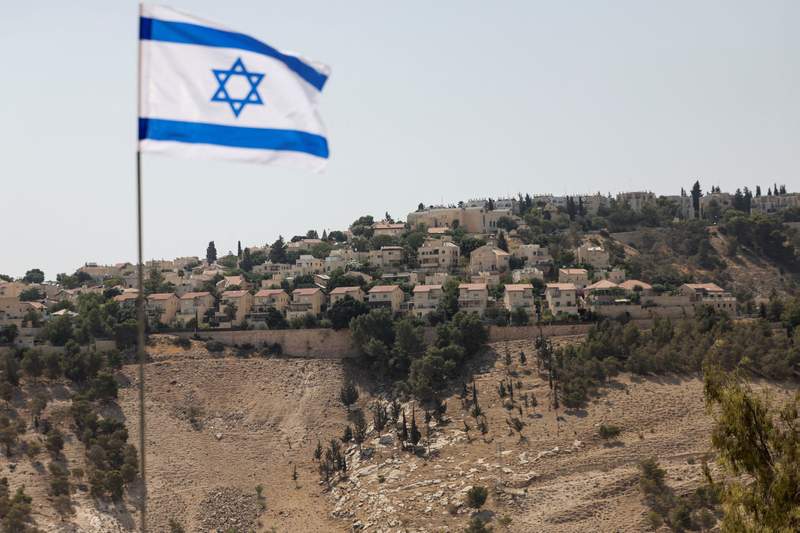
POLICY WIRE — Brussels, Belgium — It wasn’t the fanfare of a declaration of war, but rather the quiet, grinding gears of bureaucracy that finally shifted. For years, European diplomats have eyed Israel’s expanding settlements in the West Bank with a practiced frustration—a familiar ache in the complex, often exasperating, Middle East file. Now, a more concrete action, sanctions, appears to be moving from hypothetical discussions in shadowed back rooms to actual policy. It’s less a shout, more a clear-throated murmur from Brussels, and it signals a subtle, yet significant, hardening of the European Union’s stance.
Ambassadors from the 27-nation bloc have, at last, received a mandate to advance measures targeting individuals and entities involved in what the EU has consistently termed illegal settlement activities. Not an earth-shattering pronouncement, mind you. But it’s certainly more than a mere strongly-worded letter. This isn’t just about moral posturing, not anymore; it’s about drawing lines in the diplomatic sand with real economic repercussions, however limited initially. The slow pace is characteristic of the EU’s multilateral beast, but the direction seems increasingly set.
“The European Union’s position has always been grounded in international law, and that hasn’t changed, despite repeated attempts to obfuscate the issue,” stated an EU official, who requested anonymity to speak frankly on sensitive diplomatic maneuvering. “When flagrant breaches persist, the framework of international conduct demands a response. It’s a matter of principle, frankly, and the credibility of the rules-based order itself.” A tidy summary of months, perhaps years, of internal debate and external hand-wringing. This isn’t just one or two bad actors, but an issue that, to Brussels, speaks to a larger erosion of future peace prospects.
The Israelis, predictably, aren’t exactly toasting this development with fine vintage. “This punitive action—singularly targeting Israelis living in Judea and Samaria—is a cynical, unhelpful distortion of reality,” countered Ofir Gendelman, a spokesperson for Israel’s Foreign Ministry, reflecting Jerusalem’s long-held position. “It rewards aggression, completely ignores our security imperatives, and does absolutely nothing to bring us closer to a genuine peace, only further antagonizing an already volatile region. The EU would do better to focus on true impediments to peace, rather than singling out Israeli citizens exercising their right to live.” It’s a line you’ve heard before, yes. But it’s one Israel’s diplomats deploy with unwavering consistency.
The sanctions, while potentially narrow in scope at first, carry significant symbolic weight. They don’t just hit individual pockets; they land squarely on a narrative. The West Bank settlement population has continued its expansion, reaching over 490,000 Israeli citizens as of early 2024. But because of how interconnected the global economy is, especially where trade flows freely, even targeted actions can trigger headaches, creating hurdles for trade and international relations. European Union remains Israel’s largest trade partner, with bilateral trade reaching over €35 billion annually—a statistic that makes any talk of sanctions, however limited, particularly resonant. That’s a hefty chunk of change that both sides rely on, isn’t it?
And this European pivot doesn’t operate in a vacuum. Regional powers, especially in the Muslim world, have watched closely. Pakistan, for instance, has long championed Palestinian self-determination, consistently condemning settlement expansion and the humanitarian situation in the territories. Islamabad’s consistent stance aligns well with such international pushes, bolstering calls for accountability. Any credible international step taken against settlement activity offers a measured, albeit often slow, affirmation for nations that have felt these issues were neglected by global powers. It’s a psychological uplift, if nothing else, even if they sometimes feel the world is caught in a ‘digital dust bunnies‘ cycle of forgetfulness.
But the real test for Brussels will be enforcement. It’s one thing to pass a directive. It’s quite another to ensure compliance across a diverse group of member states, some of whom have very strong bilateral ties with Israel. And what if a major player—say, Germany or Hungary—decides to drag its feet, perhaps even actively undermine the spirit of the measures? It’s not an outlandish thought, not in this labyrinthine body. The wheels of European diplomacy grind slowly, sure. They can also get gummed up quite easily.
What This Means
This European move, even if starting small, reshuffles the diplomatic deck. Politically, it signals an exasperated EU that’s tired of its red lines being crossed with apparent impunity. It legitimizes a narrative long held by many international bodies and human rights organizations, shifting the global conversation from mere condemnation to concrete action, however symbolic. It certainly won’t dismantle settlements overnight—let’s not be naive. But it puts further pressure on Israel’s international standing and could make it harder for other nations, including those in the U.S. or certain Gulf states, to ignore European discontent. Economically, while initial sanctions might only target a few individuals, the very existence of such a framework creates a chilling effect. Businesses, particularly those with European ties, will likely conduct increased due diligence to avoid inadvertently financing sanctioned entities. The bigger picture? It introduces an additional layer of complexity and risk for any foreign investment or interaction linked to the territories. And it deepens the EU’s stance against illegal annexations—a principle it’s fought hard for elsewhere, making hypocrisy less of an option here. This could mean a more turbulent, ‘perilous reign‘ for existing political dynamics in the region.