


Asia’s Aerial Chessboard: Pakistan’s Stealth Jets Reshape South Asian Skies
POLICY WIRE — Islamabad, Pakistan — It wasn’t about the raw numbers, not entirely. It was about what those numbers *implied*—the subtle, unnerving shift in a perpetually precarious regional...

POLICY WIRE — Islamabad, Pakistan — It wasn’t about the raw numbers, not entirely. It was about what those numbers *implied*—the subtle, unnerving shift in a perpetually precarious regional balance. For years, the strategic air game between South Asia’s nuclear-armed neighbors has played out with an almost choreographed tension, each side keenly eyeing the other’s arsenal. Now, Pakistan’s recent moves to integrate China’s stealth technology into its air force threaten to disrupt that familiar—if volatile—rhythm.
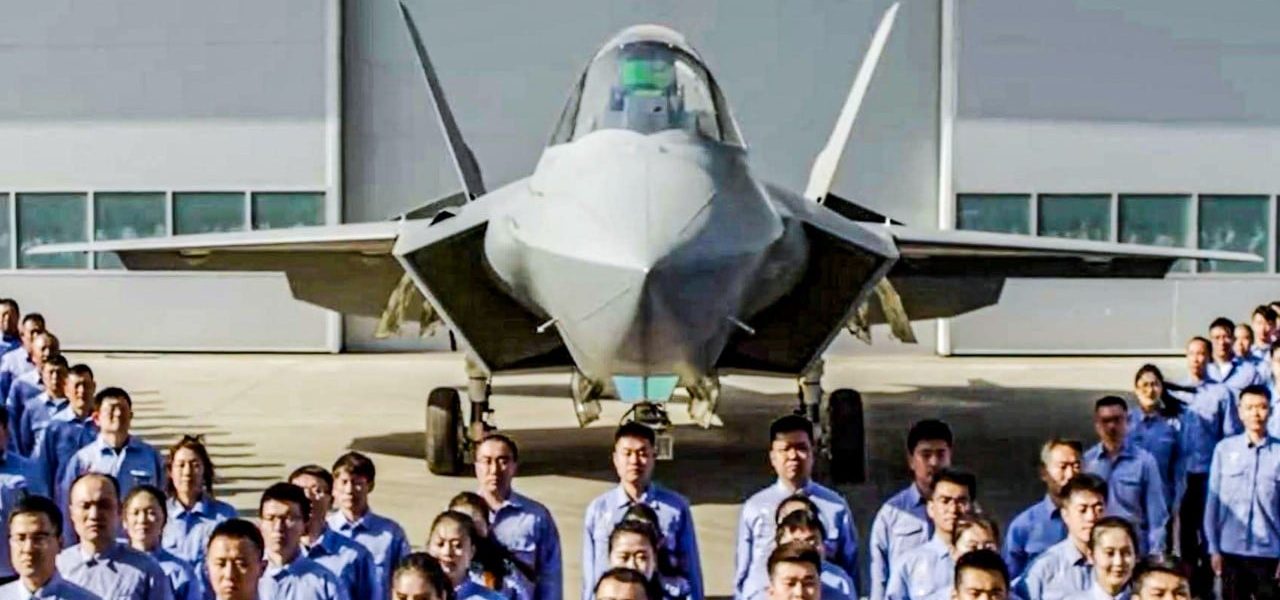
No, this isn’t just another procurement announcement from Islamabad, though plenty of those have landed in recent years. We’re talking about the Shenyang J-35. And, make no mistake, that acronym signals a fundamental re-calibration, not just an upgrade. The Pakistan Air Force (PAF) has, with rather pointed nonchalance, confirmed an “initial collaborative agreement” for the acquisition of these fifth-generation stealth fighters. They aren’t dishing out details about timelines or quantities, of course—where’s the fun in that for geopolitical observers? But the message is clear, hitting with the thud of a perfectly aimed stealth bomb: a new player’s entering the aerial arena, invisible to most radar, changing the rules.
Because let’s be honest, for all the bravado, India’s own ambitions for advanced air superiority have often felt, well, a little grounded. Their home-grown Advanced Medium Combat Aircraft (AMCA) remains largely a drawing-board dream, years, maybe even decades, from operational reality. India operates French Rafales — and a patchwork of Russian and older Western jets. Pakistan’s approach, conversely, seems decidedly more pragmatic, tying its future squarely to China’s rapidly advancing military industrial complex. A year after staring down a rather messy Indian air incursion—that entire episode felt like a clumsy, televised wrestling match at times—Pakistan has upped its game.
Beyond the gleaming promise of stealth, the PAF is also bulking up its existing fleet. They’re adding more Chengdu J-10C fighters to the mix and pushing ahead with significant upgrades to their JF-17s, jets co-produced with China. These aren’t just minor tweaks; we’re talking about enhancing avionics, radar systems, — and precision weaponry. This is about making everything they fly a little nastier, a lot smarter. It’s a comprehensive, systematic enhancement designed to close any perceived technological gap with their arch-rival.
Air Chief Marshal Zaheer Ahmed Babar Sidhu, the current Chief of Air Staff for the PAF, didn’t mince words recently when speaking about the service’s vision. “Our resolve to safeguard the nation’s sovereignty remains unwavering. This generation of fighters, coupled with the spirit of our airmen, ensures that our skies remain impenetrable,” he stated, his voice resonating with an almost theatrical certainty during a private briefing. “We’re not just acquiring hardware; we’re securing our future.” You can almost hear the unstated subtext: *This changes things.*
But India, naturally, isn’t taking this news lying down, even if publicly they’re affecting an air of detached skepticism. An Indian Ministry of Defence official, speaking off the record but with distinct irritation in their tone, shrugged off the development. “Chinese fifth-generation capability is, shall we say, a matter of some debate. Quantity rarely equals quality in advanced warfare, and India remains confident in its diverse, multi-sourced defense partnerships,” the official remarked, subtly implying China’s J-35 might just be a slick marketing ploy with unproven combat mettle. But beneath that diplomatic varnish, there’s gotta be some serious head-scratching going on in New Delhi.
📄 POLICY WIRE WHITEPAPER PUBLISHED: PAKISTAN'S NATIONAL SECURITY POLICY PRIORITIES
👉 READ BY CLICKING HEREIt’s a clear indication of where regional power dynamics are headed, and perhaps, where China’s strategic influence really counts. The broader geopolitical contest in Asia isn’t just about trade routes or maritime dominance; it’s also fought in the skies, with advanced technology acting as the ultimate bargaining chip. Pakistan, after all, isn’t just a partner; it’s China’s most consistent arms client. According to the Stockholm International Peace Research Institute (SIPRI), China became the third-largest arms exporter globally between 2019 and 2023, with Pakistan as its primary recipient, accounting for a staggering 36% of its exports. That’s a relationship built on strategic dependency, — and it runs deep.
What This Means
This J-35 acquisition isn’t merely about another jet hitting the tarmac; it’s a policy statement—loud and clear. Economically, it solidifies Pakistan’s heavy reliance on Chinese defense exports, deepening an already extensive relationship and potentially restricting its ability to diversify its military-industrial base. Politically, it grants Islamabad a psychological advantage, or at least a powerful talking point, in its perpetual tit-for-tat with India. It puts pressure on New Delhi to accelerate its own modernization programs or, perhaps, push harder on international partners for accelerated delivery of advanced platforms like the F-35—a complicated ask given America’s traditional balancing act.
But the real ripples extend further than just the subcontinent. This move demonstrates China’s growing capability and willingness to equip its allies with genuinely cutting-edge military hardware, challenging the long-standing Western dominance in such technology. It presents Beijing as a viable, perhaps even preferable, alternative for nations in the Global South seeking modern defense solutions without the geopolitical strings sometimes attached to American or European deals. For the Muslim world, specifically nations like Pakistan, this also signifies a bolstering of capabilities through a powerful non-Western ally, subtly altering long-held regional strategic calculations. It changes how you project power, how you deter, — and how you posture. And that’s a big deal. For everyone watching this space, the skies just got a lot more interesting—and a lot more opaque.