


The Ghost in the Machine: Barcelona’s Fragile Grandeur Hinges on Mid-Tier Talent
POLICY WIRE — BARCELONA, SPAIN — Forget the tiki-taka, the romantic allure, and the decades of unmatched glory. These days, the most captivating drama unfolding at FC Barcelona isn’t on the...

POLICY WIRE — BARCELONA, SPAIN — Forget the tiki-taka, the romantic allure, and the decades of unmatched glory. These days, the most captivating drama unfolding at FC Barcelona isn’t on the hallowed turf of Camp Nou (well, Lluís Companys Olympic Stadium for now), but deep within the club’s balance sheets. Because when a former luminary, Jordi Alba, takes time from his MLS sunbath to laud a player like Raphinha, it’s not merely a footballing observation. It’s a subtle, almost inadvertent, commentary on a meticulously constructed house of cards, where perception often battles-—and occasionally wins against—reality.
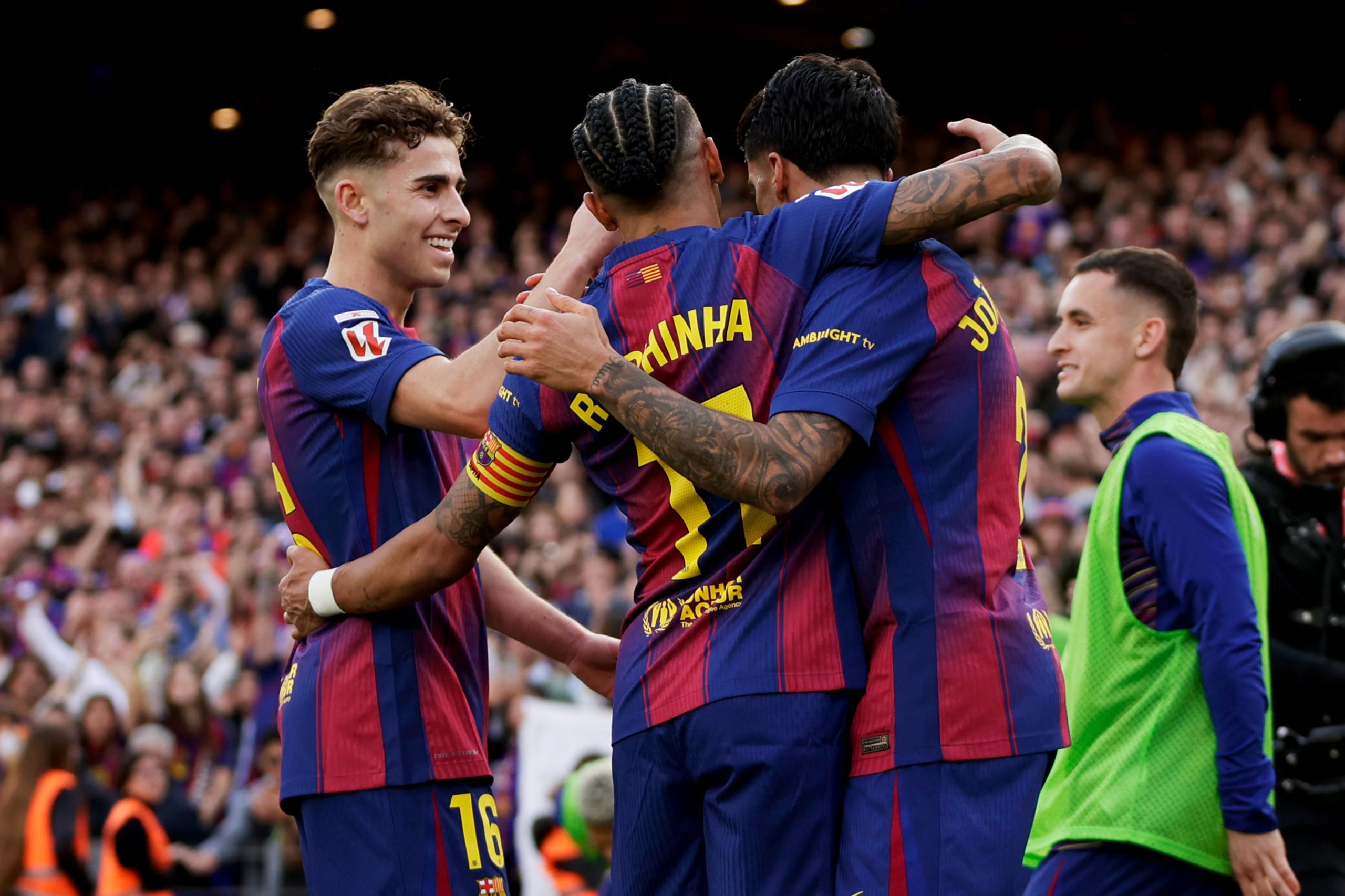
It’s become a curious spectacle, hasn’t it? A club that once boasted names like Messi, Iniesta, and Xavi, now sees its collective breath held over the form of a winger who, by his own former admission, ‘didn’t have a good time’ initially. Alba, that storied left-back now kicking around with Inter Miami, recently singled out Raphinha for praise, telling La Vanguardia, “I really like Lamine Yamal, Pedri, Gavi, Eric… and Flick, who’s a coach who’s doing very well. But I think Raphinha has taken a big step forward since I left and since Flick’s arrival.” A glowing review, sure, but what it signals beyond the pitch is far more intriguing.
Barcelona operates on a financial precipice. They’ve gambled future assets—the notorious ‘economic levers’—for immediate solvency, trying to keep pace with petro-funded giants and the Premier League’s seemingly infinite broadcast revenues. And that means every player, from academy prodigies to high-priced imports, carries a burden beyond goal tallies and assists. Their market value, their appeal to potential sponsors, their capacity to keep merchandise flying off the shelves—it’s all tied up in this delicate, often absurd, equilibrium. Raphinha, for instance, has notched 19 goals across all competitions despite injury disruptions, a respectable figure that still feels somewhat overshadowed by the sheer weight of expectation.
Club President Joan Laporta, ever the showman, has consistently tried to paint a picture of burgeoning financial health. But it’s an economic juggling act under constant scrutiny. “We’ve turned a corner,” Laporta recently declared, perhaps to a room full of skeptical creditors. “Our strategy of strategic asset sales, coupled with stringent salary controls, is proving its worth. The club’s legacy demands excellence, both on and off the field, and we’re committed to delivering it without compromising our long-term vision.” And he’s right, the legacy *does* demand excellence. But often, it’s excellence manufactured out of necessity rather than abundance.
Consider the broader landscape. La Liga’s stringent financial fair play rules mean that Barcelona, unlike some English clubs operating in a freer market, can’t simply spend its way out of trouble without first selling players or dramatically reducing its wage bill. This creates a fascinating — and frankly, rather brutal — marketplace for talent. Player endorsements, particularly from revered former figures like Alba, can subtly, almost imperceptibly, bump up a player’s perceived value, making him more marketable for a potential sale down the line. It’s not just about a fan’s satisfaction; it’s about a club’s balance sheet.
The global reach of a club like Barcelona is truly astounding. From Jakarta to Karachi, young fans mimic the movements of their heroes. This massive, enthusiastic following in places like Pakistan and across the wider Muslim world translates into staggering commercial potential—merchandise, broadcast rights, and brand partnerships that are absolutely critical for the club’s financial survival. Barcelona knows this, of course, pouring resources into expanding its brand in these burgeoning markets, understanding that every jersey sold in Lahore is another small victory against economic headwinds.
The truth is, much of modern football operates this way now—as a series of interconnected, high-stakes financial operations thinly veiled by athletic spectacle. An optimistic quote from a respected former player, therefore, becomes more than just sentiment. It’s a strategic inflection point, a whisper campaign for market advantage. “It’s about maintaining narratives,” explained Dr. Anya Sharma, a sports economics analyst from the University of Seville. “In an environment where sponsorship deals and player valuations are constantly recalibrated, a positive word from a credible source—especially a legend—can shift perception by just enough to impact contract negotiations or potential transfer fees. This isn’t charity; it’s calculated messaging within a cutthroat market.”
It’s no small feat. With operating revenues hitting a staggering 859 million Euros for the 2022-23 season, as reported by Deloitte Football Money League, Barcelona remains an economic powerhouse, but one grappling with immense debt. A seemingly small comment about a player taking a ‘big step forward’ becomes part of the public relations machinery designed to protect this colossal economic engine. It’s an exercise in brand management as much as it’s a nod to athletic improvement. And really, isn’t that just how the world works now?
What This Means
Alba’s observation isn’t a throwaway line; it speaks directly to Barcelona’s broader political and economic maneuvering. When a club is as deeply intertwined with Catalan identity as Barça is, its financial health becomes a matter of regional pride. Political leaders in Catalonia often reference the club’s global standing as a soft power asset, attracting tourism and investment. So, when players like Raphinha perform—and crucially, when their performance is validated publicly by figures like Alba—it buttresses the narrative of a club, and by extension, a region, overcoming adversity.
Economically, strong player performance enhances transfer value, a crucial liquidity faucet for Barcelona’s tightly managed budget. If Raphinha can maintain or even improve upon his 19-goal season, his market appeal grows, providing options for the club. But, because Barcelona’s reliance on these individual player ‘upswings’ for solvency is so pronounced, it creates an environment where mere athletic ability is insufficient. Players must also embody brand ambassadors, capable of driving global fan engagement and commercial revenues in markets from Europe to the subcontinent. It’s a relentless, high-pressure machine, demanding every cog performs its role—both on the pitch, and in the intricate public perception game. Anything less, — and the whole delicate structure might just wobble a bit more than it already does.