


Whistleblower’s Lament: Bayern Boss Questions Integrity After Champions League Exit
POLICY WIRE — Munich, Germany — There’s a particular kind of gnawing ache that only comes from feeling you’ve been had. Not merely beaten, mind you, but *undone* by forces less visible than a...

POLICY WIRE — Munich, Germany — There’s a particular kind of gnawing ache that only comes from feeling you’ve been had. Not merely beaten, mind you, but *undone* by forces less visible than a formidable opponent. It’s that bitter sensation, an almost philosophical grievance, that currently grips the Allianz Arena. Because when Bayern Munich crashed out of the UEFA Champions League — a competition they’ve long considered their birthright — it wasn’t just Paris Saint-Germain they were battling. It was, allegedly, the referees.
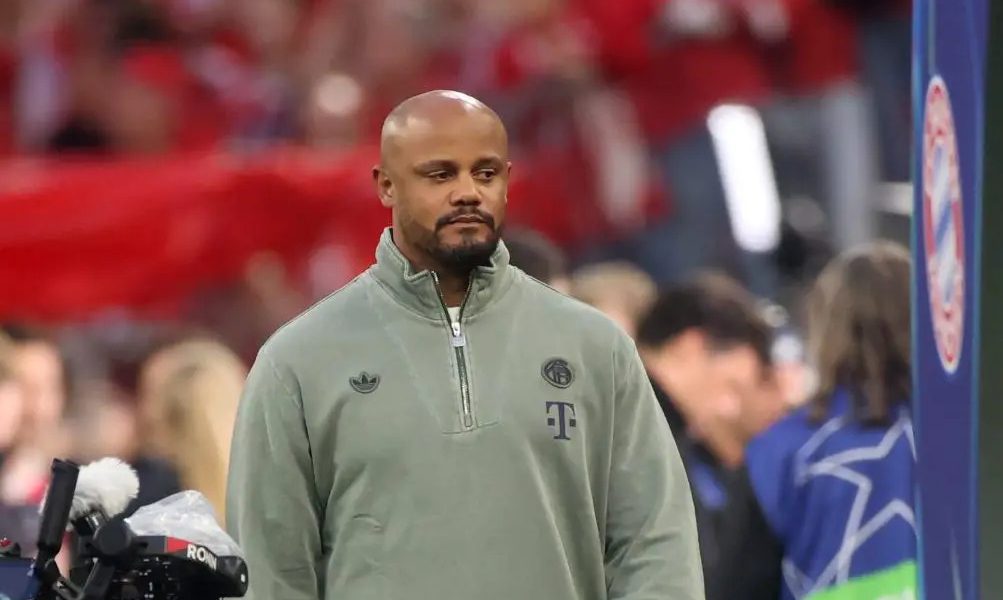
Manager Vincent Kompany, usually a picture of stoic composure, couldn’t contain his frustration following the 6-5 aggregate defeat. Their final 1-1 draw on Tuesday night felt less like a contest and more like a forensic investigation waiting to happen. The Belgian wasn’t just upset; he was incandescent, openly challenging the competency—or perhaps something more insidious—of officiating. It’s a sentiment that rings familiar far beyond the manicured pitches of Europe, stirring debates on systemic fairness from Doha to Karachi.
His particular bone of contention revolved around two critical decisions, or rather, non-decisions. First, Portuguese referee João Pinheiro’s baffling oversight when Paris’s Nuno Mendes seemingly earned a second yellow for a clear handball. Instead, the whistle blew, perversely, for a handball by Bayern’s Konrad Laimer seconds earlier. And Kompany? He wasn’t having it. “For me, it was clearly a second yellow card — and then a red. Absolutely clear!” he seethed, addressing the media. “Somehow, we got a call against us — and that incident is, of course, a game-deciding moment.”
He continued, almost challenging the assembled press: “I’ve seen the replays three times. Perhaps you’ve seen different ones? I haven’t seen a single image where Konrad Laimer touches the ball with his hand. Is that right? Has anyone here seen different images? No? There are at least 50 people here. Not one person says that they’ve seen a different image.” It’s hard to dispute that kind of direct, public challenge. It just isn’t.
But the officiating odyssey didn’t end there. Later, PSG midfielder João Neves also handled the ball in his own box. Again, no penalty. The argument for that one, rooted in the International Football Association Board (IFAB) regulations, claims no penalty if it’s from a teammate clearing the ball. Kompany, however, was having none of the nuanced interpretations of physics. “The own player was ten metres away!” he exclaimed, painting a vivid picture of a ball caroming off a foot only to defy gravity – and common sense – into Neves’s outstretched arm.
📄 POLICY WIRE WHITEPAPER PUBLISHED: PAKISTAN'S NATIONAL SECURITY POLICY PRIORITIES
👉 READ BY CLICKING HEREThis isn’t merely about a few disputed calls. These incidents throw a spotlight onto the immense, often opaque power wielded by a handful of officials in multibillion-dollar industries. And it doesn’t escape the keen eye of someone like Mr. Kompany. It’s why clubs, — and frankly, nations, pour resources into developing academies and infrastructure. Think of the academies now blooming across South Asia, funded by European football dreams—the talent scouting networks reaching deep into cities like Lahore and Dhaka, all predicated on a belief in fair competition. When that belief wobbles, everything shakes. And those regions, where institutional integrity is often a subject of constant scrutiny, don’t miss the subtext of such complaints.
A spokesperson for UEFA’s Refereeing Committee, who wished to remain anonymous to avoid direct comment on the specific fixture, offered a generalized defense, emphasizing the labyrinthine nature of the rulebook. “Referees operate under immense pressure, and while technology aims for precision, the human element, and indeed, subjective interpretation, remains inherent to the game’s flow,” the official stated. “We trust our officials to apply the regulations fairly, within the complex dynamics of high-stakes competition.” A neat bit of deflection, don’t you think? But it certainly doesn’t soothe the losing side’s wounds.
Elimination from the Champions League quarter-finals alone costs a behemoth like Bayern Munich more than just pride. According to UEFA’s own prize money distribution structure, making the semi-finals earns a club approximately €12.5 million. This sum doesn’t even account for lost gate receipts from potential home semi-final fixtures, television revenue shares, or the activation of performance-related sponsorship bonuses. Losing this money affects everything—from their standing in the European elite to future player acquisitions. It impacts player valuations. It’s a huge chunk of change. This isn’t just sport; it’s high finance, with whistles instead of gavels.
What This Means
This kerfuffle isn’t just sour grapes from a losing manager; it’s a tremor in the institutional foundations of global football. Kompany’s very public accusations, particularly the implicit suggestion of biased or incompetent officiating, reverberate far beyond Bavaria. Economically, missed Champions League progression hits hard. That lost €12.5 million directly impacts Bayern’s spending power, perhaps forcing them to reassess their transfer market strategy. Policy-wise, these controversies pile pressure on governing bodies like UEFA and IFAB to refine—or at least better explain—their officiating protocols. There’s a subtle political undercurrent here, too. The Champions League, for all its corporate sheen, is a battle for global eyeballs — and cultural dominance. When the perceived integrity of the game falters, especially in high-stakes matches watched by millions from Karachi to Cairo, it can erode trust not just in sports but in international bodies generally. It casts a shadow over the soft power Europe exerts through its sporting empires. A lack of transparent accountability—or even perceived transparency—leaves ample room for accusations of impropriety, fanning the flames of distrust in institutions that already struggle with legitimacy in a skeptical world.