

Morocco’s Glass and Steel Gamble: Waldorf Astoria Reaches Beyond Tourism
POLICY WIRE — Rabat, Morocco — It isn’t just about plush sheets or impeccable room service anymore, is it? When a country erects its tallest building, caps it with a global luxury brand like...

POLICY WIRE — Rabat, Morocco — It isn’t just about plush sheets or impeccable room service anymore, is it? When a country erects its tallest building, caps it with a global luxury brand like the Waldorf Astoria, and plants it squarely in its administrative heart, you’re not just looking at tourism. You’re watching an elaborate, meticulously choreographed statement of national intent.
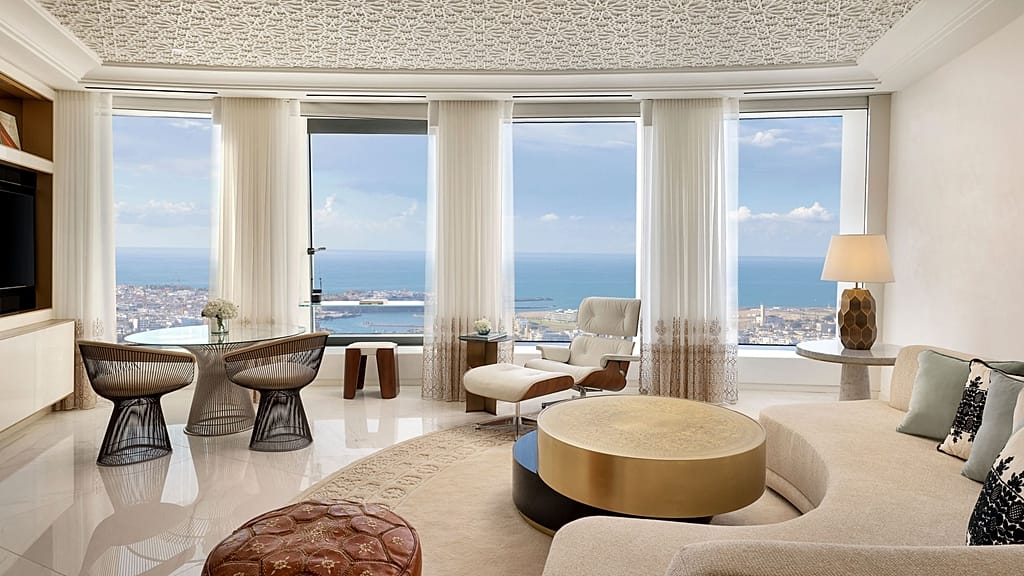
Morocco, long celebrated for its ancient souks — and sun-drenched coastlines, is making a much bolder play these days. The recent grand opening of the Waldorf Astoria Rabat Salé, nestled within the gleaming Zed complex that pierces Rabat’s skyline, isn’t just an addition to the country’s hospitality portfolio. Oh no. It’s a shiny, imposing marker of Rabat’s—and by extension, Morocco’s—lofty economic aspirations on the global stage, an unapologetic declaration of sophisticated arrival.
“This project represents far more than just brick and mortar,” declared Hassan Al-Jazouli, Morocco’s Minister of Investment, beaming at the inauguration. “It symbolizes our nation’s confidence, our open embrace of international partners, and our unwavering belief in a prosperous, diversified economic future. We’re not just building hotels; we’re cultivating an ecosystem where business thrives, where culture shines, and where the world truly sees Morocco as a premier destination, not merely a picturesque stop.” His remarks, steeped in diplomatic confidence, hint at a broader geopolitical maneuvering beneath the polished veneer of luxury.
The Zed building itself, soaring over 650 feet, doesn’t just offer panoramic views. It embodies a narrative—a tale of a Muslim-majority nation deftly balancing its rich heritage with aggressive modernization. It’s about drawing in the high-net-worth crowd, sure, but it’s also about saying to Doha, to Dubai, to Istanbul: ‘We’re here. And we’re quite serious about playing in your league.’ And they’re getting serious; Morocco’s tourism sector reportedly contributed over 8.1% to its GDP in 2022, according to the World Bank, illustrating its growing importance to the national economy. But that figure’s a floor, not a ceiling, if you ask officials.
But can a single, admittedly opulent, skyscraper fundamentally alter perception or economic trajectories? Critics might scoff. And yet, this isn’t Morocco’s first rodeo with grand projects designed to project an image of dynamism — and stability. They’ve been investing heavily in infrastructure, renewable energy, — and industrial parks. It’s part of a concerted effort to position the Kingdom as an economic gateway, a stable, welcoming counterpoint to—well, let’s just say some less predictable parts of the region.
Hilton, the parent company of Waldorf Astoria, certainly sees the allure. “North Africa, and specifically Morocco, represents a dynamic growth market with immense potential for luxury travel,” stated Simon Vincent, Hilton’s Executive Vice President & President, EMEA. “The Waldorf Astoria Rabat Salé isn’t just a flagship; it’s an anchor for further development, signaling our deep commitment to the region and its discerning clientele.” He’s not wrong; there’s a new breed of traveler—domestic and international—looking for top-tier experiences. These aren’t your backpackers, folks. They’re spending serious coin.
📄 POLICY WIRE WHITEPAPER PUBLISHED: PAKISTAN'S NATIONAL SECURITY POLICY PRIORITIES
👉 READ BY CLICKING HEREAnd what about the average Moroccan? While the direct impact might feel distant, these projects inevitably create jobs—everything from hospitality roles to the trades. They also spark discussions, both local and international, about economic equity and infrastructure development beyond the gleaming centers. It’s a complicated picture, as you might imagine, with big shiny objects sometimes distracting from underlying socio-economic wrinkles.
The venture subtly throws shade at competitors in the region, particularly those banking on old models or suffering from internal strife. Compare it, for instance, to nations wrestling with economic stagnation or political unrest—you don’t see those building super-luxury landmarks every other Tuesday, do you? Because stability, it turns out, is a heck of a selling point for big investors.
What This Means
The Waldorf Astoria Rabat Salé isn’t simply another luxury hotel; it’s a finely polished brick in Morocco’s long-term economic and geopolitical strategy. Politically, it strengthens Rabat’s narrative as a forward-thinking, stable monarchy capable of attracting and managing high-profile foreign investment. This enhances its soft power, potentially bolstering diplomatic ties within Africa, Europe, and the wider Muslim world, drawing parallels to how certain Gulf states leverage their urban developments for influence. It isn’t just about welcoming tourists; it’s about welcoming a global class of businesspeople, investors, and political elites, providing a neutral, sophisticated ground for discreet negotiations and networking.
Economically, the implications are layered. It diversifies Morocco’s tourism offerings, moving beyond traditional cultural or adventure tourism towards high-end luxury, which often comes with higher per-capita spending. This bolsters currency reserves, creates both direct and indirect employment, and stimulates local economies through supply chains—think local artisans furnishing interiors or farmers supplying restaurants. The halo effect of such a recognized brand also boosts Morocco’s overall international brand image, making it an even more attractive destination for other forms of foreign direct investment. However, for a balanced perspective on growth challenges in developing nations, one might consider Manila’s economic struggles, as detailed here, offering a contrast to Morocco’s current trajectory.
But the hotel’s placement—in Morocco’s tallest building—also holds deep symbolic meaning for the broader Muslim world. It represents a capacity for modernity and global competitiveness, a challenge to stereotypes, and an aspiration for progressive development that resonates from Pakistan to Indonesia. It signals that luxury, sophistication, — and global engagement aren’t exclusive to a handful of financial hubs. Instead, it suggests a broader path of development that many Muslim-majority nations might pursue, offering a different kind of regional leadership through economic example. In a volatile world, an investment in glass, steel, and five-star service can sometimes be the most potent form of diplomacy, creating shared economic interests that quietly underpin stability, much like the economy of power playing out in less glamorous, but equally significant arenas. This isn’t just about lodging. It’s about laying a claim.