


Sacred Icons and Scorched Earth: Why a Soldier’s Folly Ripples Across the Middle East
POLICY WIRE — Beirut, Lebanon — It isn’t the rockets that always define the Mideast cauldron, nor the geopolitical grandstanding of rival states. Sometimes, it’s a lone act—a moment of...

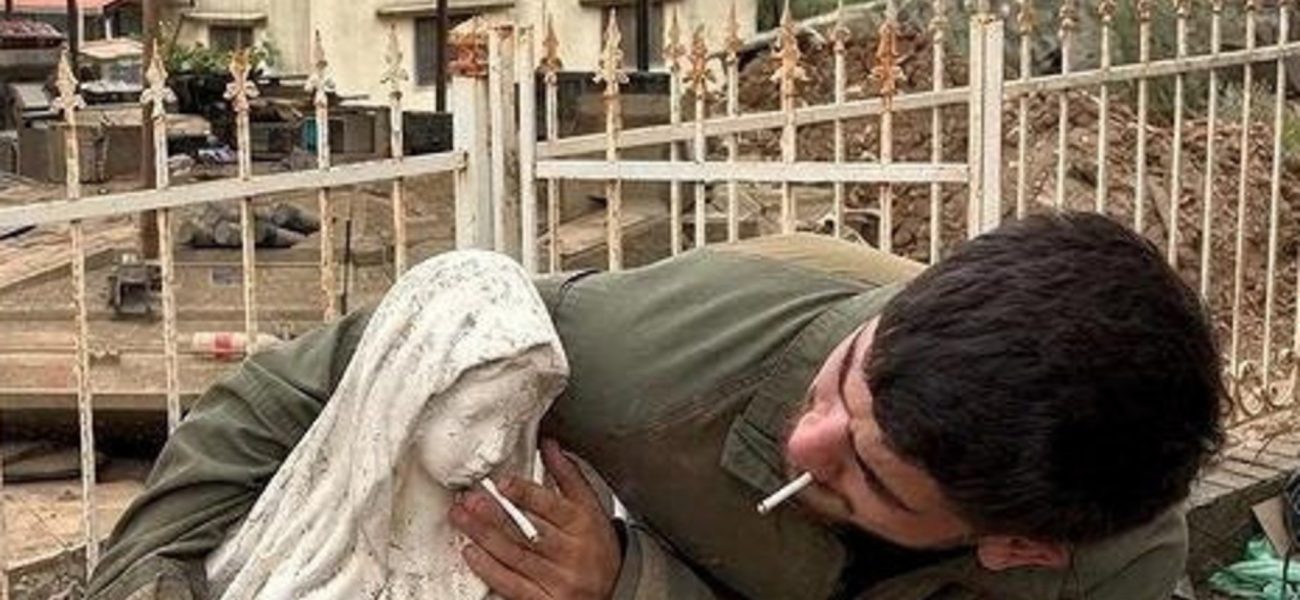
POLICY WIRE — Beirut, Lebanon — It isn’t the rockets that always define the Mideast cauldron, nor the geopolitical grandstanding of rival states. Sometimes, it’s a lone act—a moment of boneheaded disrespect—that manages to fray the region’s already thin patience, sending tremors far beyond a blasted border fence. We’ve seen it time and again: a mosque defiled, a grave desecrated, and the repercussions invariably make for an extended, ugly holiday season. This time, the spark? A crude act involving a statue of the Virgin Mary in southern Lebanon, courtesy of an Israeli soldier. Not exactly the kind of press Israel wants, is it?
The incident itself seems almost tragically simplistic in its execution. An Israeli Defense Forces (IDF) soldier, deployed in a volatile, heavily contested sliver of southern Lebanon, reportedly took it upon himself to — let’s be blunt — vandalize a statue of the Virgin Mary. Details remain hazy, of course, they always do when such an act involves a serving military member and an international outcry. But the footage, or at least its description, went viral faster than a geopolitical wildfire, depicting what’s now broadly seen as an act of calculated religious affront.
Because the region, particularly Lebanon, is a mosaic, isn’t it? A place where Maronite Christians, Sunni, Shia, Druze — they all jostle for space, for political power, for peace. The Christian communities there hold a deeply rooted spiritual significance for Catholicism, especially with the region’s historical links to biblical narratives. So, an act of scorn against one of Christianity’s most revered figures isn’t just about an ugly little skirmish; it’s about spitting on a shared heritage, deliberately kicking over an already precarious card tower. You don’t have to be a prophet to see how that’ll play out.
The Israeli military, swift in its condemnation, called the soldier’s actions “serious and unprofessional,” adding that he would face “disciplinary measures.” Sounds about right. IDF Spokesperson Rear Admiral Daniel Hagari was quick to articulate the military’s official stance, telling Policy Wire, “We view any disrespect for religious symbols, particularly those venerated by Christian communities in the region, as completely unacceptable and contrary to IDF values. This soldier’s actions reflect poorly on the entire force, — and he will be dealt with accordingly. We don’t tolerate such behavior; it complicates our security posture and alienates allies.” But, actions speak louder than platitudes, especially in a part of the world that treats apologies like pre-election promises.
On the Lebanese side, the outrage was, predictably, immediate — and incandescent. And why wouldn’t it be? Hassan Nasrallah doesn’t need much more kindling for his perpetual firestorm, but an incident like this is manna from heaven for Hezbollah’s propaganda machine. Prominent Lebanese Christian leader and politician, Gebran Bassil, minced no words, declaring, “This isn’t merely a disciplinary issue; it’s a profound insult to Lebanese sovereignty and a blatant disregard for the sacred beliefs of our Christian citizens. The international community simply can’t look away when occupying forces behave with such deliberate provocations. It fuels sectarianism where we strive for unity.” He’s got a point. Incidents like these, they just inflame local tensions, giving hardliners an open microphone.
But the fallout isn’t contained to the immediate adversaries. The broader Muslim world—stretching from the Levant all the way to Pakistan’s community fabric—listens, watches, and remembers. An attack on any Abrahamic faith symbol, irrespective of which one, resonates deeply in a region where religious identity often dictates everything from daily life to national policy. Incidents of alleged Israeli disrespect towards Christian sites or figures, regardless of their truth or scale, feed into a long-standing narrative that paints Israel as indifferent to — or actively hostile towards — non-Jewish religious sensibilities. That narrative, false or not, provides ample fodder for groups seeking to demonize Israel and galvanize anti-Western sentiment. Consider that nearly 97% of Pakistan’s population identifies as Muslim, according to the Pew Research Center’s 2010 report, making any perceived slight against a religious group in the broader Islamic world a particularly sensitive issue, capable of sparking widespread condemnation and solidarity demonstrations. It certainly adds an extra layer of complexity to already delicate economic tensions and diplomatic overtures in the region.
What This Means
The economic implications of such an act might not be immediately obvious, but they’re absolutely present. Think about it: continued instability, driven by religiously charged incidents, drives away tourism—a not-insignificant revenue stream for Lebanon—and dampens any flicker of foreign investment. For Israel, while perhaps not impacting its robust tech sector, these optics certainly complicate its diplomatic efforts, especially as it attempts to normalize relations with more Arab states. Perceived disregard for religious sensitivities is a powerful deterrent, stiffening opposition even among those otherwise amenable to cooperation.
Politically, the damage is multi-layered. For Lebanon’s fragile government, it means another headache, another sectarian tightrope to walk, trying to placate various factions and avert escalation. For Hezbollah, it’s a propaganda windfall, allowing them to further cement their role as ‘defenders’ against external aggression, both military and cultural. For Israel, this seemingly small lapse in discipline is a strategic blunder. It hands ammunition to its adversaries and complicates its messaging. But mostly, it serves as a stark reminder: in the Middle East, a single, foolish act against a statue can cause more diplomatic heartburn than a dozen tactical maneuvers. It just goes to show, sometimes the smallest provocations pack the biggest punches, destabilizing peace and poisoning relations when everyone’s already holding their breath.