


The Ghost of Draft Picks Past: How a Minor NFL Trade Exposes Major Economic Currents
POLICY WIRE — Chicago, Illinois — At its core, the annual NFL Draft is a dazzling spectacle of aspiration and potential, replete with multi-million dollar contracts and the raw emotion of dreams...

POLICY WIRE — Chicago, Illinois — At its core, the annual NFL Draft is a dazzling spectacle of aspiration and potential, replete with multi-million dollar contracts and the raw emotion of dreams realized. But beneath the glittering veneer of first-round fanfare, a different, more granular economy hums: the meticulous accounting of future assets, where a seventh-round pick, often dismissed as mere cannon fodder, can represent a pivotal piece of strategic maneuvering. It’s here, in the quiet finalization of such a transaction, that the true, often brutal, calculus of professional sports asset management comes into sharp relief.
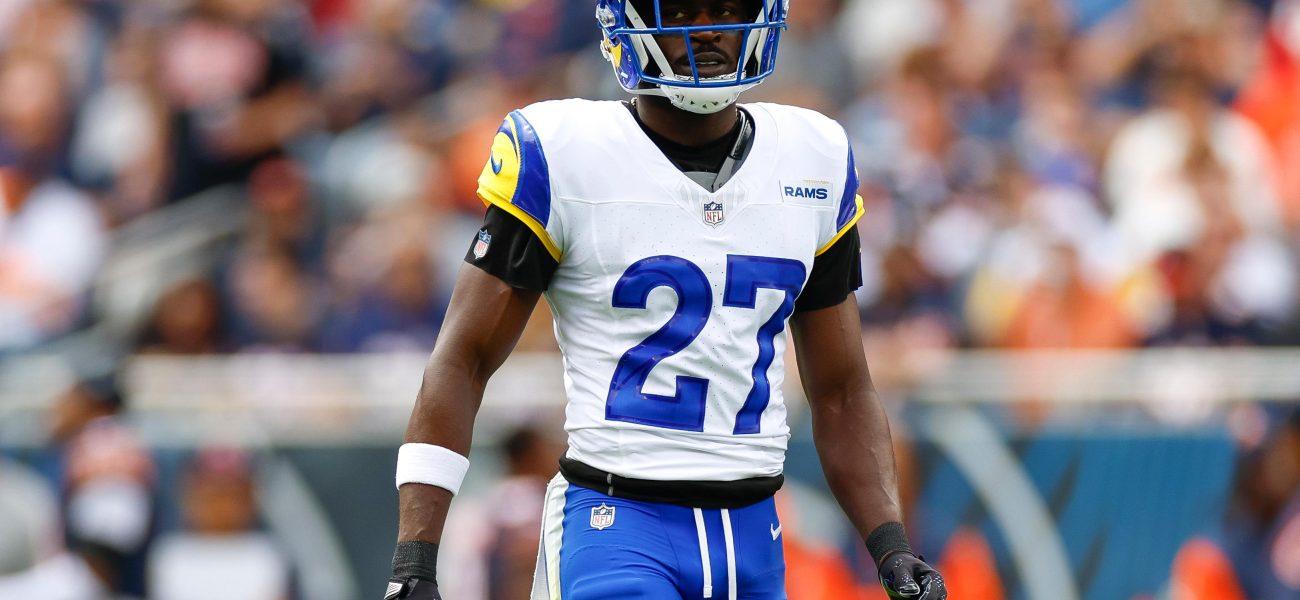
Still, the recent administrative wrap-up of the mid-season Tre’Davious White trade — a seemingly minor player swap between the Los Angeles Rams and the Baltimore Ravens — offers a fascinating, almost clinical, insight into this intricate machinery. The Rams, having gambled on White’s recovery from a career-altering Achilles injury with a one-year, $4.25 million deal in 2024, found their faith largely unrewarded. He earned a starting cornerback spot initially, yes, but by Week 5, White was warming the bench, his high-level play in Buffalo a distant memory. The experiment, quite frankly, hadn’t worked.
So, the Ravens, perpetually on the hunt for defensive reinforcements, swooped in. Their cornerback depth had become a genuine headache; first-round pick Nate Wiggins hadn’t yet proven his mettle, and Jalyn Armour-Davis was perpetually sidelined. What White offered, crucially, wasn’t elite performance but a verifiable clean bill of health – a commodity more valuable than gold in the brutal NFL landscape. Baltimore acquired him, along with a 2027 seventh-round pick, sending a 2026 seventh-rounder back to the Rams. A swap of late-round fliers, yet brimming with implicit meaning.
Upon arrival in Baltimore, White found himself as the fourth cornerback, a depth piece, playing sparingly. But what he did, he did efficiently. In seven appearances, across just 182 snaps, he impressed. Opposing quarterbacks, according to analytics tracking, posted a meager 56.2 passer rating when targeting the veteran corner, completing only 50.0% of their passes against him. It’s a hard statistic, starkly illustrating his efficiency, even if his playoff performance – conceding three catches for 46 yards on four targets – somewhat tarnished an otherwise solid, if brief, tenure.
Now, with the draft picks formally assigned, the picture is complete. The Rams, holding the Ravens’ original 2026 seventh-round selection, parlayed it into Alabama defensive tackle Tim Keenan at pick No. 232. And the Ravens? They not only retained the 2027 seventh-rounder they acquired but also nabbed a compensatory seventh-round pick (No. 250 overall) after White rejoined the Buffalo Bills on a new deal. They used this later pick to select Michigan defensive tackle Rayshaun Benny. It’s a bureaucratic dance, meticulously choreographed over months, culminating in two obscure defensive linemen.
“We’re always looking down the road, optimizing our capital,” asserted Les Snead, the Rams’ general manager, when pressed on the move. “Every asset has its value, even if it’s deferred or a late-round flyer. It’s about building for sustained success, not just one-off wins.” And Snead’s counterpart, Eric DeCosta of the Ravens, underscored the immediate necessity. “You can’t buy experience in a pinch like that. We needed a professional, a veteran presence, — and Tre’Davious provided precisely that stability when we needed it most. It was a calculated risk, and it paid off – albeit with a modest return.” DeCosta isn’t wrong; sometimes, the right piece isn’t the flashiest, it’s just the one that plugs the leak.
📄 POLICY WIRE WHITEPAPER PUBLISHED: PAKISTAN'S NATIONAL SECURITY POLICY PRIORITIES
👉 READ BY CLICKING HEREWhat This Means
The White trade, seemingly a trivial footnote in the NFL’s offseason churn, illuminates the league’s sophisticated, high-stakes financial ecosystem – an elaborate futures market where human capital is valued, devalued, and re-valued with ruthless efficiency. It’s a microcosm of broader economic dynamics, where an asset’s perceived value fluctuates wildly based on performance, health, and market demand. For the Rams, it was an acknowledgment of a sunk cost and a strategic pivot, securing a future draft slot as a form of deferred compensation. For the Ravens, it was a low-cost, high-upside gambit to address an immediate need, and they even managed to extract an extra compensatory pick (a form of league-mandated fiscal policy, one might argue) for their troubles.
This relentless pursuit of marginal gains, this quantification of human talent into tradeable commodities, stands in stark contrast to sports development in many parts of the world, particularly in South Asia and the broader Muslim world. Here, the sheer scale of investment in athlete valuation, scouting infrastructure, and player contracts often dwarfs national sports budgets. The NFL’s internal accounting for a seventh-round pick — an asset worth perhaps a few hundred thousand dollars in real terms, yet capable of securing a key rotational player — highlights a level of economic sophistication and liquidity that remains largely aspirational in regions struggling with foundational sports infrastructure and grassroots development. While the global football (soccer) market sees talent migrate from these regions to wealthier leagues, the robust, self-contained economic engine of North American sports operates on another plane entirely, illustrating profound disparities in sports capital and opportunity.
Ultimately, this isn’t just about Tre’Davious White; it’s about the pervasive philosophy of asset management that underpins modern professional sports. It’s about how teams, like corporations or even small nation-states, constantly evaluate their resources, making strategic decisions that reverberate far beyond the confines of a single game. And sometimes, those reverberations — those nuanced shifts in draft capital — are the most consequential of all.