


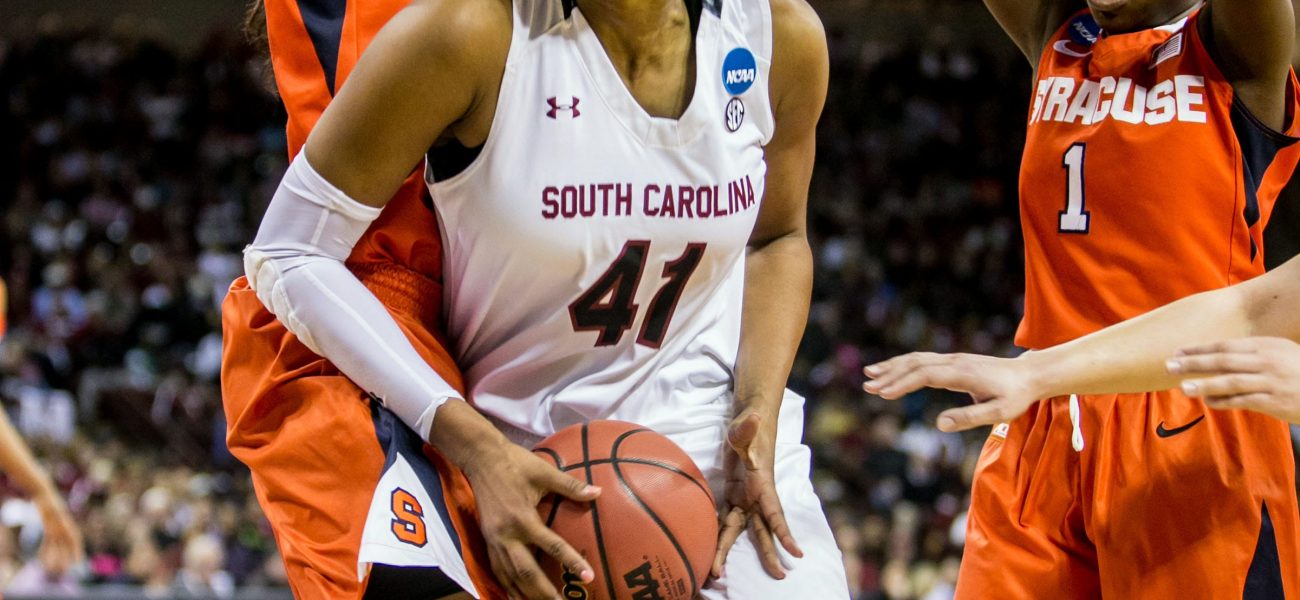
Beyond the Baseline: South Carolina’s Unseen Policy Playbook for Girls’ Basketball Dominance
POLICY WIRE — Columbia, South Carolina — It isn’t just about the swish of the net or the roar of the crowd. Behind South Carolina’s seemingly unending conveyor belt of elite...

POLICY WIRE — Columbia, South Carolina — It isn’t just about the swish of the net or the roar of the crowd. Behind South Carolina’s seemingly unending conveyor belt of elite female basketball talent — a phenomenon so pronounced that national outlets are now ranking its high school legends — lies a fascinating, if often unacknowledged, confluence of socio-economic factors and quiet policy currents. This isn’t merely a statistical anomaly; it’s a testament to an ecosystem, perhaps accidental, perhaps deliberate, that fosters athletic greatness with a tenacity rarely seen.
For decades, the Palmetto State has been a veritable forge for women’s basketball superstars. From the storied courts of its public schools to the top-ranked University of South Carolina program, the thread is continuous, vibrant. One could almost trace a direct lineage, a seamless transition from prep phenom to collegiate icon to professional luminary. And yet, the focus often rests solely on individual brilliance, overlooking the fertile ground that nurtures it. The question isn’t just ‘who’s the best?’, but rather, ‘what makes South Carolina so uniquely prodigious?’
It’s a query that delves past mere athleticism into the granular mechanics of community support, coaching dedication, and a cultural embrace of women’s sports that predates much of the national recognition. This deep-seated commitment, often in areas less economically advantaged, offers a curious case study in talent cultivation. As the nation eyes its 250th anniversary, celebrating historical figures, this sustained athletic excellence presents its own kind of legacy — one built brick by brick, rebound by rebound.
Consider Ivory Latta, whose staggering 4,319 career points still stand as the all-time scoring record for any high school player, male or female, in South Carolina history. Her narrative, like many others, speaks to an environment where dedication is rewarded, and talent, however raw, finds avenues for refinement. She didn’t just ‘get good’; she was cultivated within a system that allowed her to ascend. And it’s not just the past; contemporary stars like Joyce Edwards, already second in the state’s scoring annals with 3,966 points as a collegiate sophomore, continue this rich tradition. It’s a pipeline, not a series of isolated events.
“We’ve cultivated a culture here that prioritizes opportunity for young women in sports, particularly basketball,” asserted State Athletic Commissioner Eleanor Vance, a former collegiate player herself. “It’s about more than just trophies; it’s about character, leadership, — and providing a platform. That’s a policy choice, isn’t it?
But the story isn’t just local. A’ja Wilson, arguably the most dominant force in women’s basketball today — a four-time WNBA MVP, for goodness sake — honed her craft in Heathwood Hall. Her trajectory, from national high school prospect to global icon, illuminates the potential reach of this state’s output. It’s a soft power, really. These athletes become ambassadors, embodying excellence that transcends geographies.
Dr. Jamila Khan, a sports sociologist specializing in athletic development, offered a broader perspective. “What South Carolina has, often inadvertently, is a scalable model for fostering female athletic talent. It’s not just about funding — though that’s crucial — it’s about pervasive community engagement and a clear pathway from high school to professional ranks. That clarity provides unparalleled motivation.” One can’t argue with results.
📄 POLICY WIRE WHITEPAPER PUBLISHED: PAKISTAN'S NATIONAL SECURITY POLICY PRIORITIES
👉 READ BY CLICKING HEREWhat This Means
At its core, South Carolina’s basketball dominance isn’t merely a point of athletic pride; it’s a quiet blueprint for policy impact. The sustained excellence in girls’ basketball offers valuable insights into effective talent development and community investment. It underscores the profound socio-economic benefits derived from robust grassroots sports programs: improved health outcomes, enhanced educational opportunities (scholarships abound), and the cultivation of strong female leaders who often return to their communities as role models or entrepreneurs. Don’t forget, these are highly visible women achieving peak performance.
The consistent production of elite athletes like Katrina McClain, an Olympic gold medalist and Hall of Famer, and Pearl Moore, whose collegiate scoring record remains contentious only because it predates the NCAA’s official oversight of women’s sports in 1982, highlights the long-term dividend of such an environment. It’s a virtuous cycle: success breeds inspiration, which in turn fuels participation — and further success. And this isn’t just an American phenomenon; the global reach of these athletes is substantial. For instance, the visibility of stars like A’ja Wilson on international broadcasts inspires young girls worldwide, even in regions like the Muslim world or South Asia where societal norms or infrastructural limitations often curtail female athletic participation.
The policy implication here isn’t necessarily a top-down mandate but rather the creation of supportive local infrastructures — accessible facilities, dedicated coaching, and strong high school programs — that allow innate talent to flourish. This model, whether by design or evolution, suggests that focusing resources at the foundational level can yield disproportionate returns, transforming not just individual lives but also a state’s cultural identity. It’s a stark reminder that investment in human potential, particularly in marginalized groups, frequently pays off in ways far exceeding initial expectations, echoing broader discussions around equitable resource allocation and talent development strategies in other demanding fields.
Still, for a state often grappling with educational and economic disparities, this athletic success provides a powerful, tangible narrative of achievement. It’s a compelling case study for policymakers considering how to build sustainable pathways to success in any domain, from professional sports economics to fostering innovation. The playbook, it turns out, was written on hardwood courts, one championship season at a time.