


Beijing’s Ancient Triumph: New Dinosaur Bridges Evolutionary Chasms, Bolstering China’s Scientific Heft
POLICY WIRE — Beijing, China — It seems even the ancient bones of colossal beasts aren’t immune to the subtle currents of geopolitical ambition. While the world frets over microchips and...

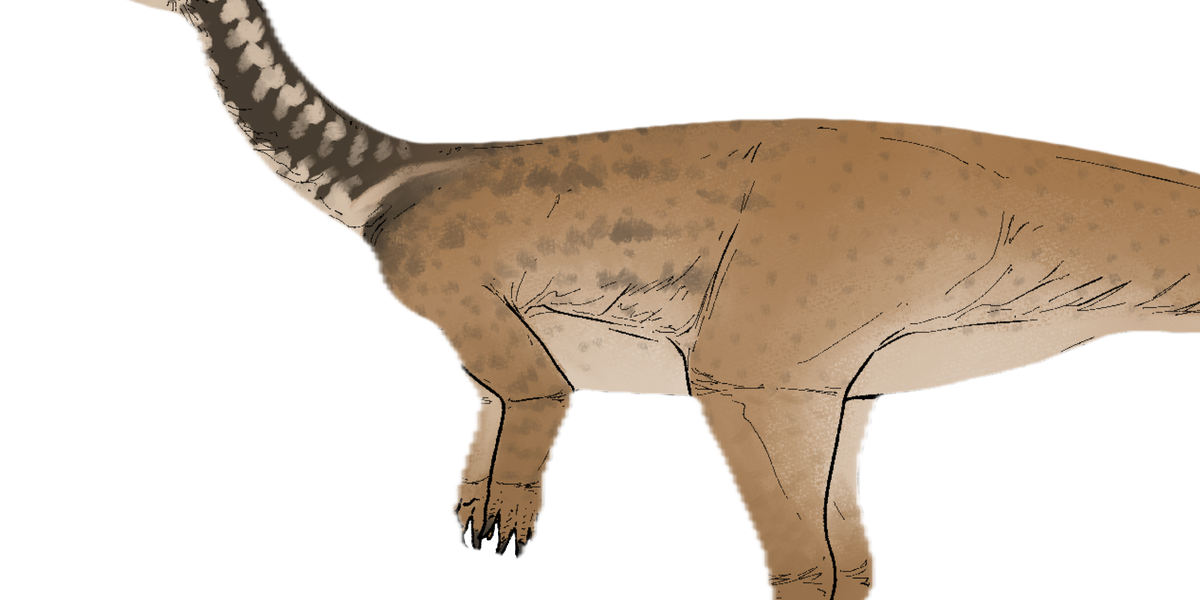
POLICY WIRE — Beijing, China — It seems even the ancient bones of colossal beasts aren’t immune to the subtle currents of geopolitical ambition. While the world frets over microchips and missile systems, China has quietly, and quite literally, been unearthing a different kind of supremacy: a dominion over the Mesozoic. The recent unveiling of a previously unknown dinosaur species in China isn’t just another paleontological footnote; it’s a monumental clarification of how Earth’s most gargantuan land animals evolved, bridging an evolutionary gap many researchers considered stubbornly opaque.
This isn’t merely about digging up old bones; it’s about piecing together an immensely complex narrative that predates humanity by tens of millions of years. And in doing so, Beijing subtly — but quite effectively — burnishes its scientific credentials on a global stage. The creature, a sauropod of prodigious dimensions (we’re talking seriously big, a veritable land dreadnought), offers a rare glimpse into the transitional forms that propelled these herbivorous giants from merely large to truly colossal.
“This isn’t merely a new species; it’s a testament to China’s profound scientific contribution to understanding Earth’s ancient past, a narrative we’re uniquely positioned to tell,” opined Dr. Li Wei, Director of the Chinese Academy of Sciences Paleontology Institute, during a carefully orchestrated press briefing. He spoke with the measured cadence of someone aware of both the scientific gravity and the national pride inherent in such discoveries. It’s a sentiment Beijing’s leadership is keen to propagate, portraying the nation not just as an industrial powerhouse, but as a crucible of fundamental scientific inquiry.
Still, the scientific world beyond China’s borders is genuinely abuzz. Professor Eleanor Vance, a prominent paleontologist from the University of Edinburgh, shot back with her own assessment, though from a respectful distance. “To uncover a specimen that so elegantly clarifies a transitional phase in sauropod gigantism — it’s not just rare, it’s foundational,” Vance mused in an email exchange. “It’s rewriting chapters, not just adding footnotes. We’ve long suspected such intermediate forms existed, but having the fossil evidence, so well-preserved, changes the entire discussion.”
The discovery, made in a region of Xinjiang, underscores China’s rich geological heritage — a veritable treasure trove for paleontologists. According to a 2021 study published in *Palaeontologia Electronica*, China has been the source of over 20% of all newly described dinosaur species since the turn of the millennium, a statistic that frankly dwarfs other nations’ contributions. It’s a staggering output, reflecting not just the vastness of its landmass but also a concerted investment in scientific exploration, often funded by state coffers. And, crucially, it’s providing answers to questions that have plagued scientists for decades.
This newly identified leviathan provides concrete evidence of how sauropods, those iconic long-necked, long-tailed plant-eaters, began their evolutionary journey towards truly titanic sizes. Its skeletal structure displays a unique blend of features: a relatively robust body — not quite the graceful enormity of later forms like the Argentinosaurus — but with an elongating neck and increasingly pneumatic bones designed to lighten the load. It’s a blueprint, really, for the ultimate land giants that would roam the Earth.
📄 POLICY WIRE WHITEPAPER PUBLISHED: PAKISTAN'S NATIONAL SECURITY POLICY PRIORITIES
👉 READ BY CLICKING HEREBehind the headlines, this find also subtly reinforces China’s role as a scientific leader, pushing boundaries not just in AI or quantum computing, but in fields as seemingly esoteric as paleontology. It’s a long-game play, fostering an image of intellectual ascendancy. Across the remnants of the ancient Tethys Ocean, where the Indian subcontinent once drifted as an island continent before its colossal collision with Asia, similar geological formations hint at equally compelling — though often underexplored — paleontological treasures. One can’t help but wonder what untold evolutionary tales lie buried beneath the sands of Balochistan or the Himalayas, awaiting a similarly concerted scientific effort, much like the redemption arc in Pakistan’s cricket, their own narratives awaiting proper excavation.
So, while some might dismiss dinosaur findings as charmingly archaic, it’s clear they resonate on a stage far larger than any museum exhibit. They’re a testament to national capability, scientific rigor, and the enduring human quest to understand our planet’s bewildering past. It’s a quiet flex, if you will, from a nation adept at both ancient history — and future-gazing.
What This Means
At its core, the discovery of this transitional sauropod isn’t just a win for paleontologists; it’s a strategic triumph for Beijing’s soft power initiatives. In an era where technological innovation often dominates headlines, a significant scientific breakthrough in a ‘pure’ science like paleontology allows China to project an image of comprehensive intellectual leadership. It demonstrates not only the nation’s capacity for sophisticated, long-term scientific investment but also its commitment to contributing to humanity’s collective knowledge — a narrative often overshadowed by economic competition or geopolitical tensions.
For developing nations, particularly in regions like South Asia and the broader Muslim world, this serves as a quiet reminder of the immense value of investing in fundamental research and scientific infrastructure. While immediate economic returns might be elusive, such discoveries elevate national prestige and foster international collaboration. It’s a subtle yet potent demonstration that global influence isn’t solely wielded through military might or economic leverage; sometimes, it’s about revealing the astonishing secrets locked in a millennia-old rock. Don’t underestimate the power of a really big, really old bone to shift perceptions. It’s a message that resonates, even if it’s delivered with the gravitas of a beast from another epoch. It also underscores a broader global trend: as nations compete, the pursuit of scientific firsts — be it in space, AI, or even deep time — becomes an increasingly consequential arena for national prestige.