


China’s Stone Giants: New Saurian Sovereign Rewrites Evolutionary Epic
POLICY WIRE — Beijing, China — The dignified dust of epochs past, it turns out, still holds rather dramatic secrets. Not merely a collection of old bones, but a geological pronouncement from deep...

POLICY WIRE — Beijing, China — The dignified dust of epochs past, it turns out, still holds rather dramatic secrets. Not merely a collection of old bones, but a geological pronouncement from deep time, one that abruptly shifts the tectonic plates of paleontological understanding. In the sprawling, mineral-rich expanse of what’s now China, scientists haven’t just unearthed another colossal creature; they’ve effectively found a Rosetta Stone for the evolution of the planet’s most gargantuan plant-eaters.
This isn’t merely about adding a new name to the dizzying taxonomy of dinosaurs. Oh no, it’s far more consequential. The recently unveiled species, a leviathan of the Middle Jurassic, fills a critical, vexing void in the sauropod lineage—those impossibly long-necked, four-legged herbivores that dominated terrestrial ecosystems for aeons. Paleontologists, for years, have grappled with the evolutionary steps that transformed smaller, earlier forms into the colossal behemoths like Brachiosaurus or Argentinosaurus. And now, suddenly, a chunk of that mystery just got excavated, dusted off, and meticulously cataloged by Chinese researchers.
It’s a testament to China’s ever-growing, meticulously funded scientific endeavors, isn’t it? The sheer scale of systematic paleontological exploration happening there continually yields finds that would be career-defining almost anywhere else. But here, they’re becoming, well, almost routine, signaling Beijing’s emergence as a significant player in global scientific discovery.
Dr. Mei Lihua, lead paleontologist at the Chinese Academy of Sciences (CAS), certainly doesn’t understate its import. “This discovery isn’t merely about size; it’s a testament to the unparalleled geological riches beneath our soil, and China’s unwavering commitment to advancing global scientific knowledge,” she articulated during a recent press briefing. “We’re not just excavating bones; we’re unearthing entire chapters of Earth’s story—chapters that compel us to revise our previous interpretations.” Her remarks underscore a distinct national pride woven into these scientific triumphs.
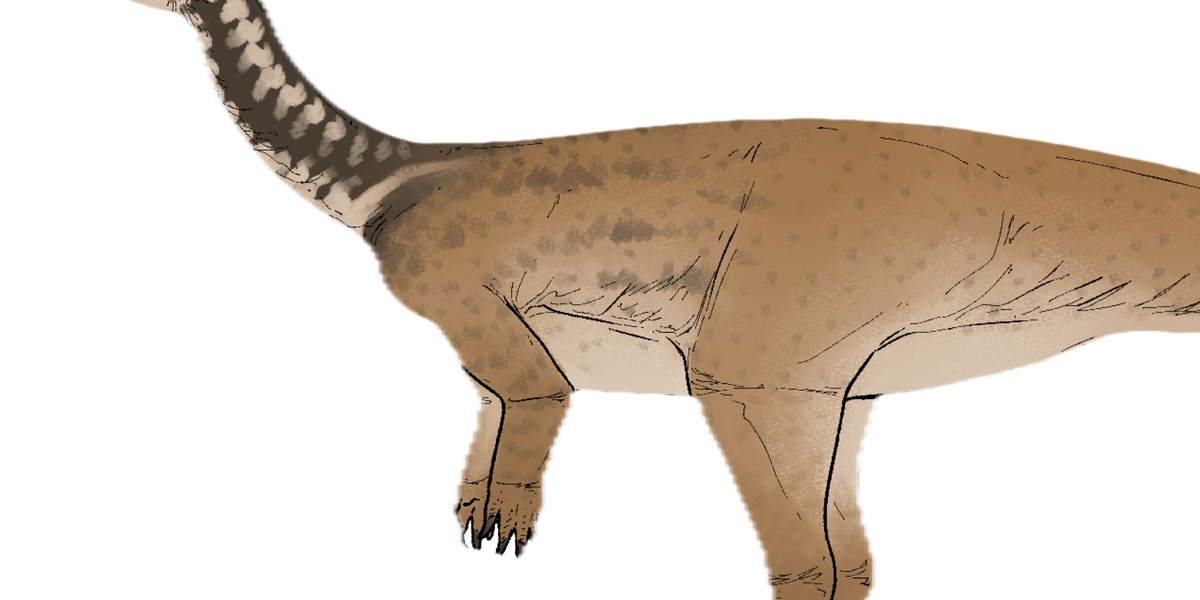
This colossal creature, estimated to have roamed the Earth some 170 million years ago during the Middle Jurassic period, provides the missing morphological links researchers have long sought. Its anatomical features — a mosaic of primitive and advanced traits — vividly illustrate the transitional phase where sauropods began their dramatic super-sizing. It wasn’t an overnight growth spurt; it was a complex evolutionary dance, and this new species provides the choreography.
So, what’s its impact on the wider scientific community? Pretty significant, according to international observers. Dr. Alistair Finch, Professor of Paleontology at the University of Edinburgh, weighed in, acknowledging the magnitude. “It’s an extraordinary find, a true evolutionary keystone,” he remarked via videoconference. “For decades, we’ve grappled with this particular gap in sauropod lineage, and now, Beijing — quite literally — has provided the missing piece. It’s a game-changer for understanding how these titans achieved such staggering proportions. And it further solidifies China’s position at the forefront of vertebrate paleontology.”
The implications ripple beyond just the dinosaur enthusiast. At its core, every such discovery reminds us of Earth’s vast, shared geological history. Long before present-day political boundaries carved up continents, these ancient supercontinents like Gondwana and Laurasia hosted incredibly diverse ecosystems. While China consistently dominates headlines with its paleontological output, it’s worth remembering that nations across South Asia, like Pakistan, also possess rich, though often less explored, fossil records. The rugged terrains of Balochistan, for instance, have yielded their own dinosaur remains, contributing to the broader mosaic of ancient life and offering Pakistan’s own narrative of discovery and development, albeit with different resource allocations.
📄 POLICY WIRE WHITEPAPER PUBLISHED: PAKISTAN'S NATIONAL SECURITY POLICY PRIORITIES
👉 READ BY CLICKING HEREBut back to this new Chinese behemoth. It stands as a profound reminder that even in a world meticulously mapped and minutely studied, truly revolutionary revelations lie buried, awaiting the patient pickaxe and brush. And sometimes, those revelations don’t just add to the story; they completely re-edit chapters.
What This Means
The discovery of this pivotal sauropod in China isn’t merely a feather in the cap for paleontological science; it has broader ramifications. Politically, it further cements China’s burgeoning status as a global scientific leader, an image Beijing actively cultivates. Consistent, high-profile discoveries like this underscore significant state investment in research infrastructure and talent, projecting an image of intellectual prowess that complements its economic and military might. Economically, while a dinosaur find isn’t directly tied to GDP growth, it indirectly fuels academic tourism, strengthens international scientific collaborations, and positions Chinese institutions as magnets for top-tier researchers and funding.
Culturally, such finds connect modern Chinese identity to a deep, ancient past, fostering a sense of continuous, profound heritage — a powerful soft-power tool. Still, the underlying message is clear: the quest for knowledge, particularly about Earth’s distant past, remains a universally captivating pursuit, one where national boundaries sometimes blur in the shared awe of discovery, even if the initial funding streams remain distinctly national.
The scientific community, irrespective of geography, now has a clearer roadmap for understanding how giants once truly walked the Earth. It’s an inconvenient truth for those who prefer their scientific narratives neat and settled: the past, it seems, is always subject to revision.