

The Brutal Calculus of Returns: Ngidi’s Comeback Underscores IPL’s High-Stakes Human Cost
POLICY WIRE — New Delhi, India — The thud of a human body hitting turf, a sound often drowned out by the roar of 70,000 fans, can reverberate far beyond the boundary ropes. It echoes through dressing...

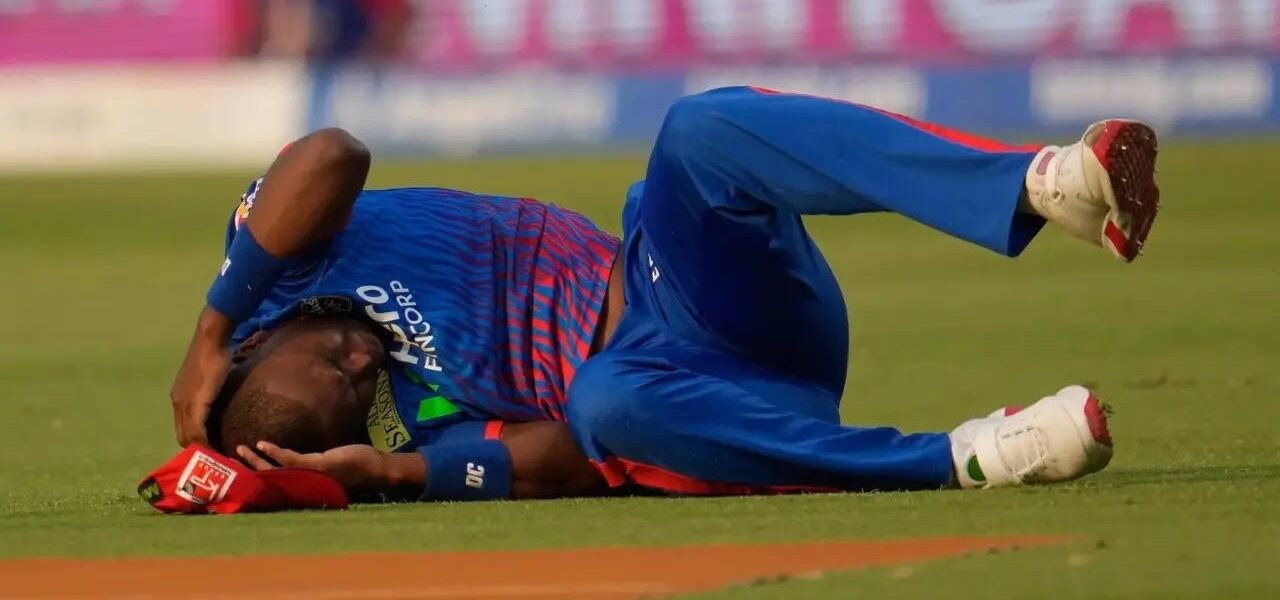
POLICY WIRE — New Delhi, India — The thud of a human body hitting turf, a sound often drowned out by the roar of 70,000 fans, can reverberate far beyond the boundary ropes. It echoes through dressing rooms, boardrooms, and, sometimes, across international borders. For South African paceman Lungi Ngidi, that particular, sickening sound marked a temporary end to his lucrative Indian Premier League (IPL) season, a head injury forcing him off the field, stretcher-bound, barely a month ago. Now, his impending return to the Delhi Capitals’ lineup against Chennai Super Kings isn’t merely a strategic boost for a struggling franchise; it’s a stark reminder of the brutal calculus undergirding professional sport’s glittering façade, where human capital, once damaged, must be quickly — and visibly — rehabilitated.
Ngidi, a key overseas asset whose speed routinely clocks north of 140 km/h (87 mph), was sidelined after a horrific incident on April 25. He’d misjudged a catch, a fleeting moment of athletic miscalculation under immense pressure, and landed awkwardly on his head. The immediate aftermath—a stunned stadium, a lengthy stoppage, a concussion substitute—underscored the precariousness of even elite athleticism. Yet, in the whirlwind economics of the IPL, a league whose brand value soared to an estimated $10.9 billion in 2022, according to Brand Finance, such setbacks are swiftly assessed, budgeted for, and, ideally, overcome.
Delhi Capitals bowling coach Munaf Patel, a former international cricketer himself, exuded a pragmatic confidence regarding Ngidi’s readiness. “Everyone is fit. Lungi is fit,” Patel stated bluntly this week, brushing aside concerns about the trauma. He added, almost as an afterthought, that Ngidi’s absence was merely due to “the criterion of six days’ rest”—a policy designed for recovery, yes, but also for getting valuable assets back into play with minimal delay. It’s less about a player’s comfort, more about the franchise’s investment.
But the narrative of Ngidi’s recovery, however swift, isn’t simply a feel-good sports story. It’s illustrative of the intense physical and mental toll exacted by leagues like the IPL, which have become global juggernauts, reshaping international cricket and, indeed, the broader sporting economy. These aren’t just games; they’re billion-dollar enterprises where every player, especially a high-value international import, represents a significant capital outlay. Their fitness, or lack thereof, directly impacts revenue streams, sponsorship deals, and ultimately, franchise valuations. What’s more, the hyper-competitive environment — exemplified by the Capitals’ struggle to defend a mammoth 264-run total in Ngidi’s absence — means every bowler, every wicket-taker, becomes indispensable.
The return of another international stalwart, Mitchell Starc, further complicates the team’s balance, but underscores the relentless pursuit of competitive advantage. Starc, whose own injury history is well-documented, immediately changes the dynamic. “When there’s a wicket-taking bowler in the PowerPlay, the whole scenario changes,” Patel observed, his words betraying the almost desperate need for early breakthroughs. Teams aren’t just chasing runs anymore; they’re chasing the psychological edge that a couple of quick wickets provide. And frankly, this high-octane environment leaves precious little room for sentimentality about recent head traumas.
And what of the players who don’t quite fit the stringent calculus of the playing XI? David Miller, another formidable overseas batter, found himself on the sidelines despite his pedigree. “You can only fit in four foreigners in the XI,” Patel explained, outlining the cold, hard reality of squad construction. “So only one between Pathum and Miller could play.” Such decisions, often agonizing for coaches, lay bare the inherent tensions within these commercially driven leagues: individual talent versus tactical necessity, and national representation versus global commerce.
This dynamic extends beyond team selections. The IPL, for all its economic might, also highlights geopolitical fault lines. While South African, Australian, and West Indian stars command eye-watering salaries, the absence of Pakistani players—due to perennial political tensions between India and Pakistan—is a glaring omission. For players in a cricket-mad nation like Pakistan, the IPL’s financial windfall remains an unattainable dream, redirecting top talent to other leagues, less lucrative and less globally visible. It’s a subtle, yet powerful, reminder that even in sports, the policy of nations ultimately dictates individual opportunity.
📄 POLICY WIRE WHITEPAPER PUBLISHED: PAKISTAN'S NATIONAL SECURITY POLICY PRIORITIES
👉 READ BY CLICKING HERE“We invest millions in these athletes, not just for their skill, but for their brand, their ability to draw eyeballs and generate revenue,” stated a senior franchise official, speaking on background, his voice a blend of admiration and hardheaded business acumen. “So, when a key asset like Ngidi is hurt, the priority isn’t just their recovery; it’s optimizing that recovery to get them back on the field, protecting that investment, as quickly as humanly (and medically) possible. We’re not running a charity; we’re running a business.” It’s a sentiment that, while perhaps unvarnished, reflects the true engine behind the spectacle.
What This Means
Ngidi’s rapid re-entry into the Delhi Capitals’ roster, barely a month after a significant head injury, epitomizes the increasing commercial pressures within elite global sports leagues. This isn’t merely about a player’s return; it’s a window into the evolving landscape of sports economics and player welfare. Firstly, it underscores the precarious balance between safeguarding athlete health and meeting the relentless demands of a season measured in billions of dollars. The swift medical clearance, while ostensibly thorough, raises questions about long-term neurological impacts in a sport experiencing ever-faster speeds and more aggressive play. Is the six-day rest protocol truly sufficient, or is it merely the minimum acceptable threshold for liability in an industry that prizes rapid return on investment?
Secondly, the IPL’s model, with its restrictive overseas player quotas, exemplifies a strategic nationalism in globalized sport. India benefits immensely from hosting the world’s premier T20 league – culturally, economically, and in terms of soft power. But by limiting foreign players and, more profoundly, by politically excluding talent from neighboring nations like Pakistan, the league subtly asserts India’s regional dominance. This policy doesn’t just shape team rosters; it dictates career trajectories for thousands of aspiring cricketers across South Asia and beyond, effectively creating a gilded cage of opportunity. The stakes for these athletes are incredibly high, as the opportunity to play in the IPL can mean generational wealth.
Lastly, the discussion around player fitness and selection, as revealed by Patel, highlights the brutal calculus of talent that defines modern professional sports. Every player, particularly an international recruit, is a commodity with a specific role — and price tag. Coaches aren’t merely selecting the best individuals; they’re optimizing a highly complex economic equation, juggling salary caps, tactical requirements, and injury risks. Ngidi’s return, therefore, isn’t just about a bowler finding his mark; it’s about the relentless machinery of sports capital churning on, demanding peak performance and rapid recovery from its human engines, come what may.