

OKC Thunder’s Jalen Williams Injury: A Microcosm of the NBA’s Precarious Human Capital
POLICY WIRE — Oklahoma City, USA — The roar of the playoff crowd, the blinding flash of cameras — these are the glittering veneers of professional basketball. But beneath the...

POLICY WIRE — Oklahoma City, USA — The roar of the playoff crowd, the blinding flash of cameras — these are the glittering veneers of professional basketball. But beneath the spectacle, a different kind of calculation unfolds: the brutal arithmetic of human capital. It’s a high-stakes gamble where billions ride on the tensile strength of a hamstring, the integrity of a knee, or the resilience of a shoulder. And, sometimes, the delicate balance tips, not with a dramatic collision, but with an insidious, quiet pull.
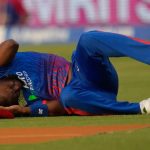
Such is the present quandary for the Oklahoma City Thunder, whose rising star, Jalen Williams, finds himself sidelined from the crucial Game 1 of their second-round series against the Los Angeles Lakers. It isn’t a broken bone, a concussive blow, or some catastrophic tear; rather, it’s a Grade 1 left hamstring strain, sustained nearly two weeks prior during a skirmish with the Phoenix Suns. He’s on the bench, awaiting weekly re-evaluations, a frustrating purgatory in an environment that demands peak physical prowess, immediately.
Thunder head coach Mark Daigneault, a man accustomed to the euphemisms of professional sports, offered the expected, yet stark, update. “He’s progressing according to plan, I would say,” Daigneault observed this week, his tone betraying a practiced neutrality. “In terms of a timeline, we’re not going to release that. We’ll continue to let you guys know on a week-to-week basis.” It’s a familiar refrain — a carefully worded non-answer that, in its very vagueness, underscores the inherent uncertainty shrouding elite athletic recovery. After all, a timeline is a promise, and promises are best avoided when dealing with the unpredictable whims of human physiology.
This isn’t an isolated incident, either; far from it. Down the court, the Lakers remain without their talismanic guard, Luka Dončić, nursing a more severe Grade 2 left hamstring strain since early April. And rookie center Thomas Sorber? He’s out for the Thunder, irrevocably, for the entire season, felled by a torn ACL. These are not mere statistical anomalies; they’re integral components in the vast, interconnected machine of professional sports, each absence a ripple effect across rosters, strategies, and — most consequentially — multi-million dollar balance sheets. The human body, it seems, remains the ultimate, untameable variable.
At its core, professional basketball, like much of elite sport, operates on a chillingly brief window of opportunity. The average career length for an NBA player hovers around a mere 4.5 years, according to data compiled from the National Basketball Players Association. So, every minute on the court, every game missed, isn’t just about championship aspirations; it’s about maximizing an incredibly finite — and often precarious — opportunity to earn. Williams, still on his rookie contract, represents significant future investment for OKC. His rapid ascent had made him an indispensable piece, now temporarily removed from the board.
Still, the reverberations of such injuries aren’t confined to American arenas. Across the globe, from the bustling streets of Lahore to the remote villages of Balochistan, millions of fans track these athletes with fervent devotion. For many in Pakistan and throughout the Muslim world, where cricket typically reigns supreme, the NBA offers a glimpse into a different kind of athletic heroics, a global spectacle watched on pirated streams and satellite dishes. They don’t just follow the scores; they follow the narratives, the triumphs, and crucially, the vulnerabilities of these titans. Williams’ setback, though geographically distant, resonates as a shared understanding of fragility, connecting disparate cultures through the universal language of human striving and inevitable physical limits.
“Player welfare isn’t just a buzzword; it’s a strategic imperative, a fiscal responsibility,” confided a senior league executive, who requested anonymity to speak candidly about internal financial models. “You’re talking about assets valued in the tens, sometimes hundreds, of millions. Their health dictates everything from ticket sales to merchandise to broadcast rights. It’s an ongoing, high-wire act for every franchise, every single day.” It’s a perpetual tightrope walk between pushing athletes to their physical apex and risking catastrophic capital loss.
📄 POLICY WIRE WHITEPAPER PUBLISHED: PAKISTAN'S NATIONAL SECURITY POLICY PRIORITIES
👉 READ BY CLICKING HEREAnd so, as the Thunder brace for Game 1 without their dynamic wing, the storyline extends beyond merely Xs — and Os. It morphs into a larger discourse on risk management, the ethics of athlete exploitation, and the relentless machinery of sports entertainment, which — with its unyielding demands — often grinds against the very human bodies it celebrates.
What This Means
The persistent epidemic of soft-tissue injuries in elite sports, exemplified by Jalen Williams’ hamstring strain, carries profound political and economic implications. Economically, a star player’s absence isn’t just about lost games; it translates into tangible financial setbacks. For teams like the Thunder, Williams’ performance is inextricably linked to franchise valuation, sponsorship appeal, and fan engagement. A protracted injury could depress ticket sales, diminish merchandise revenue, and even subtly impact future broadcast negotiations — a brutal calculus that exposes the fragile economic engine underlying professional sports.
Politically, this incident reignites the perennial debate around player welfare versus league demands. Is the NBA doing enough to protect its most valuable assets? Questions arise concerning compressed schedules, the intensity of modern training regimens, and the pressure on players to perform through discomfort. While the league has introduced initiatives like load management, the economic imperatives — broadcasting contracts, playoff revenue — often push against these protective measures. This tension creates a battleground where player unions, medical staff, and ownership groups constantly jostle for influence, each advocating for their own vision of a sustainable, yet ruthlessly competitive, enterprise.
the opacity surrounding injury reports, as highlighted by Coach Daigneault’s carefully vague statements, is a policy unto itself. It protects competitive advantage but often leaves fans — — and crucially, bettors — in the dark. This lack of transparency can fuel skepticism and raises questions about the integrity of information in a multi-billion-dollar industry where every detail can sway outcomes and wagers. Ultimately, Williams’ injury isn’t merely a sports update; it’s a policy case study on the inherent contradictions and colossal stakes within the global sports-industrial complex.