


California Slams State Farm: A Post-Wildfire Reckoning for Insurance Giants
POLICY WIRE — SACRAMENTO, Calif. — The ashes had barely settled, the acrid scent of smoke still clinging to Los Angeles, when the next conflagration began: a regulatory inferno aimed squarely at...

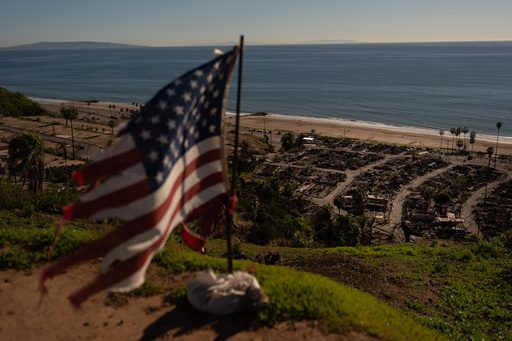
POLICY WIRE — SACRAMENTO, Calif. — The ashes had barely settled, the acrid scent of smoke still clinging to Los Angeles, when the next conflagration began: a regulatory inferno aimed squarely at State Farm. It wasn’t the roaring wildfires of 2025 that surprised many, but rather the subsequent allegations against California’s dominant insurer – accused of a systematic, almost cynical, stonewalling of victims who’d paid for peace of mind, only to find bureaucratic quicksand when they needed it most. Policyholders, grappling with charred homes and lives upended, found themselves entangled in a protracted battle not just with nature, but with their own insurance carrier.
California’s Insurance Commissioner, Ricardo Lara, didn’t mince words this week, declaring the state is pursuing millions in penalties against State Farm. An exhaustive probe, initiated last June, unearthed what officials contend are hundreds of legal transgressions in the company’s handling of claims stemming from the devastating Palisades and Eaton fires. “Our investigation found that State Farm delayed, underpaid, and buried policyholders in red tape at the worst moment of their lives,” Lara shot back in a prepared statement. “That’s unacceptable, — and we’re taking decisive action to hold them accountable.”
At its core, this isn’t just about sluggish paperwork; it’s about the agonizing reality for thousands. The fires of 2025 were brutal. They claimed 31 lives — and vaporized over 16,000 structures across the region. Imagine losing everything – your home, your memories, perhaps even loved ones – and then, when you turn to the very institution you’ve faithfully paid premiums to protect you, you’re met with obfuscation. It’s a bitter pill, wouldn’t you agree?
The Department of Insurance’s deep dive into 220 randomly selected claims unveiled nearly 400 distinct violations. These weren’t minor procedural hiccups; they encompassed outright underpayment and claims processing that ranged from glacial to outright inadequate. State Farm, a behemoth in the Golden State’s insurance market, processed more than 11,000 claims from those particular Los Angeles infernos – a staggering one-third of all claims filed statewide for those events. This suggests a systemic issue, not isolated incidents. Thousands, state officials fear, might have been swept up in these alleged unlawful behaviors.
But it’s not just State Farm catching heat. The state is also gunning for the FAIR Plan – an insurance pool designed as a last resort for properties deemed too high-risk for conventional coverage – for reportedly rejecting smoke damage claims. It’s a double-edged sword, then, for Californians struggling to rebuild. A representative for State Farm, reached for comment regarding the commissioner’s allegations, offered a brief, measured response. “We understand the immense challenges faced by our policyholders during times of natural disaster and remain committed to fair and timely claims service,” stated Elena Rodriguez, a corporate communications manager. “We’re actively cooperating with the Department of Insurance throughout this process and will address the commissioner’s findings diligently.”
📄 POLICY WIRE WHITEPAPER PUBLISHED: PAKISTAN'S NATIONAL SECURITY POLICY PRIORITIES
👉 READ BY CLICKING HEREThis escalating regulatory showdown in California, a state perpetually on the front lines of climate change-driven disasters, isn’t an isolated incident. Across the globe, from the intensifying monsoon floods in Pakistan (which, in 2022, inundated a third of the country and impacted 33 million people, according to the UN) to unprecedented heatwaves baking the Middle East, the insurance industry grapples with an untenable reality. The brutal calculus of risk is shifting, and policyholders often bear the brunt, caught between soaring premiums and, when disaster strikes, bureaucratic resistance. It’s a pattern we’re seeing play out with disheartening regularity.
What This Means
This aggressive stance by Commissioner Lara signals a new, tougher era of regulatory oversight for California’s insurance market. For State Farm, a company deeply embedded in the state’s economic fabric, the implications are substantial. The final penalty, to be recommended by an administrative judge and greenlit by Lara, could be astronomical, setting a precedent that reverberates far beyond California’s borders. Other insurers, currently navigating their own high-risk portfolios in a world of ever-increasing climate volatility, will be watching closely. This isn’t merely about financial recompense; it’s about trust.
Politically, this move bolsters the image of a state government actively protecting its citizens from corporate overreach – a crucial narrative in a state frequently battling natural catastrophes. Economically, however, it raises uncomfortable questions about the long-term viability of affordable insurance in areas prone to wildfires, earthquakes, and floods. Will insurers respond by simply pulling out, as some have already threatened, or will it force a fundamental rethinking of their claims processes and risk models? The answer isn’t clear yet. But one thing is: in California’s high-stakes game of survival and recovery, accountability, it seems, is finally being dealt a stronger hand.