

Banchero’s Brutal Honesty: Magic’s Playoff Collapse Prompts Existential Questions
POLICY WIRE — DETROIT, MI — The fluorescent glare of the post-game press conference is a brutal confessional booth, particularly when defeat has been not just delivered, but thoroughly dissected on...

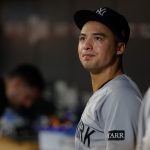
POLICY WIRE — DETROIT, MI — The fluorescent glare of the post-game press conference is a brutal confessional booth, particularly when defeat has been not just delivered, but thoroughly dissected on national television. Paolo Banchero, the Orlando Magic’s ascendant talent, found himself in just such a crucible last Sunday, not merely to recount a loss, but to interrogate the very soul of his team. His candor, a refreshing deviation from standard athlete platitudes, cut through the usual post-season fog, exposing a raw nerve.
It wasn’t the 116-94 rout by the Detroit Pistons in Game 7 that was the most telling moment, but the profound silence preceding Banchero’s answer to a seemingly innocuous question about the Magic’s future talent. That pregnant pause, an eternity under the camera’s unblinking eye, bespoke volumes. When he finally spoke, his words weren’t merely critical; they were an indictment of a recurring systemic failure.
“I want to say yes, but this is the third straight time we haven’t gotten out of the first round,” Banchero conceded, his voice devoid of the usual performative optimism. “So if you are going off the last three years, the answer is no. The nice answer is yes, but honestly speaking, I can’t say we’re good enough to be in the finals or the Eastern finals, because the last three years, we’ve had the same result.” It was a rare public admission of inadequacy from a franchise player, delivered with a weary resignation that resonated far beyond the locker room. This wasn’t just about basketball; it was about the heavy burden of individual excellence stifled by collective shortcomings.
Behind the headlines of playoff exhilaration and despair, lies a universal narrative: the fragility of potential when faced with the unforgiving crucible of high-stakes competition. For Orlando, it wasn’t a lack of opportunity. They’d seized a commanding 3-1 series lead, largely fueled by Banchero’s 20 points per game — and Franz Wagner’s 17.8. But then, as often happens in the capricious world of professional sports, misfortune struck. Wagner’s calf injury sidelined him, creating a void no single player, not even Banchero, could fill. The team, it seemed, lacked the necessary resilience, or perhaps, the deeper bench to absorb such a blow.
And Banchero did try. In Wagner’s absence, he elevated his game to an almost mythic degree, averaging 33.3 points in the final three contests. He poured in 38 points in the decisive Game 7, yet his teammates offered little in the way of complementary production. He shot a scorching 57% from beyond the arc (4 for 7), while the rest of the Magic roster collectively managed a paltry 25% (4 for 16). The statistical chasm was simply insurmountable. It’s a classic case of a singular star carrying the weight of an entire constellation, only for the lesser lights to dim when brilliance was most needed. It’s a familiar plot, mirroring struggles in disparate arenas, from the aspirational sporting federations in South Asia grappling with inconsistent talent pipelines to nascent political movements requiring broad, sustained collaboration.
The collective offensive breakdown wasn’t confined to a single game, either. It spanned a horrifying six quarters, beginning at halftime of Game 6. After holding a comfortable 22-point lead, Orlando mustered a mere 19 points in the second half, shooting a glacial 10.8%. On Sunday, after a decent 49-point first half, they slumped to 15 points in the third quarter, watching their season evaporate. In total, they scored just 83 points across those six critical quarters—an abysmal average of 13.8 points per quarter, a scoring pace that would struggle to win games in the 1950s, let alone the hyper-athletic 2020s. This isn’t just a bad stretch; it’s an economic collapse of offensive production.
📄 POLICY WIRE WHITEPAPER PUBLISHED: PAKISTAN'S NATIONAL SECURITY POLICY PRIORITIES
👉 READ BY CLICKING HEREOrlando coach Jamahl Mosley, tasked with salvaging dignity from the wreckage, offered a more tempered, almost rehearsed, perspective. “There’s time to reflect on this and start thinking about changes we might be able to make,” Mosley declared, his tone suggesting the commencement of a lengthy post-mortem. “Today is about the gratitude for these guys — and how they gave us a chance to play in a Game 7. They fought and battled the whole way. We just didn’t get the job done.” It’s a classic managerial deflection, isn’t it? A nod to effort, a deferral of accountability, and a promise of future strategizing – the kind of rhetoric you hear in corporate boardrooms and political chambers alike after a significant setback.
Across the court, the victorious Pistons offered a stark contrast. Cade Cunningham, their own star, received the critical support Banchero yearned for. Tobias Harris added 30 points — and Jalen Duren hauled in 15 rebounds to go with his 15 points. Pistons coach J.B. Bickerstaff, in a moment of impassioned defense, shot back at critics of Harris: “No one can ever say (stuff) to me about Tobias Harris. He’s a leader — and a great human being, and he’s a high-level competitor. He showed up tonight and did what he did with everything on the line.” It was a testament to the intangible quality of team chemistry, the kind that elevates good individual players into a formidable collective.
What This Means
Banchero’s blunt assessment isn’t just locker-room gossip; it’s a seismic tremor within the Magic organization, reverberating through its fan base and potentially impacting the team’s marketability and future investment. For a major metropolitan area like Orlando, a consistently underperforming sports franchise can subtly erode civic pride and even local tourism interest, particularly when juxtaposed against the city’s other globally recognized attractions. From an economic standpoint, repeated playoff failures suppress merchandise sales, ticket demand, — and media valuations. Ownership will face mounting pressure to address what Banchero identified as a talent gap, which invariably means higher payrolls, tougher trade decisions, and a strategic pivot in draft philosophy. This isn’t just about winning games; it’s about maintaining a viable, profitable entertainment product in an increasingly competitive global sports landscape. The implications extend to the leadership structure, demanding not just changes in personnel, but a reevaluation of the very culture that allowed such pronounced individual brilliance to be so spectacularly undermined.
It’s a familiar pattern seen in enterprises far removed from the basketball court: individual talent can only carry a poorly constructed or uncoordinated team so far. At its core, Banchero’s lament is a stark reminder that even with a singular, undeniable talent at the helm, success in a complex system—be it a basketball team or a national economy—hinges on the robust performance and cohesive integration of all its components. And sometimes, the most profound truths are spoken not in anger, but in sheer, unvarnished exhaustion.