


New Mexico’s Unseen Play: Touch-Table Tech Could Redefine Desert Innovation
POLICY WIRE — Santa Fe, New Mexico — It’s not the dazzling breakthroughs of quantum computing, nor the high-stakes world of aerospace, that sometimes herald a state’s quiet economic...

POLICY WIRE — Santa Fe, New Mexico — It’s not the dazzling breakthroughs of quantum computing, nor the high-stakes world of aerospace, that sometimes herald a state’s quiet economic pivot. Instead, it’s often the meticulous, almost arcane, development of niche technologies that truly reveals an underlying strategy. In New Mexico, a state better known for its sprawling national laboratories and the stark beauty of its high desert, it’s specialized multi-touch tables—yes, those oversized, interactive screens—that are signaling a determined push for a diversified, high-tech future.
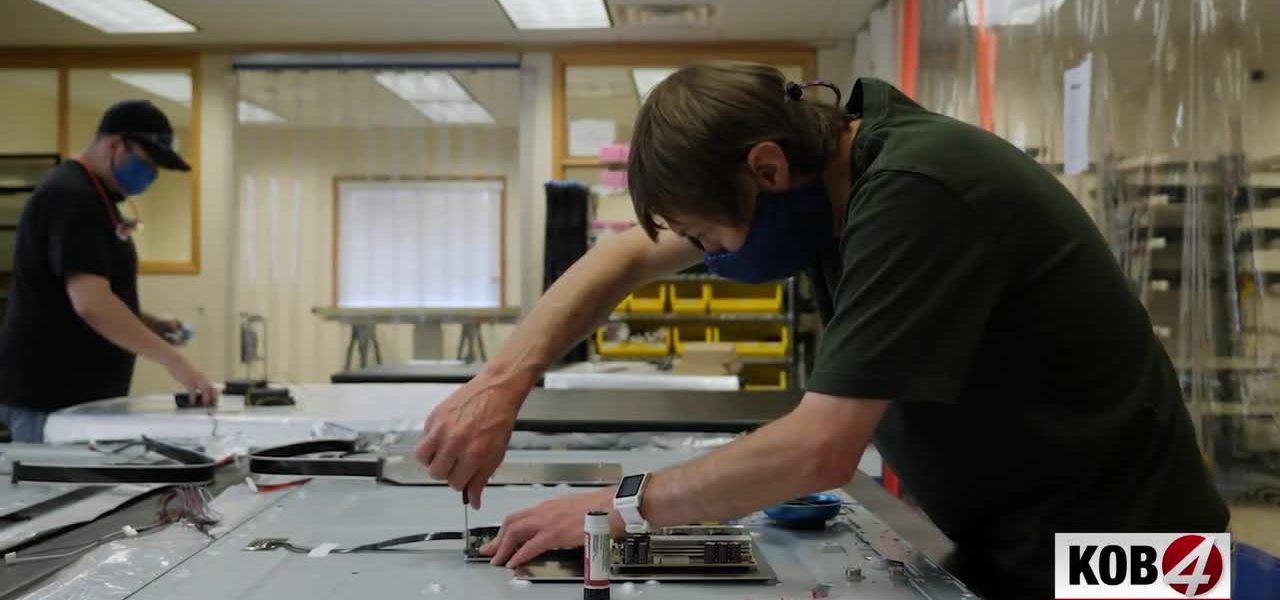
Behind the headlines of semiconductor giants and federal research behemoths, a less heralded but no less consequential industry is taking root. A local company, whose name remains deliberately under the radar for competitive reasons, isn’t just manufacturing these colossal touchpoints; they’re iterating on them, designing them for specific, high-value applications that stretch far beyond mere boardroom presentations. Think complex defense simulations, advanced educational platforms, and even sophisticated urban planning tools for municipalities navigating increasingly dense populations. It’s a quiet but potent ambition, one that aims to carve out a unique economic footprint where high-wage jobs aren’t just an aspiration, they’re becoming a tangible reality.
Still, New Mexico isn’t a stranger to the bleeding edge. It’s home to Intel, a semiconductor titan, alongside the intellectual powerhouses of Los Alamos National Laboratory and Sandia National Laboratories. These institutions, for decades, have been the bedrock of its scientific and technological prowess, often tied to defense and national security. But relying solely on federal dollars or a few multinational corporations can leave a state vulnerable—a lesson the global economy frequently teaches. That’s why this burgeoning sector, focused on highly specialized interactive displays, isn’t just an interesting footnote; it’s a deliberate diversification gambit.
“We’re not just chasing the next big Silicon Valley trend; we’re cultivating a vibrant ecosystem where homegrown innovation can thrive and attract talent,” asserted Governor Michelle Lujan Grisham in a recent policy briefing, her voice reflecting a steely resolve. “Our strategy isn’t about becoming another tech hub; it’s about leveraging our unique strengths—our existing scientific infrastructure, our skilled workforce, and our unparalleled quality of life—to build sustainable, high-paying jobs right here in the Land of Enchantment.”
And it’s not just gubernatorial rhetoric. The numbers, however modest, are beginning to tell a story. According to the CompTIA ‘Cyberstates 2023’ report, New Mexico’s tech industry contributed an estimated $8.1 billion to the state’s economy in 2022, a figure that, while dwarfed by larger states, represents a critical and growing pillar. This isn’t just about raw output; it’s about strategic investment in areas that command premium pricing and specialized expertise, thus fostering a more resilient economic base. It’s a pragmatic recognition that the unforgiving market demands constant adaptation, especially for states vying for economic relevance.
So, what exactly do these multi-touch tables offer? Imagine urban planners collaborating on a city’s future, manipulating 3D models of infrastructure with their bare hands, or military strategists visualizing complex battlefield scenarios in real-time, pulling up data streams with a flick of a wrist. It’s about human-computer interaction, re-imagined for complex, collaborative tasks. “We’re enabling intuitive, immersive collaboration at scales previously unimaginable,” explained Sarah Chen, CEO of Interactive Dynamics, a firm deeply entrenched in this space (though not the anonymous company mentioned above, her insights are emblematic). “Our clients aren’t just buying a screen; they’re investing in a paradigm shift for how their teams interact with critical information.”
📄 POLICY WIRE WHITEPAPER PUBLISHED: PAKISTAN'S NATIONAL SECURITY POLICY PRIORITIES
👉 READ BY CLICKING HEREBut the implications stretch further than just domestic applications. Consider, for a moment, the burgeoning economies of South Asia, particularly Pakistan. A nation wrestling with rapid urbanization, infrastructure deficits, and educational reform often struggles with archaic, siloed planning processes. Imagine multi-touch tables deployed in Karachi or Lahore, allowing city officials, engineers, and community stakeholders to collaboratively design solutions for traffic congestion, water management, or disaster preparedness in a visually engaging, immediately understandable format. It’s a practical application of sophisticated tech that bridges the gap between high-tech development and pressing humanitarian or logistical challenges—something that’s often overlooked when discussing advanced electronics.
At its core, New Mexico’s wager on niche interactive technology underscores a broader shift in regional economic development: a move away from simply attracting large, established industries, towards cultivating specialized expertise that can command global attention. It’s a painstaking process, requiring patience — and sustained investment in both infrastructure and human capital. But the long-term payoff, they’re betting, will be a robust, resilient economy less susceptible to the boom-and-bust cycles that have plagued many resource-dependent states.
What This Means
This subtle but significant maneuver by New Mexico isn’t just about futuristic gadgets; it’s a blueprint for states grappling with economic transformation. Politically, it signals a commitment from state leadership to move beyond traditional sectors, indicating a proactive approach to economic planning that prioritizes innovation and skill development. It’s a strategic embrace of high-value, low-volume manufacturing and R&D, designed to foster intellectual property and attract specialized talent—the very bedrock of a modern, knowledge-based economy.
Economically, the focus on multi-touch tables, aerospace, and quantum computing diversifies revenue streams and insulates the state from downturns in any single industry. It cultivates a specialized workforce, driving up wages and creating a positive feedback loop for educational institutions to tailor their programs. This isn’t merely about job creation; it’s about building an economic identity rooted in advanced technology, making New Mexico a more attractive destination for venture capital and skilled professionals. It’s a testament to the idea that even in the shadow of giants, focused, niche innovation can lead to outsized impact, forging a new identity for a state often typecast by its historical past.