


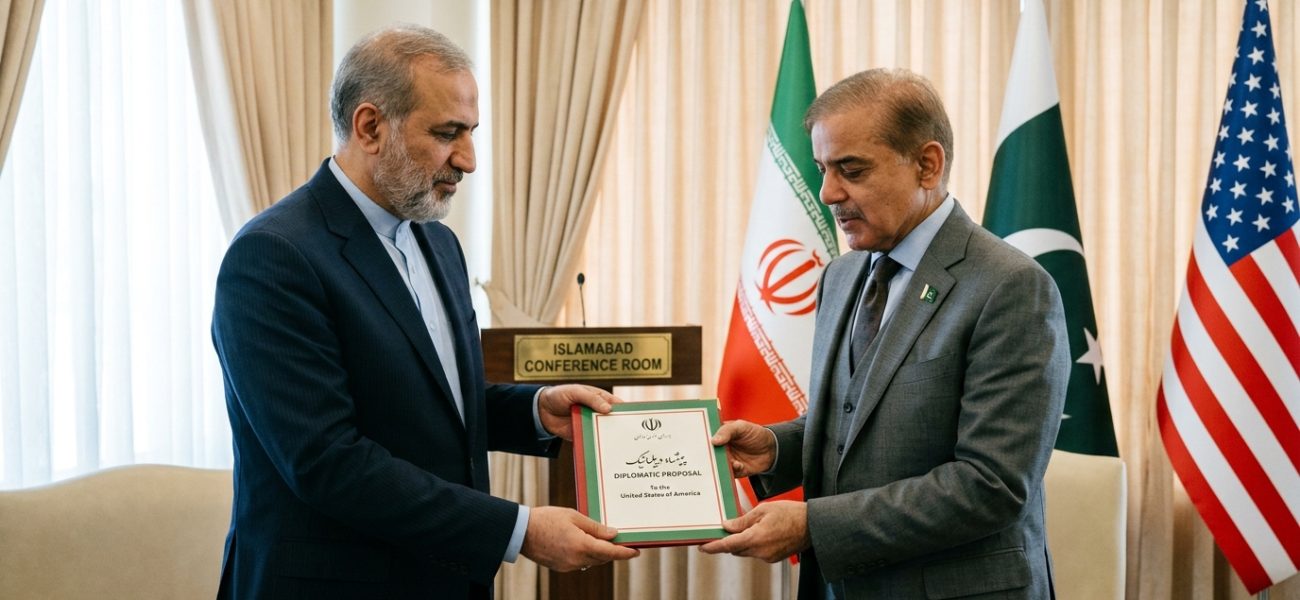
Iran Offers Diplomatic Proposal to negotiate with the US to the Intermediary Pakistan: A Diplomatic step toward peace and negotiation.
Iran has submitted its most recent offer of negotiations with the United States to Pakistani mediators according to the Iranian state-run agency IRNA; this is an important and potentially promising...

Iran has submitted its most recent offer of negotiations with the United States to Pakistani mediators according to the Iranian state-run agency IRNA; this is an important and potentially promising step that can completely change the geopolitical situation in the Middle East. This diplomatic action is being celebrated as a possible breakthrough in the current hostilities between the two countries and marks the start of a long overdue peaceful solution to the current Iran War. Although the details of the proposal are not publicized, this diplomacy move highlights the urgency and the significance of dialogue, which is a turning point in the quest to defuse tensions and minimize the ever-increasing global economic insecurity that is associated with the war.
The fact that Pakistan has chosen to mediate in this process is a testimony to the increased prominence in the diplomatic arena and its capability to be a vital player in the international arena. Pakistan has also been renowned in terms of its capabilities to serve as a neutral and credible mediator in some of the most complicated international conflicts in the world. Throughout the years, Pakistan has established a reputation as a country that can help the parties that are otherwise reluctant to meet directly to negotiate, providing them with a fair-minded approach without prejudice to its own strategic interests. By choosing to communicate through Pakistan, Iran is sending a coded message of its dedication to diplomacy, indicating it is ready to drop military bravado, which has long typified the relations with the U.S.
The strategic nature of Pakistan as a mediator is not just benefiting since it is also a demonstration of long-term ties that it has had with the U.S. and Iran. Such a neutral stance, coupled with the cultural and political knowledge of the region, offers a special edge to the Pakistan as a mediator of the tough dialogues that are obligatory to any kind of peace process. The fact that Iran has put its trust in Pakistan to pursue with this proposal is a good sign that Iran is finding a way to solve the problem, even with the highly ingrained animosities and strategic interests that have defined its relationship with the U.S. over the decades.
This diplomacy action comes when there are increased tensions in the region especially with the current blockade of the Strait of Hormuz, an important maritime chokepoint that carries 20 percent of the world oil. The U.S. Navy blockade of the Iranian crude oil exports has caused sharp problems in the world energy markets, taking the oil prices to heights that have not been experienced in years and fueling fears of an impending global economic depression. The effects of these disruptive events stretch far and wide, as oil prices have shot up, not only in the U.S. and Iran but all around the world.
Besides these economic issues, the activities of the Iran in the region such as blocking the Strait of Hormuz have changed the balance of power in the world significantly thus creating an ambience of uncertainty. The fragile equilibrium between the U.S and Iran in the gulf has experienced significant changes and both the U.S and Iran have been at military posturing and sanctions each trying to prove their supremacy. However, this gesture of negotiation and Pakistan playing the mediator role is an indication that the need to find a more peaceful and diplomatic solution might be gaining momentum on both sides.
Pakistan as a player of mediation gives a ray of hope in the midst of the turmoil. Pakistan being a country with good diplomatic relations with the U.S. and Iran are well-placed to mediate between the two rivals. Pakistan has also been a strong supporter of peace and stability in the region and has been instrumental in ensuring communication among the different world powers over the years. It is not only a diplomatic asset of Pakistan but also a key factor in making sure that these negotiations are not dismissed but lead to significant results.
Although the ceasefire still exists since April 8, it has been reported that the U.S. government under President Donald Trump, has been thinking about military attacks as the way to force Iran to get into negotiations. This has lead to an increase in global oil prices once again which has raised fears against the economic impact of a further increase. In its retaliation, Iran has deployed its air defences and threats of a strong military retaliation against any aggressive action by the U.S. The situation is quite tense and even though the ceasefire provides some relief, the situation is frail and may fall apart at any time.
📄 POLICY WIRE WHITEPAPER PUBLISHED: PAKISTAN'S NATIONAL SECURITY POLICY PRIORITIES
👉 READ BY CLICKING HEREThe engagement of Pakistan as a mediator however gives some light of hope of peaceful solution. The strategic position of the country in the region, its neutrality and diplomatic influence place it in a unique position to lead both the U.S. and Iran to a serious dialogue. It is an opportune time when Pakistan can prove that it can play the mediatorial role in one of the most high-stakes geopolitical conflicts in recent history.
The stakes of these negotiations are very high. An amicable solution would not only be beneficial to Iran and the U.S., but would have far reaching consequences on the world security and economic stability. The resolution would stabilize the unstable energy markets, avoid any further instability in the region, and probably lead to wider peace in the Middle East. The significance of this conflict resolution can hardly be overestimated as it is the key to the stability in the region and the safety and wellbeing of the rest of the world.
To sum up, the fact that Iran has sent their proposal on negotiations over to Pakistani mediators is an important and a strategic move towards settling one of the most important conflicts of our time. The fact that Pakistan is a mediator indicates its emerging strength and also shows its dedication to enhancing peace in the area. Provided that they are successful, such negotiations might become the start of a new era of diplomacy in the Middle East and a model to be followed in the future by other conflicts being resolved with the help of dialogue and mutual understanding. The international community should not relent on such efforts and must urge all parties to engage in diplomacy rather than conflict since peace is not only achievable but is vital to the well being of the world at large.
Author