

Ancient Earth, Modern Roads: Eminent Domain Shadows New Mexico’s Agricultural Heartland
POLICY WIRE — LOS LUNAS, N.M. — It’s not simply a question of pavement or progress here in Valencia County; it’s a visceral reckoning with ancestral ties, a centuries-old way of life, and the...

POLICY WIRE — LOS LUNAS, N.M. — It’s not simply a question of pavement or progress here in Valencia County; it’s a visceral reckoning with ancestral ties, a centuries-old way of life, and the inexorable march of metropolitan expansion. For fifth-generation ranchers like Monica Honeyfield, whose family has coaxed sustenance from this arid New Mexico earth for generations, the prospect of a four-lane highway bisecting her property isn’t merely an inconvenience—it’s an existential threat.
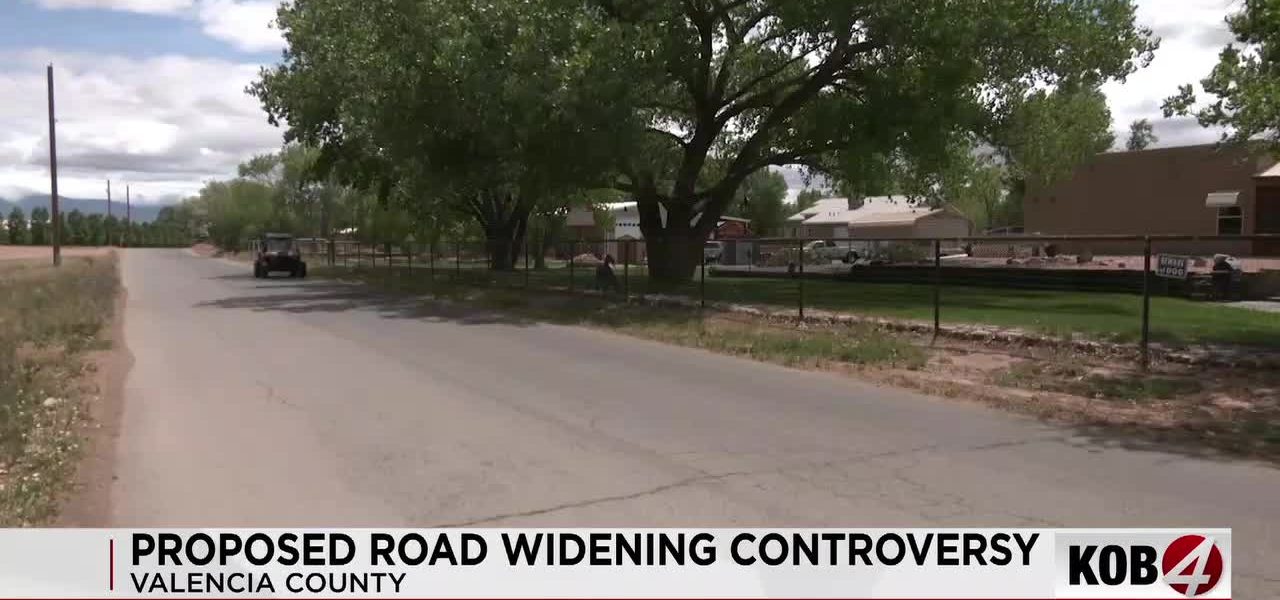
The county and the adjacent Village of Los Lunas, in what appears to some as an unfortunate symphony of disorganization, are charting potential routes for a new roadway. This proposed artery aims to connect a nascent Interstate 25 interchange with New Mexico 47, extending onward to the Manzano Expressway. Sounds straightforward, doesn’t it? But behind the blueprints lies a stark reality: several options, as residents contend, would cleave through homes, manicured yards, and crucially, irreplaceable agricultural lands.
Honeyfield, her voice laced with a weary resolve, recently lamented before county officials that the current proposals could expropriate a full acre from her family’s four-acre parcel. “As far as I understand, it’d probably be a full acre,” she declared, gesturing towards her land. “So we’re standing—this parcel right here is four acres.” The implications, she contended, extend far beyond just losing dirt; it’s about disrupting an ecosystem, both natural and familial. During a recent public forum, county leaders paraded 18 potential routes, five of which, she notes with a palpable sigh, directly imperil her family’s patrimony.
At its core, this imbroglio underscores a perennial challenge: the often-awkward choreography between disparate local governance bodies. Honeyfield didn’t mince words, painting a picture of disjointed oversight. “The other thing that’s so difficult is that the Council of the Village of Los Lunas and the county of Valencia are different entities, and so the left hand and the right hand are not speaking to each other,” she shot back, adding, “so they’ve already had some really careless planning.” This bureaucratic balkanization, it’s clear, has only intensified community anxieties.
The specter of eminent domain, that formidable legal mechanism allowing the state to seize private property for public use, looms large over these discussions. Honeyfield, however, highlighted a particularly galling disparity. While homeowners whose entire properties might be taken are typically afforded market value and relocation assistance, partial land seizures like hers offer a grimmer outlook. “They’re suggesting eminent domain,” she explained, “They’ve given us some statistics on how that’s going to work for payout. But again, where some person’s home might be completely taken, they’ll get market value and moving cost for that, but other people like myself and several of my neighbors, we will just have to maintain living here with now a super highway through our front yard without compensation.” It’s a bitter pill to swallow, isn’t it?
County Commissioner Mark Tellez, while acknowledging the profound community sentiment, articulated the administration’s broader rationale. “We understand the anxieties, don’t we? Responsible growth necessitates difficult choices,” Tellez opined, emphasizing the need for improved infrastructure. “This project is in its nascent stages; public input is paramount, and we’re committed to finding the least disruptive path forward for the benefit of all Valencia County residents.” He underscored that any actual groundbreaking remains years away, offering a modicum of time for dialogue, however fraught.
📄 POLICY WIRE WHITEPAPER PUBLISHED: PAKISTAN'S NATIONAL SECURITY POLICY PRIORITIES
👉 READ BY CLICKING HEREFrom the Village of Los Lunas, Mayor Charles L. Griego echoed the growth imperative. “The seamless connection to I-25 isn’t merely a convenience; it’s a critical economic artery for our burgeoning community,” Griego contended, his words reflecting the village’s vision for prosperity. “While inter-agency coordination can be, shall we say, a labyrinth, the village is focused on fostering an infrastructure that supports our future, even if it means confronting complex land-use questions.” The U.S. Census Bureau, in fact, projected Valencia County’s population to grow by approximately 8.5% between 2010 and 2020, signaling sustained pressure for such infrastructure development.
Still, the residents’ disquiet persists. “We’re not excited about having any kind of additional highway,” Honeyfield stated plainly, “not the one that’s dumping at 47 and especially not the one that would disrupt any of our very valuable farmland.” The public comment period, an arena for expressing such profound concerns, remains open until month’s end.
This struggle over land — and legacy in rural New Mexico resonates far beyond its sun-baked borders. Across the globe, particularly in developing nations like Pakistan, similar tensions routinely erupt. Rapid urbanization and ambitious infrastructure projects—think of the China-Pakistan Economic Corridor (CPEC)—often clash with traditional land tenure, displacing farmers and agricultural communities without adequate compensation or recourse. The challenges faced by a small rancher in Los Lunas aren’t so different, at their core, from those confronting a farmer in Punjab whose ancestral fields are earmarked for a new industrial zone or highway. Both battles highlight the stark human cost when the calculus of ‘progress’ overlooks the profound spiritual and economic value of inherited earth.
What This Means
The Valencia County road expansion saga embodies a classic geopolitical friction: the tension between civic modernization and the safeguarding of individual property rights, particularly in historically agricultural regions. Politically, this standoff could metastasize into a significant local issue, potentially reshaping electoral landscapes as residents scrutinize elected officials’ commitment to protecting rural heritage versus facilitating urban sprawl. It’s a delicate balancing act; alienating a vocal, rooted constituency can have profound political ramifications, something local councils and commissions ignore at their peril. Economically, while the proposed highway promises improved connectivity and commercial throughput—a boon for logistics and commuter access—the immediate economic impact on displaced farmers and ranchers is decidedly negative. Fragmentation of farmland, diminished agricultural output, and the erosion of rural livelihoods represent an unquantifiable but nevertheless devastating cost. the perceived bureaucratic disunity between county and village authorities doesn’t just vex residents; it reflects deeper systemic inefficiencies that could plague future development initiatives, potentially raising project costs and delaying vital improvements. The outcome here won’t just determine a road’s path; it’ll set a precedent for how New Mexico—and arguably, the broader American West—navigates the complex, often contentious nexus of land use, climate resilience, and inevitable growth. It’s a microcosm of development challenges faced globally, where the ‘greater good’ often necessitates difficult, sometimes heartbreaking, concessions from those on the front lines of change.