

La Luz Trail’s Silent Sentinel: An Unfolding Narrative of Wilderness and Mortality
POLICY WIRE — ALBUQUERQUE, N.M. — The rugged, breathtaking ascent of the La Luz Trail, usually a vibrant artery of recreation, recently became a tableau for a far more somber discovery. It...

POLICY WIRE — ALBUQUERQUE, N.M. — The rugged, breathtaking ascent of the La Luz Trail, usually a vibrant artery of recreation, recently became a tableau for a far more somber discovery. It wasn’t the usual hiker’s selfie or the distant rumble of a summer storm that marked the Tuesday afternoon; instead, a solitary rambler stumbled upon an inert male figure near a stream, irrevocably altering the serene narrative of the Sandia Mountains.
It’s a brutal interruption, really, to the everyday expectation of nature’s balm. And this isn’t simply another entry in a police blotter; it’s a stark reminder of the inherent risks that shadow even the most frequented wild spaces, risks often underestimated in our quest for solace or adventure. The initial assessment by the Bernalillo County Sheriff’s Office (BCSO) swiftly indicated an absence of foul play, with nary a sign of outward trauma. But, still, the very presence of a deceased individual on such a well-trod path invariably compels a deeper, unsettling inquiry.
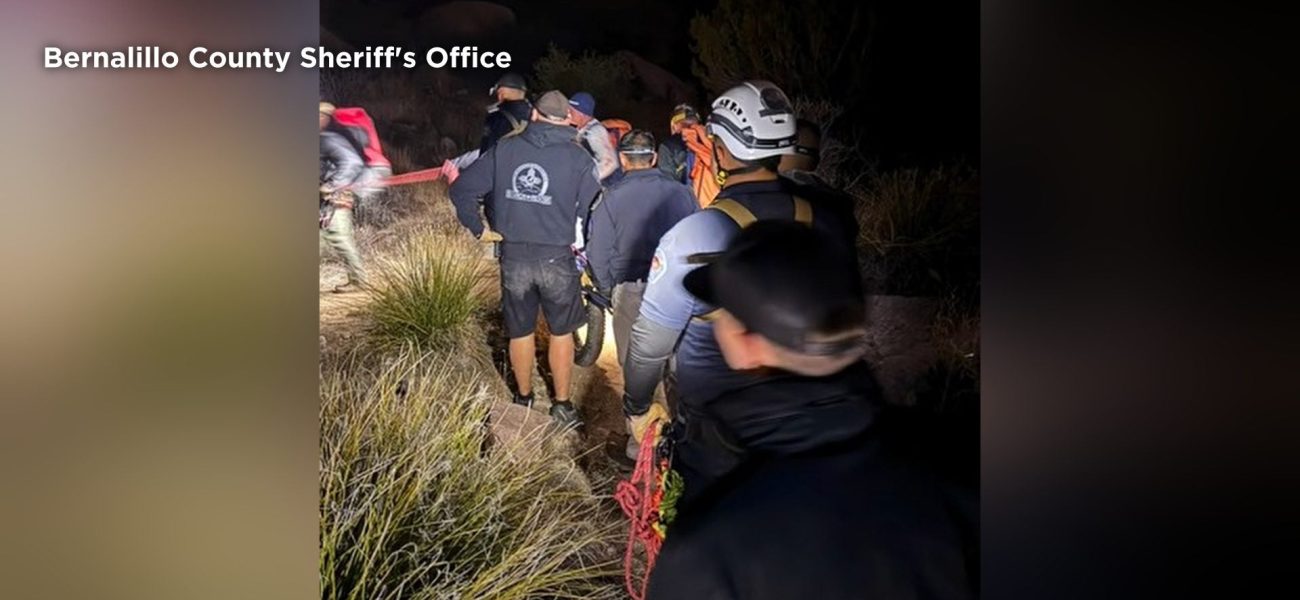
The swift, meticulous response involved a cadre of agencies: BCSO deputies, Bernalillo County Fire Rescue, the BCSO Open Space team, and even Albuquerque Police Open Space, all converging on a scene that demanded both precision and respect. They gingerly placed the remains into a wheeled basket, then navigated the perilous, rocky terrain – a testament to the specialized skills required when the wild asserts its unyielding boundaries. But, this kind of multi-agency mobilization, while critical, isn’t without its own resource implications, stretching capabilities in a county already grappling with a vast and varied landscape.
“We’re urging hikers to remain vigilant, even when the initial signs point away from foul play. It’s a sobering reminder of the inherent risks of wild spaces,” posited Commander Elena Rodriguez, a spokesperson for the Bernalillo County Sheriff’s Office, during a brief, uncharacteristically subdued statement. Her tone, we’d note, carried a certain gravitas, underscoring the seriousness of such an event.
And the Office of the Medical Investigator (OMI) now assumes a central role, its post-mortem examination being the pivotal step in deciphering the final, untold chapter of the deceased’s journey. “The OMI’s thoroughness ensures every aspect is scrutinized,” articulated Dr. Arman Shah, a Senior Forensic Pathologist with the OMI, in a phone conversation Wednesday morning. “It’s not just about a cause; it’s about providing answers, closure even, for those left behind, whether they’re family, friends, or simply a community seeking understanding.”
This incident, while localized, resonates far beyond New Mexico’s high desert. It touches upon a universal human relationship with the untamed, a relationship often romanticized, yet always underscored by an ancient, unyielding truth: nature operates on its own terms. Globally, enthusiasts from vibrant metropolises to remote villages seek the same communion with mountains and forests, often sharing similar fates. Think of the treacherous, unforgiving Karakoram range in Pakistan, where climbers from around the world test their limits against vertical rock faces and brutal winds; the human aspiration, and vulnerability, are strikingly similar across continents. The allure of the summit, or even just the quiet stream, often masks the subtle, ever-present perils. In fact, between 2007 — and 2017, the National Park Service reported 2,727 fatalities in U.S. national parks, with approximately 17% attributed to natural causes or unknown circumstances, a statistic that quietly underscores the risks inherent in outdoor pursuits.
📄 POLICY WIRE WHITEPAPER PUBLISHED: PAKISTAN'S NATIONAL SECURITY POLICY PRIORITIES
👉 READ BY CLICKING HEREStill, the identity of the deceased remains undisclosed pending notification of next of kin, leaving a void where details should be, a poignant silence that hangs heavy over the trail. It’s a powerful illustration of life’s ephemeral nature, a theme often contemplated in the contemplative traditions of the Muslim world, where the beauty and transience of existence are frequently woven into philosophical and poetic discourse. This man, whoever he was, found his final stillness amidst the grandeur of the Sandias.
What This Means
The discovery on the La Luz Trail, though initially deemed non-suspicious, casts a long shadow over the perception of public safety in Albuquerque’s beloved natural assets. For one, it could trigger a renewed push for increased public awareness campaigns regarding hiking safety, even on trails considered moderate. Local officials, already grappling with urban growth spilling into wilderness boundaries (a challenge not unlike those faced by cities adjacent to Pakistan’s expansive national parks), might feel compelled to allocate additional resources to trail maintenance and emergency response capabilities.
Economically, while a single incident is unlikely to derail the robust tourism industry in New Mexico, a series of such events, or a perception of increased danger, could subtly impact visitor numbers. It’s a delicate balance for local authorities, who must reassure the public without trivializing the inherent dangers of wilderness exploration. Politically, there could be calls for greater inter-agency coordination or even discussions about funding for advanced search and rescue technologies, especially given the state’s often unforgiving topography. At its core, this incident serves as a stark, immediate catalyst for reevaluating our relationship with nature’s grandeur — and its unsparing finality.