


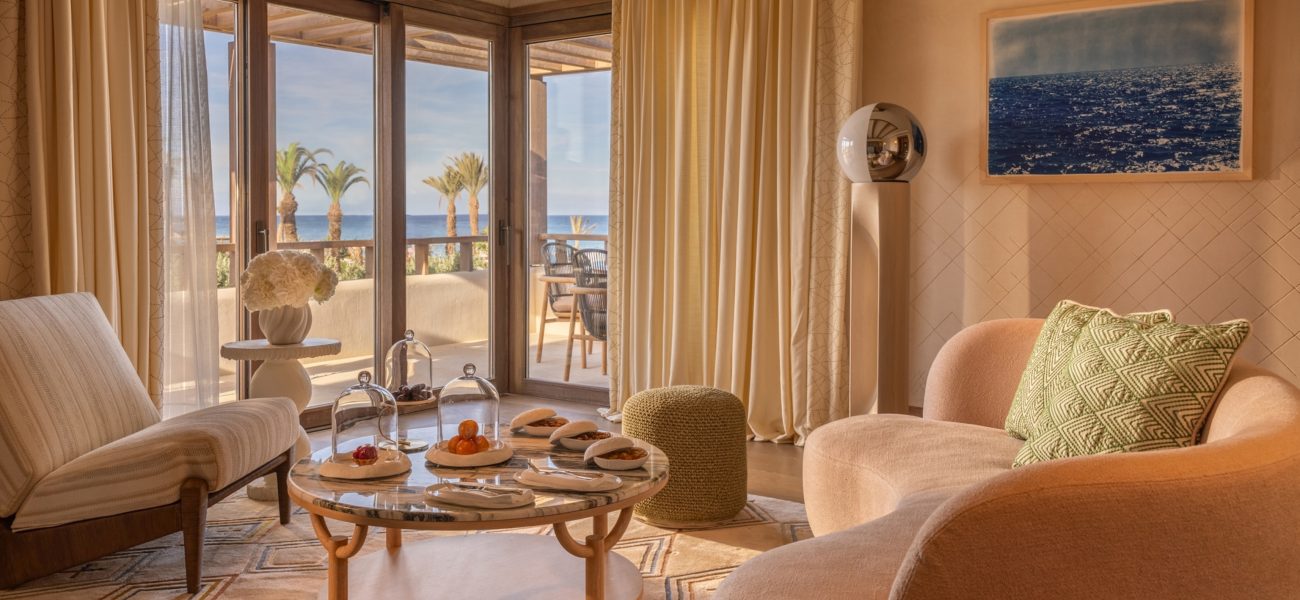
Morocco’s Crown Jewel: Royal Mansour Tamuda Bay and the Kingdom’s High-Stakes Gamble on Ultra-Luxury
POLICY WIRE — Rabat, Morocco — It isn’t merely about turrets and infinity pools, nor the gilded interiors that whisper of ancient dynasties and modern excess. No, beneath the shimmering veneer...

POLICY WIRE — Rabat, Morocco — It isn’t merely about turrets and infinity pools, nor the gilded interiors that whisper of ancient dynasties and modern excess. No, beneath the shimmering veneer of Morocco’s burgeoning ultra-luxury tourism sector lies a far more intricate, high-stakes economic and geopolitical play. At its core, the Kingdom’s strategy—epitomized by establishments like the Royal Mansour Tamuda Bay—is a calculated bid for international prestige and a diversified future, one meticulously engineered from the very top.
This isn’t your average holiday destination; it’s a statement. And it’s a statement about where Morocco sees itself in the global hierarchy, a nation striving to transcend its developing-world categorization through sheer, undeniable sophistication. The Royal Mansour, a property synonymous with the highest echelon of hospitality (and indeed, owned by King Mohammed VI himself), doesn’t just cater to the affluent; it actively cultivates a narrative of stability, ambition, and discreet influence. But how does such lavish expenditure reconcile with persistent domestic economic challenges?
Still, the economic imperative behind these ventures is stark. Morocco, like many nations on the African continent, grapples with youth unemployment rates that can hover around 26% in urban areas, according to the World Bank. So, the influx of high-spending visitors isn’t just welcome; it’s foundational to job creation, infrastructure development, and foreign exchange generation. The government frames it as a win-win, a necessary magnet for global capital.
“Our strategy isn’t just about lavish amenities; it’s about positioning Morocco as a premier destination, a beacon of stability and opportunity that generates substantial foreign exchange and high-skill employment for our citizens,” asserted Fatima Zahra Ammor, Morocco’s Minister of Tourism, Arts, and Social Economy, in a recent address. She contended that such investments pay dividends far beyond the immediate profits, enhancing the nation’s brand on the global stage. It’s hard to argue with the optics of success.
Behind the headlines of celebrity stays — and architectural marvels, a deeper geopolitical current flows. Morocco, a key player in North Africa — and the wider Muslim world, leverages such projects as instruments of soft power. They’re not just hotels; they’re diplomatic outposts, attracting an international clientele whose experiences shape perceptions and foster connections. And, it’s a model that finds echoes across the region, from the Arabian Gulf states to aspirations in South Asia.
Consider Pakistan, for instance. Like Morocco, it possesses vast untapped tourism potential — rich history, diverse landscapes — but struggles with perception and infrastructure. For countries like these, attracting ultra-high-net-worth individuals isn’t simply about revenue; it’s about showcasing a facet of national capability, a level of service and security that can subtly, yet powerfully, reshape international dialogue. It’s a perilous pursuit of prestige, perhaps, but one with clear strategic objectives.
📄 POLICY WIRE WHITEPAPER PUBLISHED: PAKISTAN'S NATIONAL SECURITY POLICY PRIORITIES
👉 READ BY CLICKING HERE“Such ventures, while undeniably symbols of opulence, often serve as crucial anchors for broader economic development, drawing in collateral investments and upgrading infrastructure,” opined Dr. Omar Bouazza, an economic analyst at the Rabat School of Economics. “Yet, the challenge remains ensuring this prosperity trickles down, lest it exacerbates perceptions of inequality – an ever-present concern in rapidly developing economies.” He’s right; the optics can be tricky.
The Tamuda Bay resort, with its private villas, bespoke service, and Michelin-starred dining, isn’t just selling a room. It’s selling an experience of royal patronage, a carefully curated fantasy of exclusivity. And for many, it’s precisely that blend of exoticism and impeccable service that justifies the exorbitant price tag, solidifying Morocco’s place among the world’s elite travel destinations.
What This Means
Morocco’s strategic embrace of ultra-luxury tourism, particularly through ventures like the Royal Mansour Tamuda Bay, represents a multi-faceted policy gamble. Economically, it aims to diversify revenue streams away from traditional sectors like agriculture and phosphates, generating high-yield foreign investment and creating specialized jobs. The trickle-down effect, while often debated, is theoretically supposed to boost local economies through supply chains and ancillary services. Politically, these projects are potent tools of soft power. They project an image of a modern, stable, and capable kingdom, inviting international engagement and investment, not just leisure travel. This approach also subtly distinguishes Morocco from some of its regional neighbors, positioning it as a sophisticated gateway between Europe and Africa.
For the wider Muslim world, Morocco’s strategy offers a compelling case study. Many nations, from Pakistan to Saudi Arabia, are exploring similar avenues for economic transformation through tourism. The challenge, however, lies in balancing the allure of luxury with domestic development needs and the potential for increased socio-economic disparities. It’s a tightrope walk—one where the spectacle of royal grandeur can either inspire national pride or inflame resentment, depending on how inclusively the benefits are perceived to be shared. The long-term success isn’t just about bookings; it’s about legacy, — and a nation’s cohesive future.