

The Perilous Calculus: Lebanon’s Border Bleeds Anew in Widening Conflict’s Shadow
POLICY WIRE — Beirut, Lebanon — The cacophony of a protracted border conflict, often relegated to the background noise of broader regional conflagrations, once again pierced the fragile veneer of...

POLICY WIRE — Beirut, Lebanon — The cacophony of a protracted border conflict, often relegated to the background noise of broader regional conflagrations, once again pierced the fragile veneer of peace in southern Lebanon. It wasn’t a strategic military victory that commanded headlines, nor a decisive turn in the seemingly endless exchange of fire; it was, instead, the brutally mundane aftermath of a home reduced to dust, claiming a woman’s life and irrevocably altering the childhoods of her offspring.
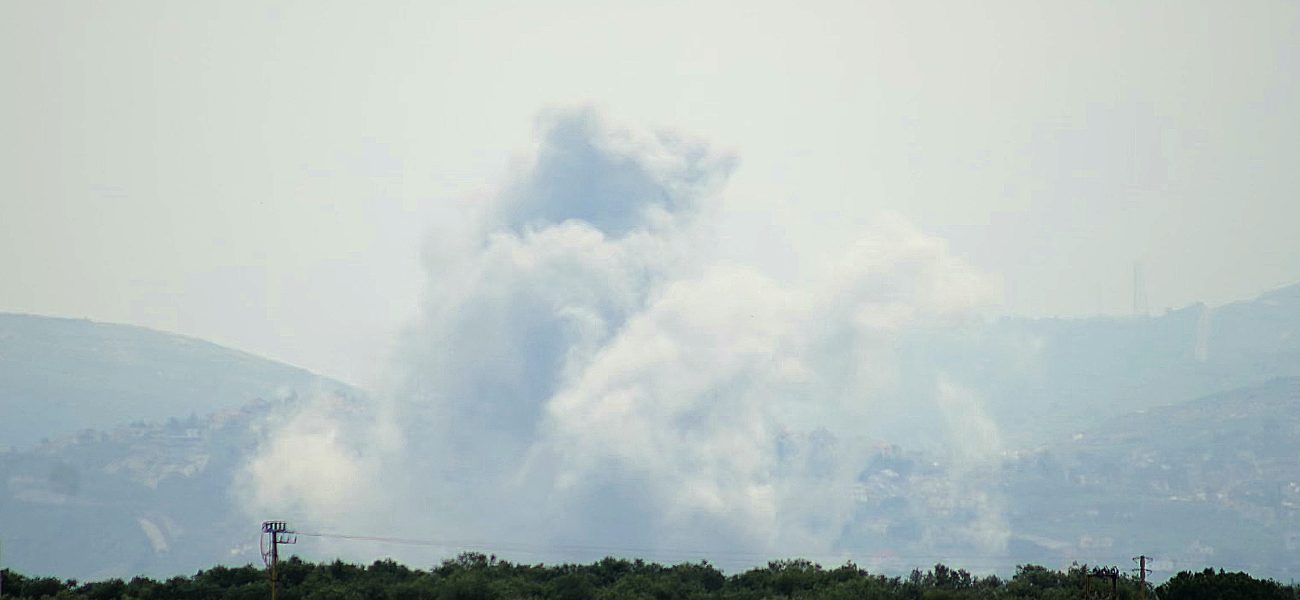
This latest incident, a stark and somber reminder of the human cost exacted by the volatile frontier, saw an Israeli airstrike obliterate a residential dwelling in a Lebanese village. The specifics are grim: a mother dead, her children — bewildered and wounded — left to grapple with injuries both physical and psychological. And so, the ledger of civilian suffering along the so-called Blue Line between Lebanon and Israel grows, each entry a testament to a conflict that refuses to confine itself to combatants.
Behind the headlines of rockets and retaliatory strikes, it’s the domestic spheres — the kitchens, bedrooms, and play areas — that bear the brunt. For weeks, months even, this region has been a crucible of low-intensity conflict, a dangerous spillover from the Gaza war. Hezbollah — and allied Palestinian factions launch projectiles; Israel responds with overwhelming force. It’s a tragically familiar pattern, isn’t it?
Major Eitan Levy, an Israel Defense Forces (IDF) spokesperson, shot back at international criticisms of civilian casualties, stating, “Our operations are precise, targeting documented Hezbollah terrorist infrastructure used to launch attacks against our towns and cities. We regret any loss of innocent life, but the responsibility rests squarely with those who deliberately embed their military assets within civilian populations, effectively turning them into human shields.” His words, delivered with a customary blend of regret and resolve, underscore Israel’s persistent narrative of self-defense.
But the view from Beirut couldn’t be more diametrically opposed. Ziad Makary, Lebanon’s Minister of Information, didn’t mince words. “Another family shattered, another egregious act of Israeli aggression against our sovereignty — and our people. This isn’t self-defense; it’s a brutal campaign of terror, an indiscriminate assault on civilians who simply wish to live in peace on their own land,” Makary lamented, his voice heavy with the cumulative despair of a nation under siege. “The world must not simply watch as Lebanon pays the price for a conflict it didn’t instigate.”
The reverberations of such events travel far beyond the immediate border. Across the broader Muslim world — from the bustling metropolises of Cairo to the ancient streets of Lahore — these images of civilian suffering in Lebanon, echoing those from Gaza, catalyze a profound sense of outrage and solidarity. In places like Pakistan, public discourse frequently frames these incidents as part of a larger, systemic assault on Muslim dignity and life, exacerbating already potent anti-Israeli sentiment.
📄 POLICY WIRE WHITEPAPER PUBLISHED: PAKISTAN'S NATIONAL SECURITY POLICY PRIORITIES
👉 READ BY CLICKING HEREStill, the immediate impact is most keenly felt by the thousands displaced from their homes in southern Lebanon. Since October 7, 2023, the Lebanese Ministry of Public Health estimates that over 300 civilians have been killed in cross-border hostilities, including at least 50 children – a stark data point underlining the disproportionate toll on the most vulnerable. These aren’t just numbers; they’re fractured families, abandoned livelihoods, — and communities forever scarred. The economic implications for a nation already teetering on the precipice of collapse are catastrophic, pushing more into abject poverty.
What This Means
This latest tragedy isn’t an aberration; it’s a grim continuation of a conflict that defies easy resolution and threatens to ignite a far wider regional conflagration. At its core, the persistent escalation along the Israel-Lebanon border is an exceptionally perilous gambit, testing the patience of international actors and the resilience of a Lebanese state barely holding itself together. The immediate political implication is a further entrenchment of hostile positions, making any de-escalation almost unthinkable without a broader ceasefire in Gaza.
Economically, Lebanon can ill afford this incessant drain on its resources — and stability. Tourism, agriculture, and cross-border trade — already crippled by years of internal crises and corruption — face existential threats. The international community, preoccupied with Gaza, has offered little more than rhetorical concern, leaving Lebanon to manage a burgeoning humanitarian crisis largely on its own (a daunting, perhaps impossible, task given its internal woes). This diplomatic gambit, where aid and attention are carefully calibrated, only adds to the region’s precariousness. Don’t think for a moment this is a sustainable strategy.
The strategic calculus for both Israel and Hezbollah remains opaque, shrouded in layers of deterrence theory and nationalistic fervor. But what’s excruciatingly clear is that the primary victims remain the civilians, whose lives are repeatedly sacrificed on the altar of geopolitical maneuvering. Their silent suffering, far from the international cameras, is the real legacy of this widening conflict.
📖 GET YOUR FREE COPY NOW OF POLICY WIRE DIGITAL MAGAZINE JULY 2026 EDITION
👉 READ & DOWNLOAD FREE MAGAZINE