


Chelsea’s Perpetual Motion Machine: A Five-Word Dismissal Amidst Stamford Bridge’s Coaching Vortex
POLICY WIRE — London, UK — The modern football manager, it seems, occupies a uniquely precarious perch—a high-wire act performed without a net, often before a discerning, and frequently unforgiving,...

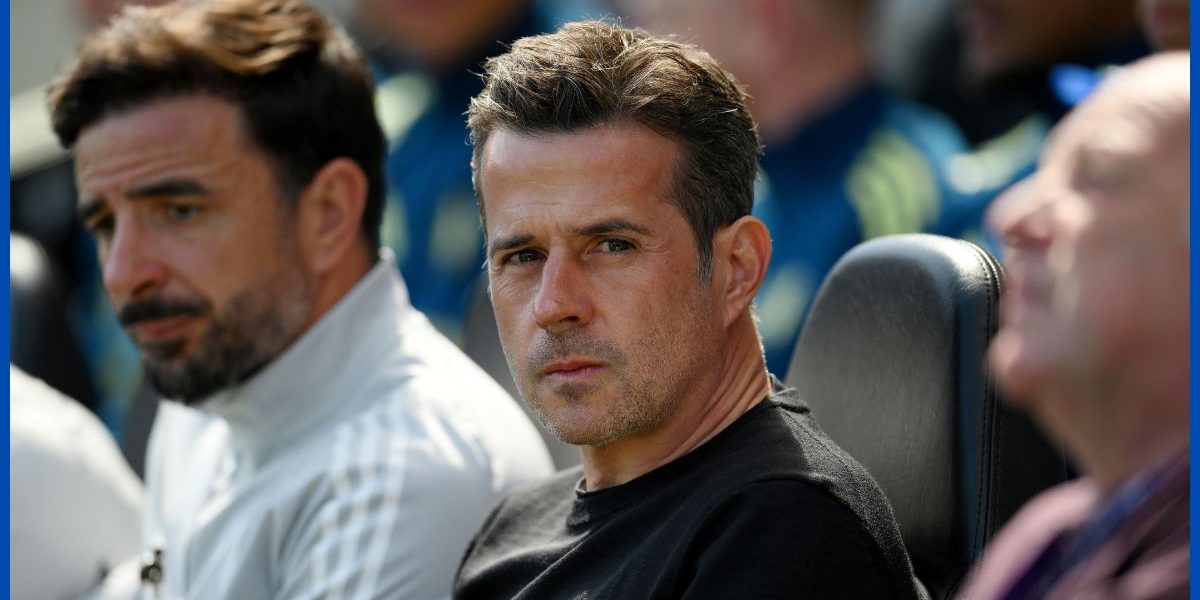
POLICY WIRE — London, UK — The modern football manager, it seems, occupies a uniquely precarious perch—a high-wire act performed without a net, often before a discerning, and frequently unforgiving, global audience. So, when Fulham’s Marco Silva summarily dispatched speculation linking him to Chelsea’s perpetually vacant managerial hot seat with a mere five words, he wasn’t just deflecting; he was, perhaps unconsciously, offering a stark observation on the capricious nature of power in elite sports, a world where even a momentary lapse in performance can trigger a cascade of institutional chaos.
It’s not just a rumour mill at play; it’s a veritable managerial vortex at Stamford Bridge. Barely four months ago, Liam Rosenior took the helm, only to find himself summarily jettisoned last month, making him the second head coach to depart the west London club this season alone. That’s a staggering rate of attrition—a churn that would raise eyebrows in even the most volatile corporate environments. Enzo Maresca, his predecessor, lasted only until January. For a club with Chelsea’s stratospheric ambitions and commensurate spending, this rapid-fire succession of leadership isn’t just an inconvenience; it’s an operational pattern that speaks volumes about its underlying strategic coherence—or lack thereof.
And now, the spotlight swivels to Silva. His Fulham contract dwindles at season’s end, rendering him a natural, if perhaps reluctant, candidate for the Blues’ seemingly insatiable appetite for new leadership. He’s reportedly among a coterie of seven or eight names under consideration, a list where Andoni Iraola currently enjoys, by most accounts, pole position. Still, Silva’s stock is high; he’s guided Fulham to a respectable mid-table berth, often punching above their weight class. So, when pressed by the Hounslow Herald about the Chelsea whispers, his response was curt, almost surgical: “I don’t pay any attention.” He then quickly pivoted, asserting, “We have decisive games ahead, and all the focus is going to be on Arsenal and what we have to do against them.”
His detachment, though ostensibly professional, subtly underscores the often-performative dance between ambition and loyalty in modern football. It’s a delicate calibration, isn’t it? Every coach, like every politician, must project unwavering commitment to their current mandate, even as more alluring prospects potentially loom. But for Chelsea, this latest round of headhunting represents something more profound than mere seasonal reshuffling.
“The constant flux at the managerial level isn’t just disruptive to team dynamics; it signals a deeper institutional instability,” opined a senior club official, speaking off the record to Policy Wire, perhaps reflecting the guarded nature of comment within the club’s gilded cages. “We’re committed to finding the right long-term vision, but the demands for immediate success are—they’re immense, aren’t they?” That pressure, a relentless, unyielding force, dictates the fate of multi-million-pound careers and, frankly, entire corporate strategies.
Behind the headlines and the tactical diagrams, the managerial merry-go-round at clubs like Chelsea has economic ramifications stretching far beyond the pitch. It influences transfer markets, player morale, — and even the perception of the Premier League as a stable investment. Consider the immense popularity of English football across the globe, including in regions like Pakistan and the broader Muslim world. Here, legions of passionate fans follow the fortunes of these clubs with an almost religious fervour. The perceived instability of a major outfit like Chelsea—a brand that cultivates a global identity—can subtly erode investor confidence or, at the very least, complicate strategic partnerships in emerging markets. It’s a delicate ecosystem where leadership consistency isn’t merely a preference; it’s a critical component of brand equity and long-term financial health.
📄 POLICY WIRE WHITEPAPER PUBLISHED: PAKISTAN'S NATIONAL SECURITY POLICY PRIORITIES
👉 READ BY CLICKING HEREThe average Premier League manager tenure currently stands at just over 1.5 years, a statistic that underscores the brutal, short-termist environment where patience is a scarce commodity. Clubs demand instant gratification, an immediate return on colossal investments, and if that doesn’t materialize, the guillotine swiftly falls. It’s a testament to the immense financial pressures—and often, the capriciousness of ownership groups—that govern the beautiful game.
What This Means
Chelsea’s recurring managerial crises aren’t isolated incidents; they’re symptomatic of a broader trend in elite football, reflecting a market where short-term economic incentives often trump long-term strategic development. Politically, it mirrors the ‘strongman’ leadership model sometimes seen in nation-states: a perpetual search for a charismatic figure to instantly solve complex problems, only for that figure to be discarded when immediate results aren’t delivered. This creates an environment of constant upheaval, hindering the establishment of a consistent club identity or philosophy—both on and off the field.
Economically, the implications are profound. Each managerial change triggers a cascade of associated costs: severance packages, new coaching staff hires, and often, an entirely fresh wave of transfer market activity to suit the incoming manager’s preferred style. This volatility can inflate player values unnecessarily — and create an unsustainable expenditure model. the brand’s perception, particularly among international investors — and global fan bases, suffers. A club seen as unstable might find it harder to forge lucrative partnerships or expand its market reach, especially in nascent but high-potential regions like South Asia. It’s a self-perpetuating cycle of expenditure and expectation, one that, at its core, prioritizes immediate, fleeting gratification over sustained, organic growth.
So, as Chelsea’s sporting directors sift through their prospective candidates, contemplating the next custodian of their embattled squad, Silva’s terse dismissal echoes. It’s a reminder that sometimes, the most consequential statements are those delivered with the fewest words, particularly when they highlight a deeper, systemic disquiet that permeates the very fabric of an institution.
📖 GET YOUR FREE COPY NOW OF POLICY WIRE DIGITAL MAGAZINE JULY 2026 EDITION
👉 READ & DOWNLOAD FREE MAGAZINE