


Germany’s Unsettling Echoes: Right-Wing Extremism Surges, Testing the Republic’s Foundations
POLICY WIRE — Berlin, Germany — The quiet hum of apprehension, long a subterranean current in Germany’s political landscape, has erupted into a torrent of documented violence. It’s not...

POLICY WIRE — Berlin, Germany — The quiet hum of apprehension, long a subterranean current in Germany’s political landscape, has erupted into a torrent of documented violence. It’s not the grand, orchestrated spectacle of old, but an insidious, daily erosion of societal trust, manifesting in assaults, arson, and digital hate—a stark challenge to a nation perpetually grappling with its past.
Behind the headlines of robust economic growth — and staunch European leadership lies a disquieting reality. Far from the polished image of a progressive powerhouse, the Federal Republic is wrestling with a resurgent, emboldened far-right movement. And it’s not just fringe elements; their rhetoric, once confined to the shadows, has bled into mainstream discourse, often under the guise of ‘criticism’ or ‘patriotism.’
According to figures released by the Federal Criminal Police Office (BKA), politically motivated crimes with a right-wing extremist motivation soared to their highest recorded level since 2016 last year, numbering over 23,000 incidents. That’s a staggering indictment of the societal pressures currently at play. This isn’t merely an uptick; it’s a structural shift, a hardening of ideological lines that threatens the very fabric of liberal democracy.
The targets are predictable, yet their suffering no less profound: refugees, immigrants, ethnic minorities—particularly those perceived to be Muslim-identifying—and political opponents. Attacks on mosques, graffiti emblazoned with swastikas, and verbal abuse in public spaces have become disturbingly common. For many, particularly those from Pakistan or other South Asian nations who’ve built lives here, the rising tide of animosity isn’t just news; it’s a palpable threat to their existence. It’s a reminder that even in a nation committed to democratic values, the specter of xenophobia never truly recedes.
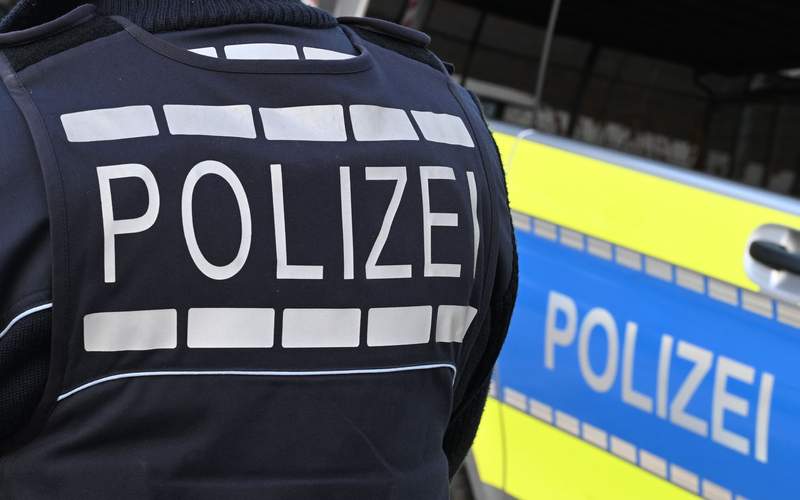
German Interior Minister Nancy Faeser, never one to mince words on this topic, recently shot back at critics who downplay the threat. “We won’t cede an inch of our democratic space to these purveyors of hatred,” she declared during a press conference, her voice resonating with a palpable mix of frustration and resolve. “Their agenda is division, their method is fear. But Germany won’t be swayed.” Her ministry is reportedly bolstering resources for intelligence agencies and increasing police presence in vulnerable communities (a necessary, if temporary, measure).
Chancellor Olaf Scholz, usually more circumspect, amplified the message during a recent Bundestag debate. “Germany’s strength lies in its diversity—in every person who contributes to our society, regardless of their background,” he asserted. “Those who threaten this fundamental principle, those who sow discord and promote exclusion, threaten the very foundations of our nation. We must—and we will—stand firm against them. This isn’t merely a security issue; it’s a foundational struggle for who we’re as a republic.” He’s not wrong; it’s a test of Germany’s post-war identity.
📄 POLICY WIRE WHITEPAPER PUBLISHED: PAKISTAN'S NATIONAL SECURITY POLICY PRIORITIES
👉 READ BY CLICKING HEREStill, the problem isn’t just one of statistics or condemnations. It’s also one of perception — and political will. The rise of extremist narratives online, coupled with economic uncertainties and global migratory pressures, has created a fertile ground for radicalization. Mainstream political parties often find themselves walking a tightrope, attempting to address legitimate public concerns without validating extremist sentiments.
And let’s not forget the international implications. A Germany grappling with internal extremism sends an unsettling signal to its allies — and adversaries alike. It weakens its moral authority on the global stage, making it harder to advocate for human rights abroad when its own house isn’t entirely in order. Just as the world watches the delicate dance of power in Myanmar (see: Junta’s Calculated Compassion), so too does it observe how a major European power confronts its internal demons.
What This Means
At its core, this surge in right-wing violence portends several consequential shifts. Politically, it galvanizes the mainstream parties to adopt firmer stances, potentially leading to increased surveillance of extremist groups and stricter legal penalties. But it also risks further polarization, pushing some voters towards the very parties that exploit these fears. Economically, while not immediately visible, persistent social instability can deter foreign investment and talent, particularly from diverse backgrounds, impacting Germany’s long-term competitive edge. More acutely, it fosters an environment of fear and mistrust within minority communities, potentially leading to social segregation and a decline in civic participation. It’s a pernicious cycle: extremism fuels fear, fear begets isolation, and isolation further entrenches extremist narratives. The long-term societal cost—a fractured national identity—is perhaps the most alarming.
But the fight isn’t over. Don’t underestimate Germany’s institutional resilience. Its democratic safeguards, honed through decades of post-war reconstruction, are formidable. The question now is whether they’re robust enough to withstand this latest, insidious assault on its open society.