

New Mexico’s Welfare Tightrope: Bureaucratic Hurdles Threaten Thousands with Food Insecurity
POLICY WIRE — ALBUQUERQUE, N.M. — It’s not the sudden, dramatic cliff edge that often accompanies policy shifts; rather, it’s the quiet, administrative labyrinth now confronting some of New Mexico’s...

POLICY WIRE — ALBUQUERQUE, N.M. — It’s not the sudden, dramatic cliff edge that often accompanies policy shifts; rather, it’s the quiet, administrative labyrinth now confronting some of New Mexico’s most vulnerable. Beginning May 1, a subtle yet seismic recalibration of Supplemental Nutrition Assistance Program (SNAP) requirements is poised to dislodge thousands from their lifeline, not always for lack of need, but for want of the precise paperwork.
Behind the headlines of federal compliance lies a stark reality: individuals previously exempt from work requirements — veterans, those experiencing homelessness, young adults exiting foster care, and even adults up to age 64 — must now demonstrate 80 hours of monthly work or participation in specific training programs. And that’s just the start. Documentation, once a more fluid affair, now demands exacting proof of housing expenses, utility bills, and, perhaps most controversially, dependent care costs. It’s a bureaucratic gauntlet, plain and simple, threatening to transform the social safety net into an administrative obstacle course.
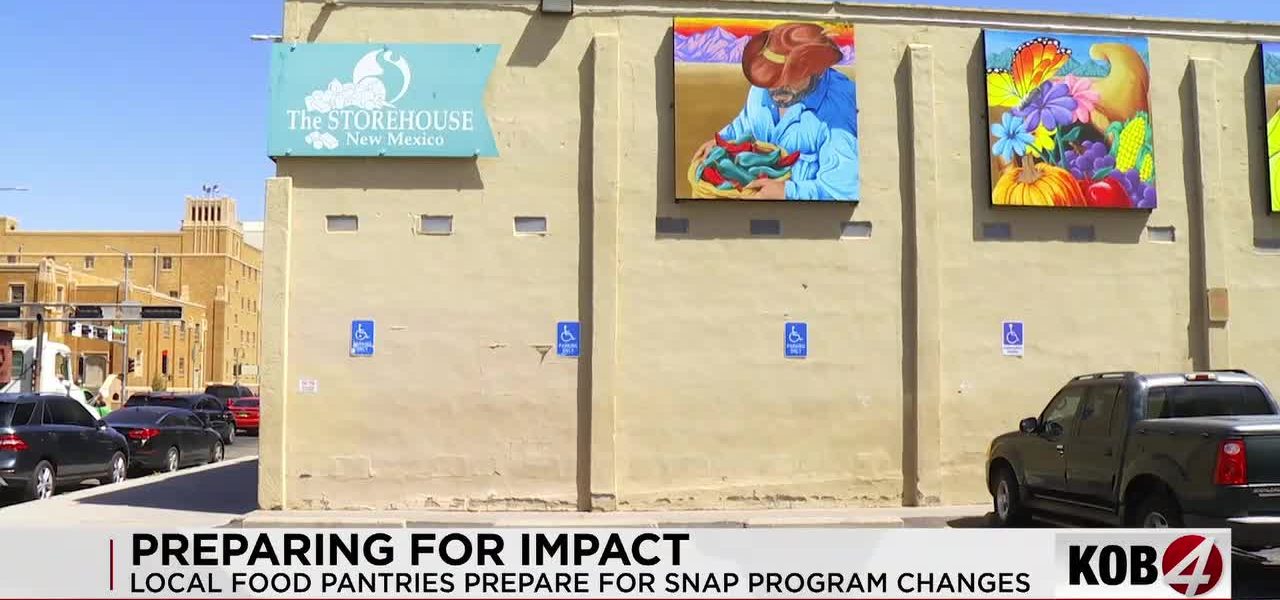
Jill Beets, a marketing representative for Storehouse Food Pantry, an Albuquerque-based non-profit, didn’t mince words. She observed, If people haven’t turned in the documentation, for example, if you’re paying your neighbor to do your day care, and you pay them cash sometimes or a check here and there – they may not be able to provide documentation of the amount of hours and the amount of money you’re spending on day care, for example.
That informal economy, the very fabric of survival for countless low-income households, becomes a liability under the new regime. It’s a predicament that disproportionately impacts communities reliant on tight-knit networks, including many immigrant families whose cultural practices (and indeed, practical economic realities) often eschew formal receipts for essential services.
Still, state officials maintain the changes are necessary, if not desirable. Dr. Elena Vargas, Director of Programs at the New Mexico Health Care Authority (HCA), shot back at criticisms, stating, These updated guidelines, directly aligned with federal mandates, ensure the judicious allocation of taxpayer funds and foster greater accountability within the Supplemental Nutrition Assistance Program. Our objective isn’t to deny aid, but to affirm eligibility for every recipient.
She emphasized that the goal was program integrity, ensuring benefits precisely matched household needs.
But the real-world implications, food pantries say, will be anything but precise. Storehouse New Mexico, which expects a gradual but definite uptick in demand, has prepared for the influx. Beets remarked, We do expect, as a food pantry, that we’ll start seeing more people who need food, because if they don’t have a way to pay for it with their SNAP benefits and their EBT card, they will need to get food somewhere.
The rolling nature of the impact – affecting individuals as their six-month renewal cycles arrive – means the full brunt of the policy won’t be felt immediately, but will steadily accumulate, like a slow-motion cascade.
And the scale of potential dislocation is considerable. Over 440,000 New Mexicans currently rely on SNAP benefits, with 113,000 of those residing in Bernalillo County alone, a figure recently corroborated by the state’s Health Care Authority. These aren’t abstract numbers; they represent working families, elderly individuals, and struggling single parents — the very demographic that’s historically found it challenging to navigate labyrinthine bureaucratic processes even without the added layer of new requirements.
📄 POLICY WIRE WHITEPAPER PUBLISHED: PAKISTAN'S NATIONAL SECURITY POLICY PRIORITIES
👉 READ BY CLICKING HERETo mitigate the foreseeable hardships, the governor’s office has trumpeted expanded support programs. Secretary Michael Chen, from the New Mexico Department of Workforce Solutions, affirmed the state’s commitment: While federal parameters necessitate these adjustments, New Mexico remains steadfast in its commitment to our most vulnerable citizens. We’re actively rolling out expanded job training and support initiatives — a robust pathway to self-sufficiency, not merely a punitive measure.
These offerings, including free job training and career support through the SNAP Employment and Training Program, officially launched concurrently with the new rules. The success of these initiatives, however, hinges on a crucial factor: whether those in need can access and utilize them amid the fresh documentation hurdles for the primary benefit itself.
In a global context where food insecurity remains a pressing concern — as highlighted by recent reports on Global Hunger’s New Front — the administrative tightening of social safety nets in developed nations presents a curious paradox. It begs the question of whether efficiency, when pursued to the exclusion of practical realities, inadvertently creates more substantial, albeit different, costs down the line. For many families from South Asian and Muslim-majority backgrounds, for instance, who may rely on extended family networks for childcare paid informally, these new strictures could be particularly vexing, forcing them to either alter long-standing cultural practices or face benefit reductions.
What This Means
At its core, this policy shift in New Mexico underscores a broader national tension between fiscal conservatism and social welfare. Economically, a reduction in SNAP benefits for thousands will invariably ripple through local economies. Fewer dollars circulating for food purchases mean less revenue for grocery stores, farmers’ markets, and indirectly, even transportation services. It’s a deflationary pressure on household budgets that can depress local commerce, especially in areas already struggling. Politically, the implications are substantial; it’s a tightrope walk for the state administration. While they can point to federal mandates, the visible strain on food banks and the potential for increased destitution could become a potent electoral issue, particularly in a state with a significant number of households hovering near the poverty line. it places an immense, often invisible, burden on non-profit organizations like Storehouse, which invariably become the last resort for those who fall through the bureaucratic cracks. This isn’t just about food; it’s about the erosion of trust in public institutions and the practical, everyday struggle for dignity and sustenance for countless New Mexicans.