

Senate Curtails Its Own Speculative Instincts Amidst Geopolitical Wagers
POLICY WIRE — Washington D.C., USA — It wasn’t the usual congressional wrangling over appropriations or judicial appointments that finally stirred the Senate to unanimous action. No, the...

POLICY WIRE — Washington D.C., USA — It wasn’t the usual congressional wrangling over appropriations or judicial appointments that finally stirred the Senate to unanimous action. No, the catalyst was far more visceral: a U.S. Special Forces operative charged with leveraging classified intelligence to bet on the capture of a foreign leader. And then there were those disquieting whispers, now growing into a clamor, about shadowy bets placed on potential ceasefires in volatile regions, particularly concerning Iran. So, with an almost uncharacteristic display of self-awareness, the upper chamber quietly but decisively moved to insulate its own.
The Senate, in a rare moment of bipartisan accord, has effectively declared its chambers a no-gambling zone for sensitive information. A voice vote last Thursday saw a resolution sail through, changing Senate rules to prohibit members from engaging with prediction markets. This immediate prohibition — a reaction, some might argue, to a burgeoning ethical quagmire — extends beyond just senators, encompassing their staff after an amendment by California Democrat Sen. Alex Padilla widened its scope. It’s a measure, seemingly small, that speaks volumes about the deepening concerns over the intersection of privileged access and speculative finance.
Behind the headlines, this isn’t merely about recreational wagers; it’s about the grotesque optics and potential corruption inherent in monetizing foreknowledge of national security events or economic shifts. Sen. Bernie Moreno, the Ohio Republican who sponsored the resolution, didn’t mince words. “United States senators have no business engaging in speculative activities like prediction markets while collecting a taxpayer-funded paycheck, period,” he asserted, a sentiment that resonated across the aisle. One might even discern a subtle sigh of relief among those who’ve long decried the opaque nature of such platforms.
And indeed, the alarm bells have been ringing. The Associated Press reported earlier this month that a cadre of fresh accounts on Polymarket, a prominent prediction platform, made exceptionally precise, well-timed bets regarding a U.S.-Iran ceasefire on April 7. These wagers yielded hundreds of thousands of dollars in profits for these new customers. Such activity, occurring against a backdrop of highly sensitive international diplomacy, screams of information asymmetry – or worse, outright insider trading. It’s an uncomfortable echo of a casino floor, where the house (or those with an inside track) always wins.
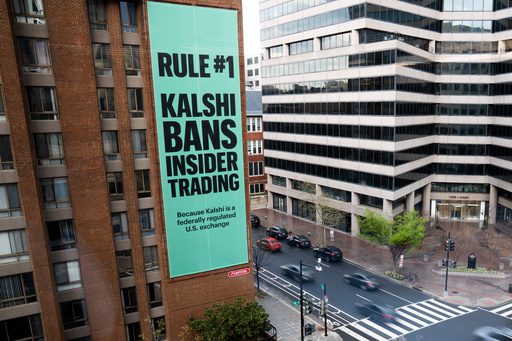
Still, the narrative gets even murkier. The White House, despite warning its own staff against using private information for prediction market trades following the AP report, has also been a curious ally of the industry in legal battles with states seeking to regulate or ban these platforms. Complicating matters further, Donald Trump Jr., the president’s eldest son, serves as an adviser for both Polymarket and Kalshi, two major players in this burgeoning market. His father’s social media venture, Truth Social, is even reportedly launching its own cryptocurrency-based prediction market, Truth Predict. It’s a peculiar confluence of interests, isn’t it?
📄 POLICY WIRE WHITEPAPER PUBLISHED: PAKISTAN'S NATIONAL SECURITY POLICY PRIORITIES
👉 READ BY CLICKING HERE“We must never allow Congress to turn into a casino where members representing the public can gamble on wars or economic crises or elections,” declared Senate Minority Leader Chuck Schumer, D-N.Y. He described the Senate’s move as a “no-brainer,” urging the House — and the administration to follow suit. His concern, articulated with unusual clarity, underscores the fundamental threat to democratic principles if elected officials can profit from policy outcomes they themselves might influence, or on conflicts that demand impartiality. Imagine, for a moment, the implications for nations like Pakistan or those across the wider Muslim world, where geopolitical stability often hangs by a thread – and where any hint of official malfeasance could destabilize already precarious situations.
What This Means
This swift, unanimous legislative action isn’t just about curbing a niche form of financial speculation; it’s a desperate, almost reflexive, attempt to shore up the eroding public trust in Congress. At its core, the ban addresses the fundamental question of integrity: can representatives truly serve the public when they stand to personally gain from the very events they legislate or oversee? Economically, this move might signal a chilling effect for the prediction market industry, particularly if other branches of government – or even state legislatures – adopt similar prohibitions. The perceived legitimacy of these platforms, already under scrutiny, takes a substantial hit. Politically, it’s a rare instance of Congress preemptively attempting to police its own ethical boundaries, though some critics will undoubtedly view it as closing the barn door after several horses have already bolted. It also underscores the growing realization that information, especially sensitive government information, is a commodity that must be vigorously protected from illicit monetization, lest the entire apparatus of governance appear as nothing more than a high-stakes game for insiders.
Senators Todd Young (R-Ind.) and Elissa Slotkin (D-Mich.) have already introduced legislation aiming for a far broader ban, targeting all federally elected officials and government employees from using insider information on prediction markets. The Senate’s unanimous resolution, for all its immediate impact, really only represents a first skirmish in what promises to be a longer, more complex battle over the ethics of information in an increasingly data-driven, and often ethically ambiguous, world.